A soggy lawn isn’t always a lawn problem. When water lingers after rain, it’s natural to wonder how to improve lawn drainage in Brier and whether Core Aeration will solve it. The right fix depends on what is keeping water in place. Compacted soil can limit water movement through the lawn, while poor surface grading or a downspout directing water onto the yard calls for a different solution. Treating the turf before finding the cause can waste effort or leave the wet patch unchanged.
This guide explains how to spot clues around soggy areas, what you can safely assess, and how to match likely causes with practical next steps. You’ll also learn when lawn restoration treatments may help and when the issue is beyond what turf work can correct. A Lawn Tune-Up consists of Core Aeration, Overseeding, and Fertilizing. It may support turf recovery when symptoms point to lawn and soil conditions, but it won’t fix grading or drainage-system defects. Start with the source of the water, then choose a treatment that fits.
Key Takeaways
- To understand how to improve lawn drainage in Brier, note where water collects, how long it stays, and where runoff comes from.
- Compare soggy patches with clues such as firm, compacted ground, excess thatch, nearby slopes, or low spots before choosing a fix.
- After rain, safely check recurring wet areas, downspouts, slopes, and hard-surface edges to help narrow down the cause.
- Core Aeration may help when compaction limits water movement. A Lawn Tune-Up consists of Core Aeration, Overseeding, and Fertilizing, but won’t correct grading or drainage-system defects.
How to Improve Lawn Drainage in Brier Starts with Finding Where Water Collects
Puddles and soft ground after wet weather are frustrating, but they don’t point to one cause. Before deciding how to improve lawn drainage in Brier, track where water gathers, how long it remains, and where runoff travels. Look for the same pattern after more than one rainfall. A dry-day inspection can show the shape of the yard, but it won’t reveal how water moves or whether a wet patch keeps returning.
Standing water is a symptom. The cause may be in the soil, the yard’s shape, or the path runoff takes. Follow the pattern first, then consider what it suggests.
What the location and pattern of puddles can reveal
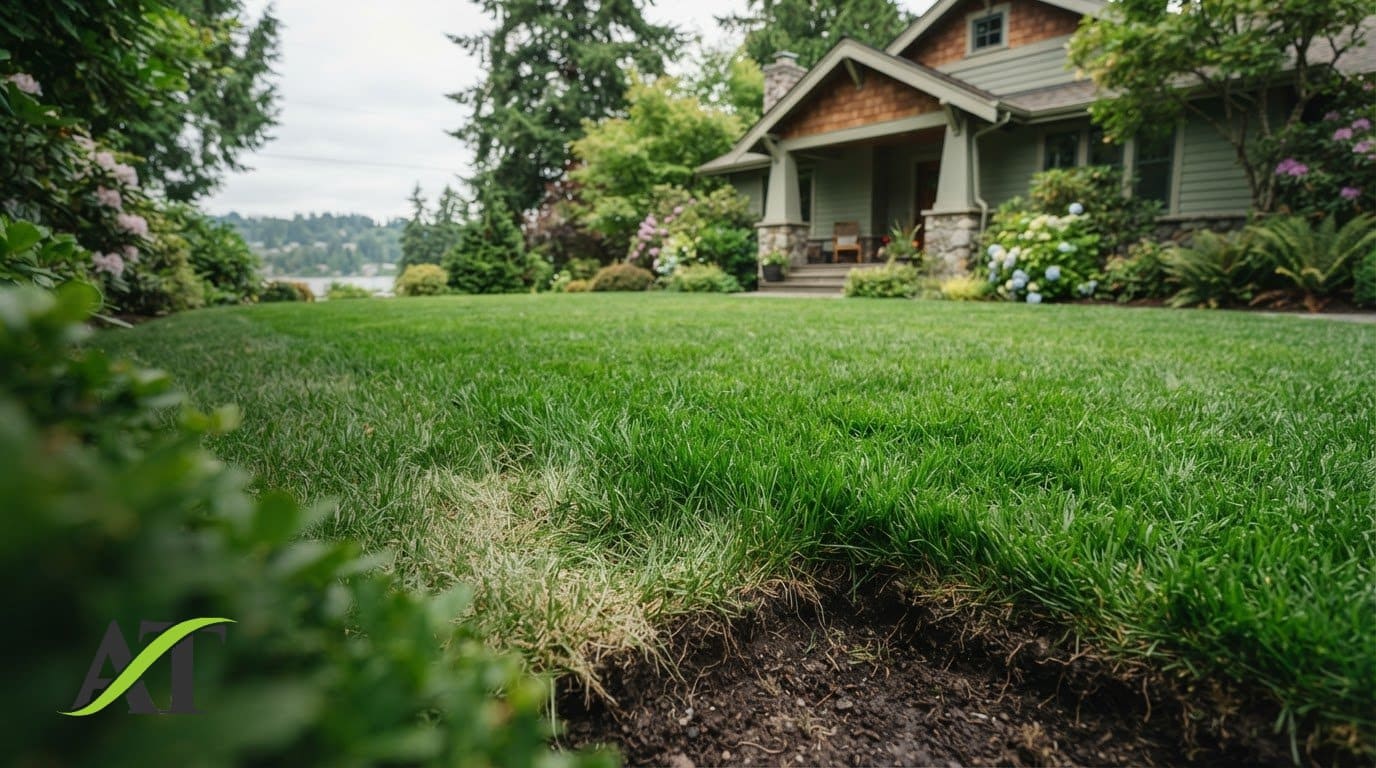
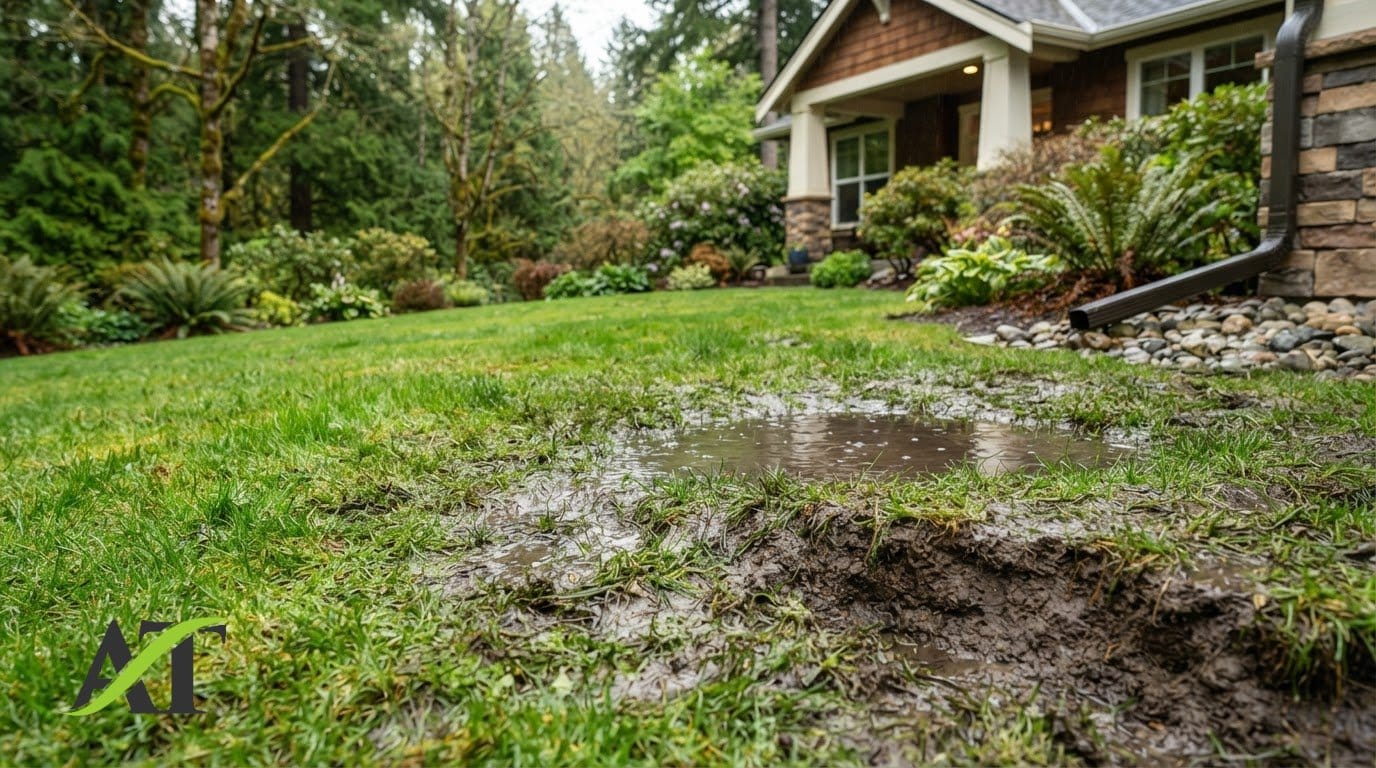
A broad, soggy area may point to a different issue than one isolated puddle in a low spot. Water moving downhill suggests runoff is crossing the lawn, while wet ground near a roof downspout, path, or hard-surface edge may show where water is being directed or concentrated. Firm ground beneath the turf can be a clue to compaction, which restricts water movement through soil. Learn more about Soil compaction and its effects. One wet patch doesn’t diagnose the whole lawn, so note its boundaries and check whether nearby areas stay dry.
What to note before choosing a drainage fix
Keep a simple record after rainfall. Note the recent weather, mark affected spots, and record how long puddles remain. Then check whether the same areas become wet again and whether water flows toward or away from them.
- Map wet areas alongside nearby slopes, downspouts, paths, and lawn edges.
- Notice whether the turf feels spongy or the soil beneath feels firm.
- Compare observations from separate wet-weather checks instead of relying on one inspection.
These observations won’t confirm every underlying cause, but they can help distinguish a recurring lawn-soil concern from water arriving from elsewhere. That’s a useful starting point before choosing a treatment.
Brier Lawn Drainage Problems: Compaction, Thatch, Runoff, or a Low Spot?
Water that lingers can point to different problems, and each calls for a different response. Use the pattern you observed to narrow down the possibilities before choosing how to improve lawn drainage in Brier.
| Symptom | Possible cause | What it may indicate | Suitable next step |
|---|---|---|---|
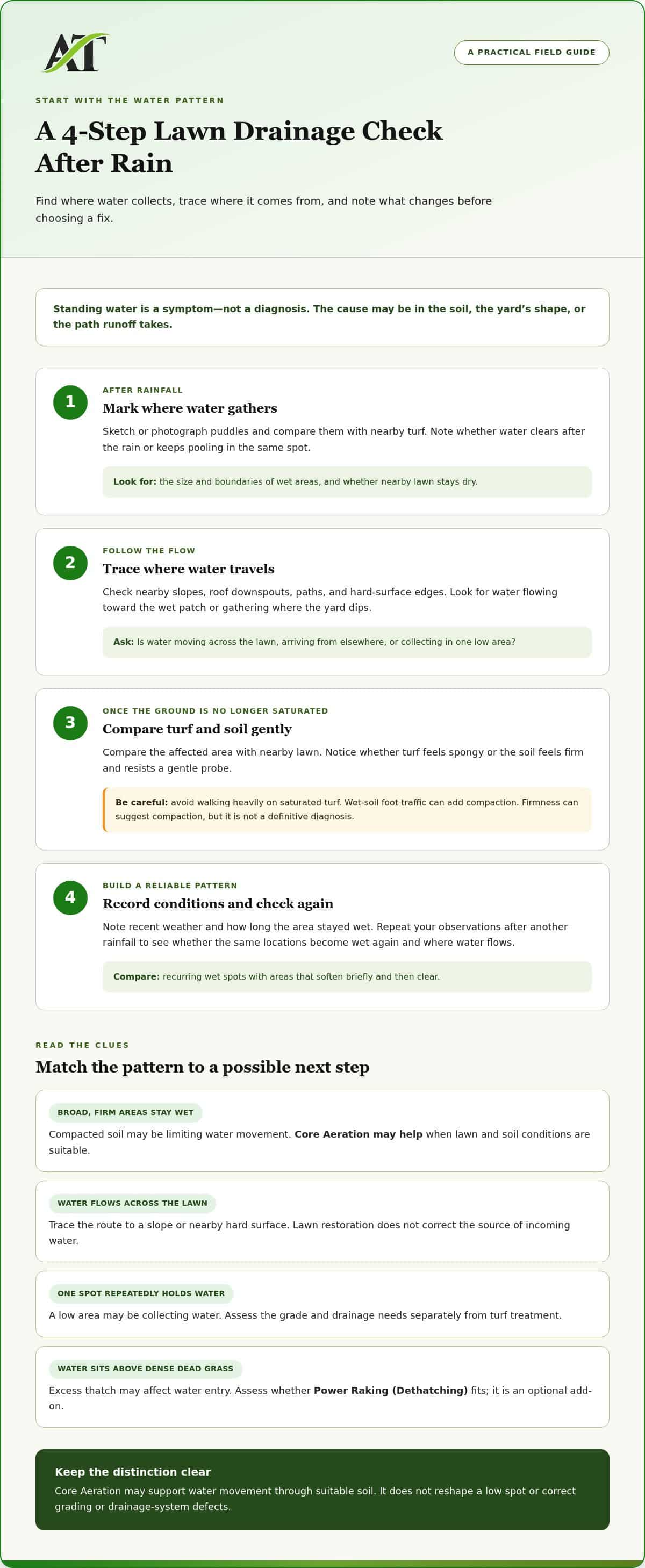
| Broad, firm areas stay wet | Compacted soil | Water may be having trouble moving into the soil | Consider Core Aeration if the turf and soil conditions are suitable |
| Water seems to sit above a dense layer of dead grass | Excess thatch | The surface layer may be affecting water entry | Assess whether Power Raking (Dethatching) fits; it’s an optional add-on or part of the Full Meal Deal |
| Water flows across the lawn | Surface runoff | Water may be arriving from a slope or nearby hard surface | Trace its path; turf restoration won’t correct the source |
| One spot repeatedly holds water | Low area | The yard’s shape may be collecting water | Assess the grade and drainage needs separately |
Core Aeration can help with compaction, but it isn’t a universal fix for standing water. It removes small soil cores, which can relieve compaction in suitable lawn conditions and support water movement through the soil. It doesn’t reshape a low spot or correct grading. See the Core Aeration service details for more about this turf treatment.
When the problem points beyond lawn restoration
Water flowing in from a slope, a persistent low spot, or runoff concentrated near a structure points beyond a soil treatment. These patterns may call for a grading or drainage-system solution. Core Aeration and other lawn restoration treatments support turf and soil health; they don’t fix the source of incoming water or a drainage-system defect.
If your observations suggest a lawn-soil issue, you can request a quote for lawn restoration suited to the conditions you’ve found.
A Practical Brier Lawn Drainage Check You Can Do Before Choosing a Fix
Check the lawn after rainfall when it’s safe to be outside, but avoid walking heavily on saturated turf. Foot traffic on wet soil can add compaction and make the problem harder to assess. Repeat your observations after another rainfall to see whether the same pattern returns.
- Mark wet areas. Sketch or photograph where puddles form, and compare them with nearby turf. Note whether water disappears after the rain or keeps pooling in the same spot.
- Trace the water’s path. Mark nearby slopes, roof downspouts, paths, and hard-surface edges. Look for water flowing toward the wet patch or collecting where the yard dips.
- Check the turf and soil gently. Once the ground is no longer saturated, compare the affected area with nearby lawn. Spongy turf may have a different cause from firm soil that resists a gentle probe. Firmness can suggest compaction, but it isn’t a definitive diagnosis.
- Record the conditions. Note recent weather, how long the area stayed wet, and whether the same location is affected each time.
A patch that softens briefly after rain but clears may reflect temporary saturation. Recurring pooling in one location, or a wet area that remains long after nearby turf has dried, deserves closer attention. The pattern helps distinguish a lasting concern from a short-lived response to wet weather.
Choose the next step based on what you observed
Firm, compacted lawn soil may be a reason to consider Core Aeration, which can support water movement through suitable turf. A visible layer of thatch is a separate issue. Power Raking (Dethatching) is not part of a Lawn Tune-Up, which consists of Core Aeration, Overseeding, and Fertilizing. Explore lawn restoration services for options suited to turf and soil conditions. If water flows in from a slope or repeatedly collects in a low spot, lawn restoration won’t correct grading or drainage-system issues.
Which Lawn Restoration Option Fits a Brier Drainage Problem?
Your observations can help distinguish a lawn and soil concern from a drainage problem beyond the turf. If water lingers where soil feels compacted and the lawn is struggling, restoration treatments may support healthier turf. If water flows in from a slope, collects in a low area, or concentrates near a structure, a lawn treatment won’t correct the grading or drainage-system issue. Finding the cause is the practical first step in how to improve lawn drainage in Brier.
When a Lawn Tune-Up may support healthier turf
A Lawn Tune-Up consists of Core Aeration, Overseeding, and Fertilizing. Core Aeration may help where compaction limits water movement through the soil. Overseeding and Fertilizing support turf restoration, but they don’t fix standing water caused by the yard’s shape or an external water source. A Lawn Tune-Up does not include Power Raking (Dethatching).
For cool-season grass seed, the preferred soil temperature for germination is 55°F-75°F (13°C-24°C). Outside this range, germination and establishment may be slower, less consistent, and less reliable. Moisture, seed-to-soil contact, soil conditions, and weather also affect results, so Overseeding can’t guarantee new grass will establish.
When the Full Meal Deal or a different drainage solution may fit
If thatch is also a concern, the Full Meal Deal includes Power Raking (Dethatching), Core Aeration, Overseeding, and Fertilizing. Power Raking (Dethatching) is part of this service, not the Lawn Tune-Up. For related service information, see the Seattle Lawn Tune-Up guide.
Persistent pooling, water running downhill into the lawn, or runoff concentrated near a structure points to a separate drainage issue. Turf restoration may help the lawn recover, but it won’t correct grading or drainage-system defects. Treatment choice depends on the conditions you observed.
Start with the Cause, Then Choose the Right Lawn Treatment
To understand how to improve lawn drainage in Brier, track where water collects and whether the same spots stay wet after rainfall. Compacted soil may respond to Core Aeration, while persistent pooling caused by a low area, runoff, or grading needs a different kind of solution. Lawn restoration can support turf and soil health, but it won’t correct drainage-system defects.
When the symptoms point to the lawn, a Lawn Tune-Up consists of Core Aeration, Overseeding, and Fertilizing. Aerating Thatching Co. is an owner-operated local business founded in 2004, specializing in lawn restoration and soil-health treatments for Brier and nearby North Seattle communities. Treatment recommendations depend on the conditions observed, so start by noting where water collects and how the lawn responds after rain.
With the cause identified, you can choose a practical next step and give your lawn a sounder path toward recovery.
Frequently Asked Questions
Can lawn aeration improve drainage in Brier?
Core Aeration may help when compacted lawn soil limits water movement through the ground. It removes small soil cores and can support healthier soil and turf where compaction contributes to soggy conditions. It won’t fix water collecting in a low spot, runoff flowing in from a slope, or a drainage-system defect. Look for recurring wet areas and firm soil before deciding whether aeration fits.
Why does my lawn still have puddles after the rain stops?
Puddles may linger because water is collecting in a low area, moving onto the lawn from a slope or hard surface, or draining slowly through compacted soil. A single wet patch doesn’t identify the cause. Note where water gathers, how long it remains, and whether the same spots recur after rainfall. Compare the affected turf with nearby areas to help distinguish a lawn-soil concern from a grading or drainage issue.
Does dethatching fix a soggy lawn?
Not necessarily. Power Raking (Dethatching) addresses excess thatch, but it won’t correct compacted soil, a low spot, runoff from a downspout, or a drainage-system problem. First check whether a thatch layer is present and whether it matches the wet area. Power Raking (Dethatching) is an optional add-on or part of the Full Meal Deal, which also includes Core Aeration, Overseeding, and Fertilizing.
When should I overseed a lawn with drainage problems?
Address the likely cause of persistent pooling before Overseeding, since wet conditions and poor seed-to-soil contact can affect establishment. For cool-season grass, the preferred soil temperature range for germination is 55°F-75°F (13°C-24°C). Outside this range, germination and establishment may be slower, less consistent, and less reliable. Moisture, soil conditions, and weather also affect results, so Overseeding can’t guarantee germination.
Can a Lawn Tune-Up solve standing water in my yard?
A Lawn Tune-Up may support turf restoration when symptoms point to lawn and soil conditions, but it won’t fix standing water caused by grading, runoff, or a drainage-system defect. It consists of Core Aeration, Overseeding, and Fertilizing; Power Raking (Dethatching) isn’t included. Aerating Thatching Co. provides lawn restoration in Brier and nearby communities, including North Seattle, Shoreline, Edmonds, Lynnwood, Mill Creek, Bothell, Kenmore, Lake Forest Park, Mountlake Terrace, Snohomish, Everett, Woodway, Green Lake, Ballard, and Greenwood.
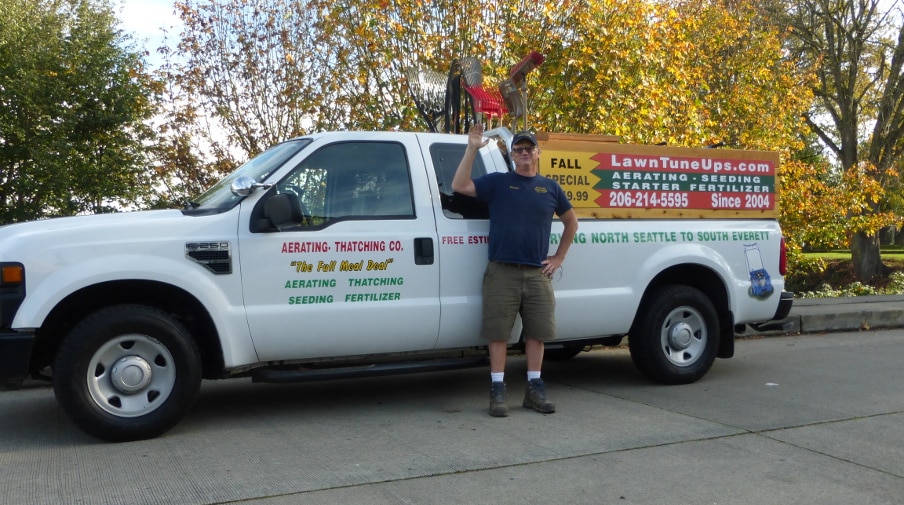
Article by
Stewart Armour
Stewart Armour is an independent lawn restoration expert, educator, and owner of Aerating Thatching Co., serving the greater Seattle area since 2004. With more than two decades of professional experience restoring Western Washington lawns, Stewart specializes in diagnosing lawn problems, improving soil health, and developing long-term lawn renovation strategies. His education includes turf management studies, advanced golf course turf training, and continuing education through Wilbur-Ellis University, State Turf Facilities, Soil First Academy, and Golf Course Applied Turf Physiology. Every article published on LawnTuneUps.com is grounded in practical field experience, current turf science, and a commitment to helping homeowners understand the why behind every recommendation—not just what to do.
Stewart has personally evaluated thousands of residential lawns throughout the Seattle area and remains committed to helping homeowners understand the science behind growing healthier, more resilient lawns.