Raking moss off your lawn every spring is a losing battle if your soil chemistry is working against you. Across Western Washington, heavy rainfall continuously washes away alkaline minerals, leaving damp, acidic ground where cool-season grass struggles to survive. For local yards burdened by weak blades and yellowing patches, a targeted lime application Mountlake Terrace homeowners schedule can break that exhausting cycle.
You aren’t imagining things if your regular fertilizer applications fail to produce a deep green lawn. When soil pH drops too far, grass roots physically cannot absorb nutrients, allowing moss to crowd out your turf. In this guide, you will discover how targeted lime applications neutralize acidic soil, unlock essential turf nutrients, and stop persistent lawn moss across Mountlake Terrace properties. We will explore how to test your ground accurately, why fall treatments deliver optimal results, and how restoring balanced chemistry builds resilient turf.
Key Takeaways
- Mountlake Terrace lawns naturally drift toward acidic conditions due to heavy regional rainfall and local glacial till that deplete essential calcium and magnesium.
- A scheduled lime application Mountlake Terrace yards receive corrects low pH, eliminating nutrient lockout so your grass can fully absorb regular fertilizer.
- Applying granular lime in fall or early spring allows natural seasonal rain to dissolve minerals directly into the soil profile.
- Pairing lime amendments with mechanical cultivation like a Lawn Tune-Up creates direct pathways to root zones, helping dense grass outcompete moss.
Why Mountlake Terrace Lawns Suffer from Acidic Soil
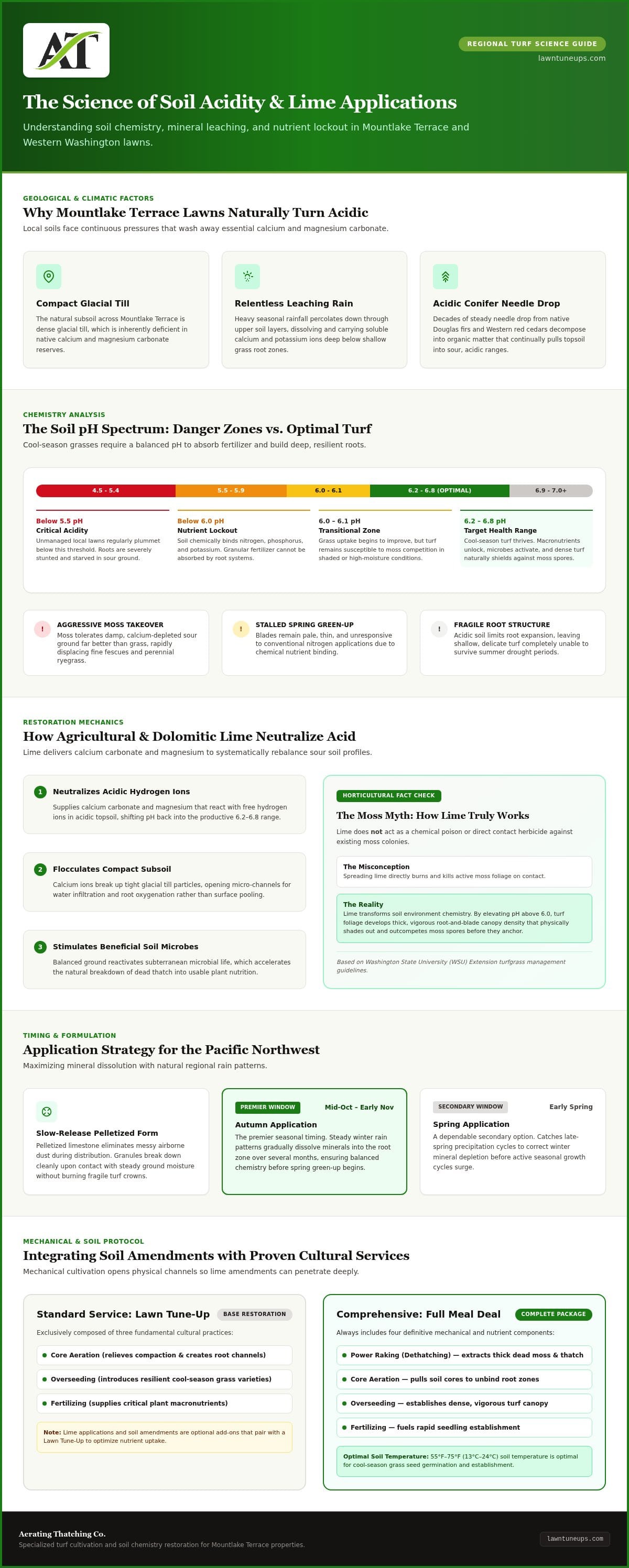
Mountlake Terrace sits atop dense glacial till, a compact subsoil naturally deficient in native calcium and magnesium carbonate. Decades of steady needle drop from towering native Douglas firs and Western red cedars also break down into acidic organic matter across local neighborhoods. Cool-season turfgrass thrives when soil pH sits between 6.2 and 6.8, yet unmanaged residential yards across this area regularly plummet below 5.5. As outlined in The Science of Soil pH, severe acidity creates chemical barriers that bind up essential nutrients, leaving roots starved in sour ground.
The Rainfall Factor in Southern Snohomish County
Southern Snohomish County receives substantial precipitation each year, which causes relentless mineral leaching. Rainwater percolates through upper dirt layers, washing soluble calcium and potassium ions deep below shallow grass root zones. This steady moisture cycle leaves topsoil depleted, tight, and vulnerable to winter compaction. Scheduling an optional lime application Mountlake Terrace properties rely on restores these lost minerals and rebuilds foundational soil chemistry.
Common Symptoms of Soil Acidity in Local Turf
Low pH creates unmistakable warning signs in Western Washington yards:
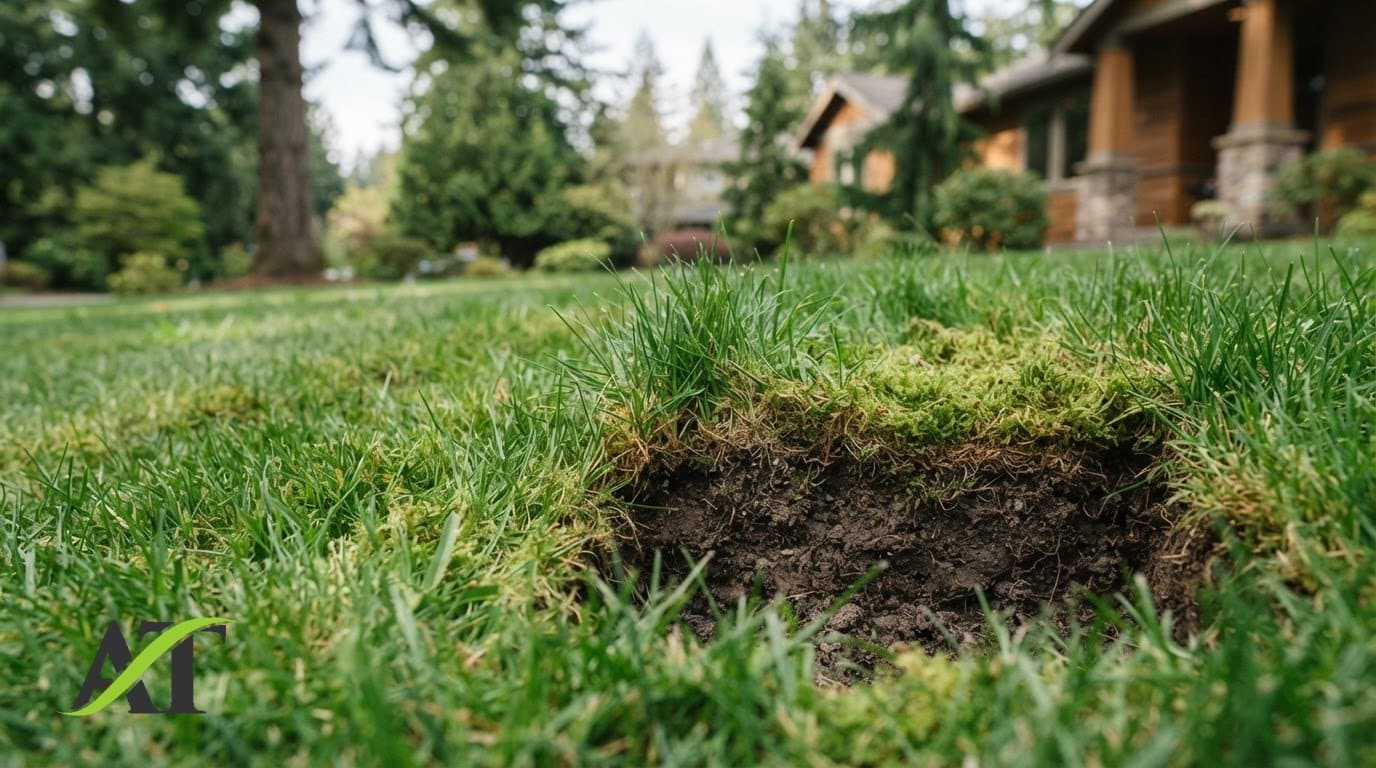
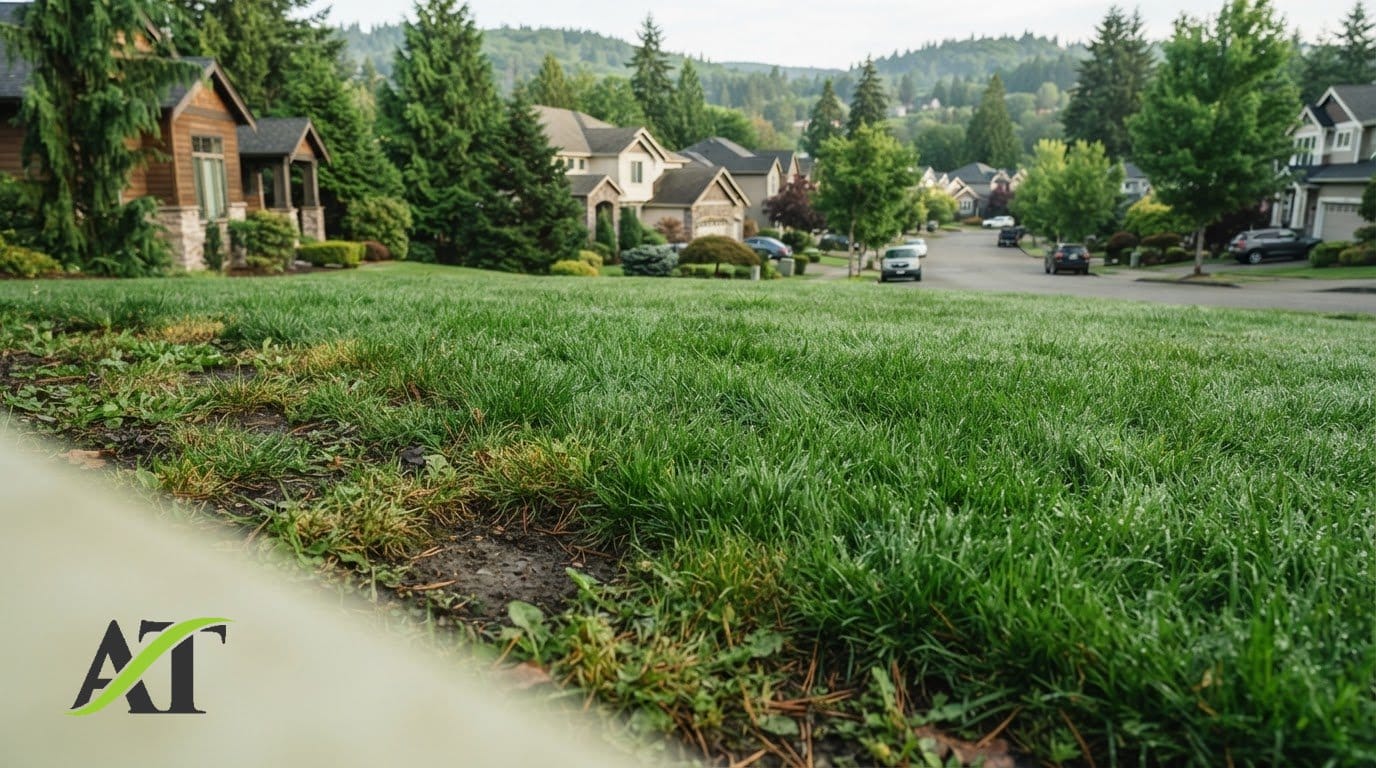
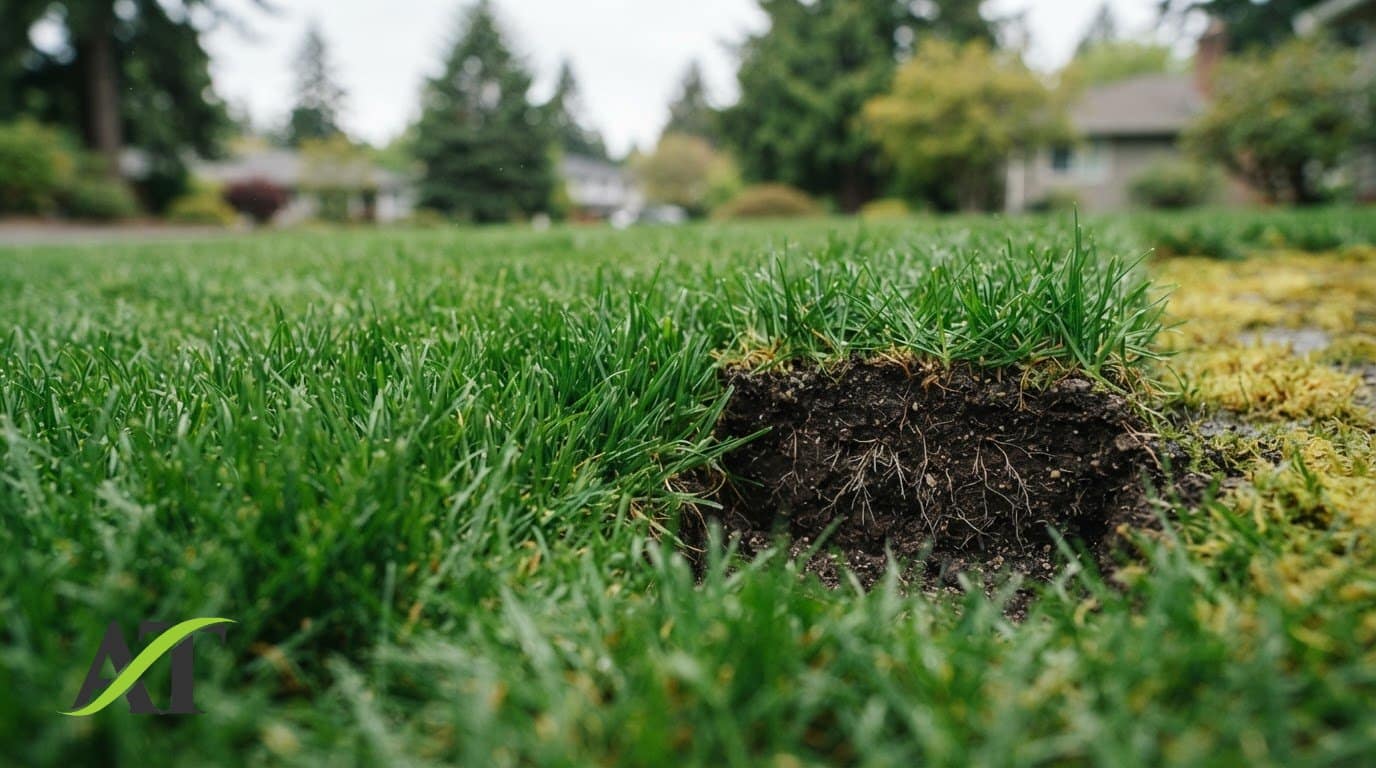
- Aggressive moss takeover: Moss tolerates acidic, soggy ground far better than turf, quickly displacing fine fescues and perennial ryegrass in shaded lawns.
- Stalled spring green-up: Grass blades stay pale, thin, and unresponsive even after you spread conventional nitrogen fertilizer.
- Poor root structure: Acidic soil stunts root development, leaving turf fragile and unable to handle summer drought stress.
When these symptoms appear, an intentional lime application Mountlake Terrace homeowners arrange corrects underlying chemistry so fertilizers can finally do their job.
The Science of Lime: How Balancing pH Restores Turf Health
Agricultural and dolomitic lime supply calcium carbonate and magnesium to neutralize acidic hydrogen ions in the dirt. This chemical shift unbinds tight soil particles and improves the physical structure of dense Western Washington subsoils. Calcium helps loosen compact ground, allowing water and air to reach deep root pathways rather than stagnating at the surface. Balanced soil chemistry also activates beneficial microbes, which break down thatch into usable plant food. Following recommendations in the WSU Extension lawn care guide, applying lime keeps soil above the critical 5.5 pH threshold and prevents severe mineral deficiencies.
Eliminating Nutrient Lockout in Cool-Season Grasses
When soil drops below 6.0 pH, cool-season turf suffers severe nutrient lockout. Acidic ground chemically binds essential macronutrients like nitrogen, phosphorus, and potassium. Grass roots cannot absorb these locked elements, no matter how much granular fertilizer you apply. A methodical lime application Mountlake Terrace properties receive unbinds those minerals. Restoring proper pH optimizes uptake efficiency, letting grass utilize applied fertilizer without requiring excessive synthetic chemicals.
Creating an Unfavorable Environment for Lawn Moss
A common myth claims lime acts as a direct moss killer. In reality, lime alters the growing environment rather than poisoning existing moss patches. Moss naturally thrives in damp, calcium-deficient ground where grass struggles to survive. By raising pH toward the ideal 6.2 to 6.8 range, an optional lime application Mountlake Terrace homeowners schedule helps turf grow thick and aggressive. Dense turf foliage shields the soil surface and outcompetes moss spores before they establish. If you want to balance your ground chemistry, you can request a quote to get custom soil amendments underway.
Timing and Applying Lime for Maximum Soil Absorption
Slow-release pelletized limestone provides steady, gradual neutralization without burning delicate grass blades or root systems. Pelletized granules also eliminate airborne dust during spreading, breaking down cleanly once exposed to consistent ground moisture. It serves as a practical soil amendment to stabilize native dirt chemistry across the region. Review our full suite of specialized services to see how soil conditioning supports broader turf recovery.
Best Seasonal Windows for Pacific Northwest Application
Autumn stands out as the premier window for a lime application Mountlake Terrace properties receive. Spreading lime between mid-October and early November allows steady winter rainfall to dissolve the granules slowly over several months. By the time soil temperatures rise in spring, the root zone is chemically balanced and ready for vigorous growth. Early spring offers another reliable window, catching persistent rain before summer dry spells harden the ground.
Pairing Lime with Mechanical Aeration Treatments
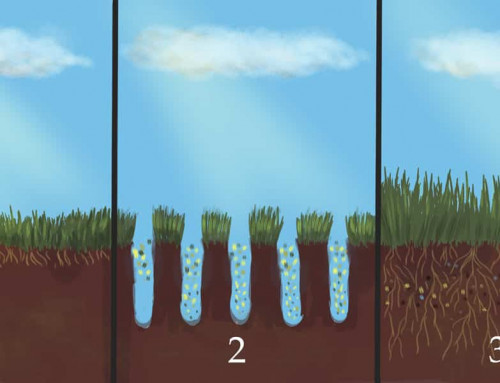
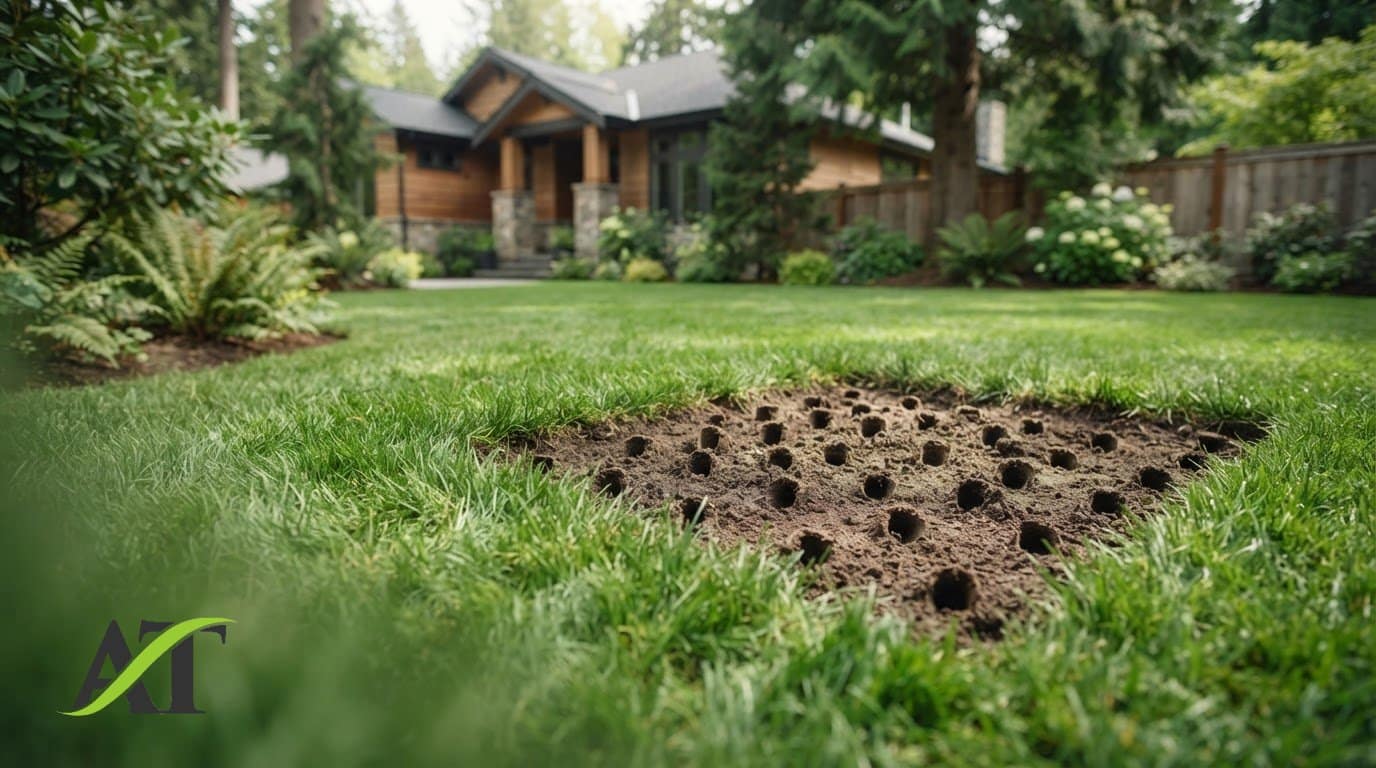
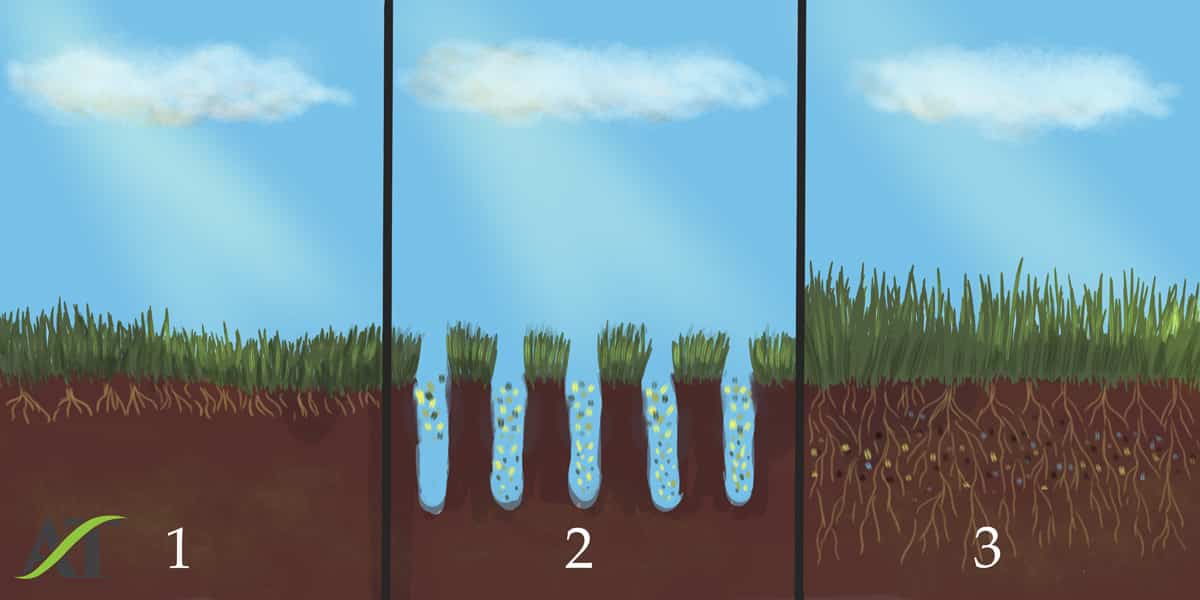
Dropping lime onto undisturbed, compacted ground often leads to wasted product. Surface runoff from heavy rains can wash loose granules down sidewalks and into street gutters before they ever dissolve into the subsoil. Pairing an optional lime amendment with Core Aeration solves this problem immediately. Aeration pulls physical soil plugs, creating thousands of open channels into the root zone. These holes drop pelletized limestone straight to where roots feed, accelerating neutralization in stubborn clay. A targeted lime application Mountlake Terrace yards undergo works far faster when paired directly with core removal.
Building a Complete Lawn Restoration Plan in Mountlake Terrace
Spreading lime adjusts chemistry, but soil amendments cannot rebuild bare dirt or thicken thin patches on their own. Full lawn renovation requires mechanical cultivation alongside chemical balancing. By pairing an optional lime application Mountlake Terrace yards receive with hands-on mechanical treatments, you create the ideal physical and chemical environment for lasting density.
Integrating Lime with the Signature Lawn Tune-Up
Our signature Lawn Tune-Up consists exclusively of Core Aeration, Overseeding, and Fertilizing. Adding an optional lime application directly complements this base service by conditioning the dirt right as fresh seed settles into aeration holes. Cool-season grass seed establishes most reliably when soil temperatures reach 55°F-75°F (13°C-24°C). Germination can occur outside this optimal window, but establishment will be slower, less consistent, and less reliable. Because overall turf success depends on balanced moisture, seed-to-soil contact, existing soil conditions, and shifting weather patterns, correcting pH gives young grass blades the best possible start.
When Heavy Thatch Demands the Full Meal Deal
Severe moss mats and tangled dead grass act like a sponge, intercepting lime granules and preventing them from reaching the root zone. Lawns facing heavy surface buildup need our Full Meal Deal, which consists exclusively of Power Raking (Dethatching), Core Aeration, Overseeding, and Fertilizing. Mechanical Power Raking (Dethatching) pulls up thick debris layers and exposes the true grade. This crucial step clears a path for core removal, seed distribution, and optional soil amendments to touch bare dirt. Request a Mountlake Terrace lawn quote to evaluate your yard and get your restorative program started.
Take Control of Your Lawn Soil Chemistry
Acidic soil and recurring moss don’t have to dictate the condition of your yard. Heavy regional rainfall steadily strips essential calcium from local dirt, locking out fertilizers and leaving cool-season grass thin. Scheduling an intentional lime application Mountlake Terrace properties need restores balanced pH. That correction unlocks bound soil nutrients and allows dense turfgrass to crowd out opportunistic moss naturally.
Aerating Thatching Co. has been serving Western Washington turf since 2004, bringing over 20 years of experience restoring lawns across Snohomish and King County. We run specialized mechanical equipment designed for tough Northwest soils, pairing proven cultivation methods with targeted soil amendments.
Give your yard the balanced foundation it needs to build deep, resilient roots and thrive through every wet winter.
Frequently Asked Questions
How do I know if my Mountlake Terrace lawn needs a lime application?
A reliable soil test showing a pH below 5.5 is the clearest signal your yard needs lime. Physical indicators in Mountlake Terrace include persistent moss invasion, yellowing turf, and poor grass response after fertilizing. Conifer needle drop and waterlogged glacial till also point to low calcium levels. Testing confirms exact acidity so you can schedule a targeted lime application Mountlake Terrace yards need to thrive.
Does lime kill active moss growing across my grass?
No, lime does not directly kill existing lawn moss. Instead, lime corrects the acidic soil conditions that allow moss to dominate weak turfgrass. By raising soil pH into the optimal 6.2 to 6.8 range, it unlocks essential nutrients so cool-season grasses grow dense and robust. Over time, that thick grass canopy outcompetes moss spores, preventing them from spreading across your lawn.
Can I apply lime and fertilizer to my lawn at the same time?
Yes, you can apply slow-release pelletized lime alongside lawn fertilizer during restoration treatments. Pelletized limestone breaks down slowly, so it will not react with or gas off nitrogen from standard granular blends. Applying them together actually accelerates turf recovery because the rising pH immediately helps grass roots absorb the applied nutrients. Combining them during seasonal aeration delivers the fastest, most noticeable improvement to root depth.
How long does it take for a lawn lime application to change soil pH?
A lime application Mountlake Terrace properties receive typically takes several months to fully adjust soil chemistry. Pelletized limestone dissolves gradually as winter rain moves through the dirt profile. While visible greening often shows up in early spring as nutrient lockout clears, the full upward shift in subsoil pH usually takes six to twelve months. Regular watering or Pacific Northwest seasonal precipitation ensures steady mineral movement.
Is lime application included in the standard Lawn Tune-Up package?
No, lime application is not included in the baseline service. A Lawn Tune-Up consists exclusively of Core Aeration, Overseeding, and Fertilizing. We offer lime applications and lawn soil amendments as optional add-ons to accommodate properties with verified acidic soil. Customers dealing with heavy moss, thatch, and sour dirt often combine this amendment with our Full Meal Deal for a complete mechanical and chemical yard reset.
Article by
Stewart Armour
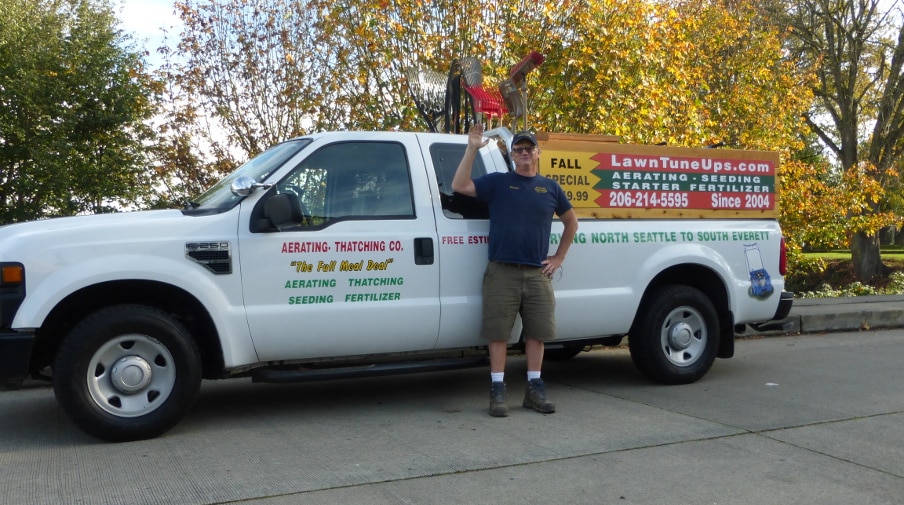
Stewart Armour is an independent lawn restoration expert, educator, and owner of Aerating Thatching Co., serving the greater Seattle area since 2004. With more than two decades of professional experience restoring Western Washington lawns, Stewart specializes in diagnosing lawn problems, improving soil health, and developing long-term lawn renovation strategies. His education includes turf management studies, advanced golf course turf training, and continuing education through Wilbur-Ellis University, State Turf Facilities, Soil First Academy, and Golf Course Applied Turf Physiology. Every article published on LawnTuneUps.com is grounded in practical field experience, current turf science, and a commitment to helping homeowners understand the why behind every recommendation—not just what to do.
Stewart has personally evaluated thousands of residential lawns throughout the Seattle area and remains committed to helping homeowners understand the science behind growing healthier, more resilient lawns.