Why does your grass feel like a soaked sponge all winter only to turn into a sun-baked brick by July? If you’re tired of moss choking out your turf and water pooling on your lawn, you aren’t alone. Most neighbors here struggle with the heavy glacial till and acidic soil common in our area. A professional Lawn Tune Up Mountlake Terrace is the most effective way to break through that compaction and restore soil health without relying on harsh synthetic chemicals.
We understand the frustration of a yard that looks more like a moss pit than a play space. This guide explains how to transform your property using mechanical restoration and organic treatments designed for the Pacific Northwest. You’ll learn how a Lawn Tune-Up, consisting of Core Aeration, Overseeding, and Fertilizing, builds thick turf. We’ll also cover why soil temperatures between 55°F-75°F (13°C-24°C) are the sweet spot for growth. Whether you need that baseline or the Full Meal Deal, which includes Power Raking (Dethatching), Core Aeration, Overseeding, and Fertilizing, you can create a lush, safe space for your family.
Key Takeaways
- Mountlake Terrace lawns struggle with acidic, compacted glacial till that requires mechanical restoration to thrive. Building self-sustaining soil with organic inputs is the key to a resilient, moss-free yard.
- A professional Lawn Tune Up Mountlake Terrace consists of Core Aeration, Overseeding, and Fertilizing to relieve soil compaction. This targeted process improves turf respiration and helps organic nutrients reach the root zone efficiently.
- Grass seed germination depends on soil temperature rather than air temperature, with the optimal range being 55°F-75°F (13°C-24°C). Planting within this window ensures the most reliable establishment for your new grass.
- Choose the Full Meal Deal, which includes Power Raking (Dethatching), Core Aeration, Overseeding, and Fertilizing, if your lawn has heavy thatch. This comprehensive restoration is the best way to handle severe moss or spongy turf.
The Mountlake Terrace Soil Challenge: Acidity and Compaction
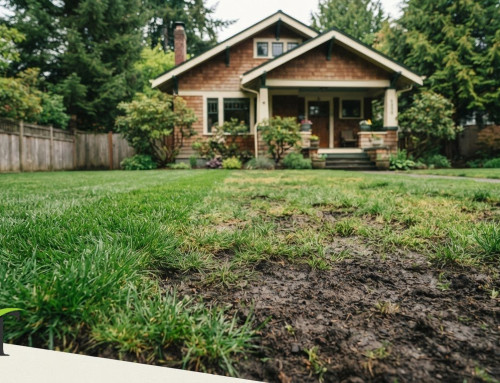
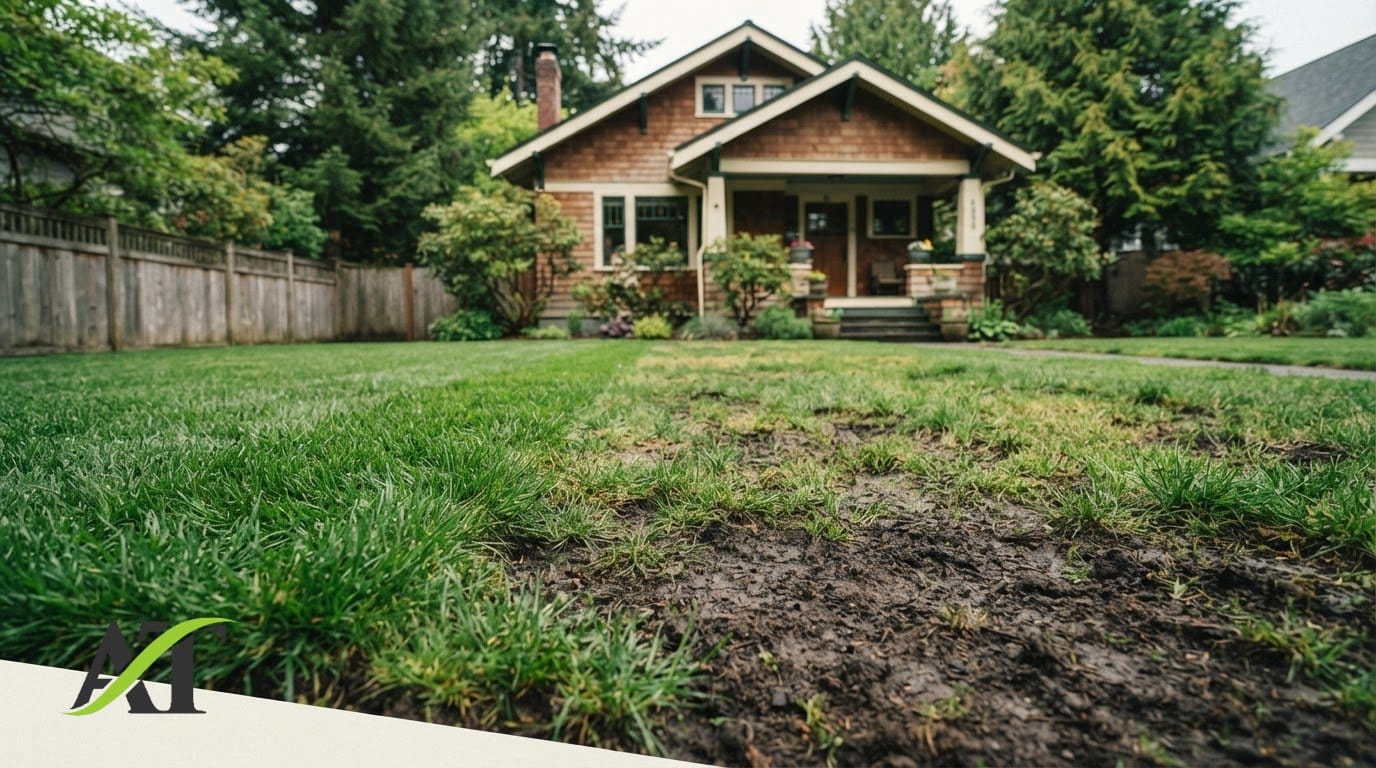
Successful turf in Mountlake Terrace isn’t about dumping more nitrogen on the ground. It’s about understanding the glacial till beneath your feet. Our local soil, often a mix of Alderwood and Everett series gravelly loam, sits on dense layers that drain poorly and compact quickly under foot traffic. Natural turf care addresses these physical limits. Instead of a chemical-heavy approach, we focus on mechanical processes and organic inputs to build self-sustaining soil. A professional Lawn Tune Up Mountlake Terrace starts by identifying these environmental stressors before they kill your grass.
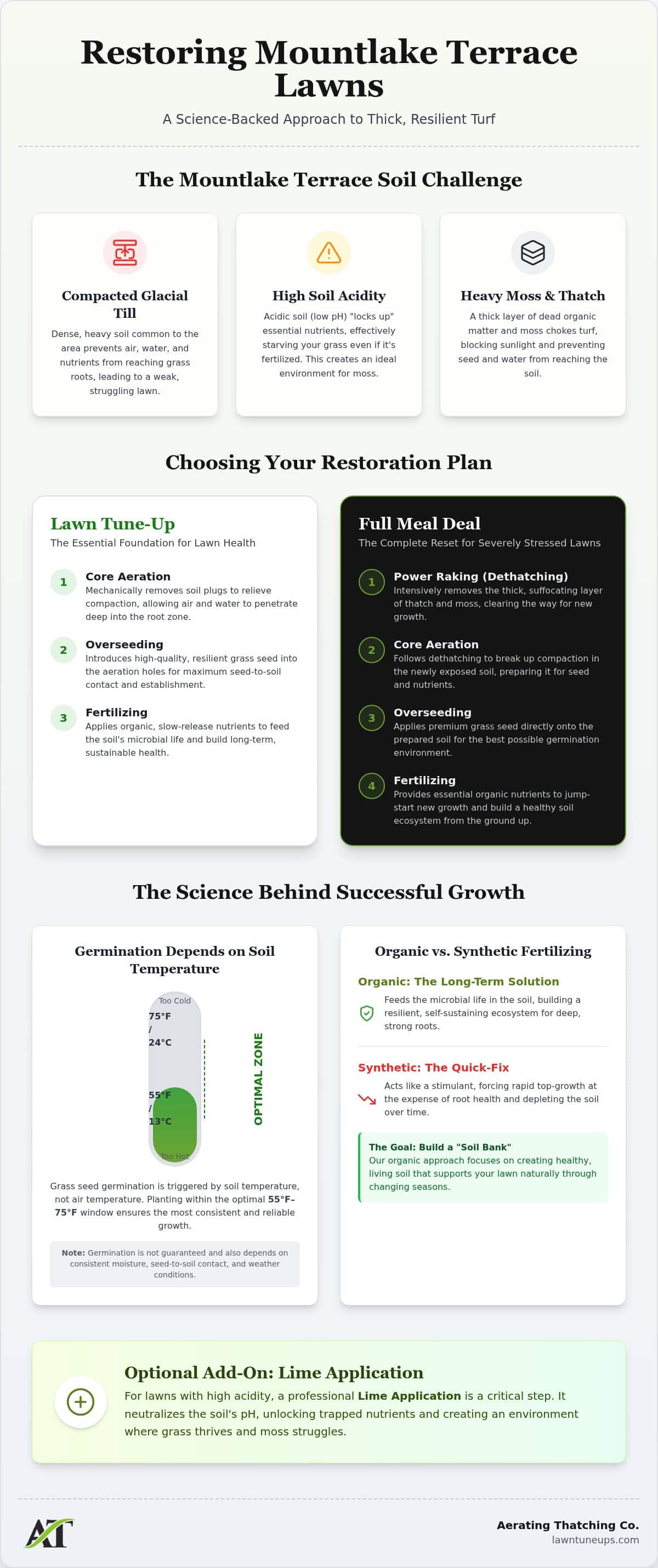
Moss thrives in our wet, shaded environment because it loves the conditions grass hates: high acidity and low oxygen. When soil pH drops into the 5.0 to 6.0 range, common in Western Washington, nutrients become chemically locked. This means your grass is essentially starving even if you fertilize regularly. This is where The Science of Core Aeration becomes vital. It is a primary component of a Lawn Tune-Up. By removing soil plugs, we allow air and water to penetrate the dense ground, breaking the cycle of compaction that favors moss over healthy turf.
The Necessity of Lime Application
Correcting soil acidity is a critical step in natural restoration. A professional Lime Application neutralizes high acidity, effectively unlocking the “soil bank” of nutrients. This shift in pH acts as a natural moss control. While toxic chemical killers offer a temporary fix, changing the soil environment makes the ground less hospitable to moss. Most local lawns benefit from regular pH correction to ensure that organic fertilizers can actually do their job.
Mechanical Restoration: The Science of Core Aeration and Overseeding
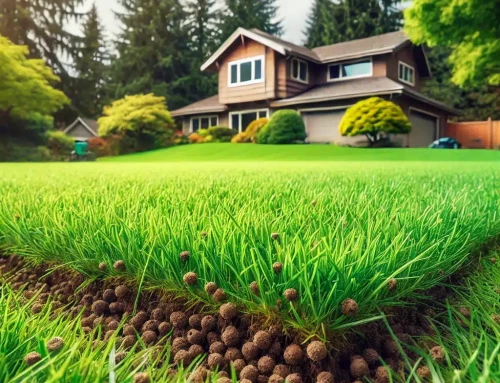
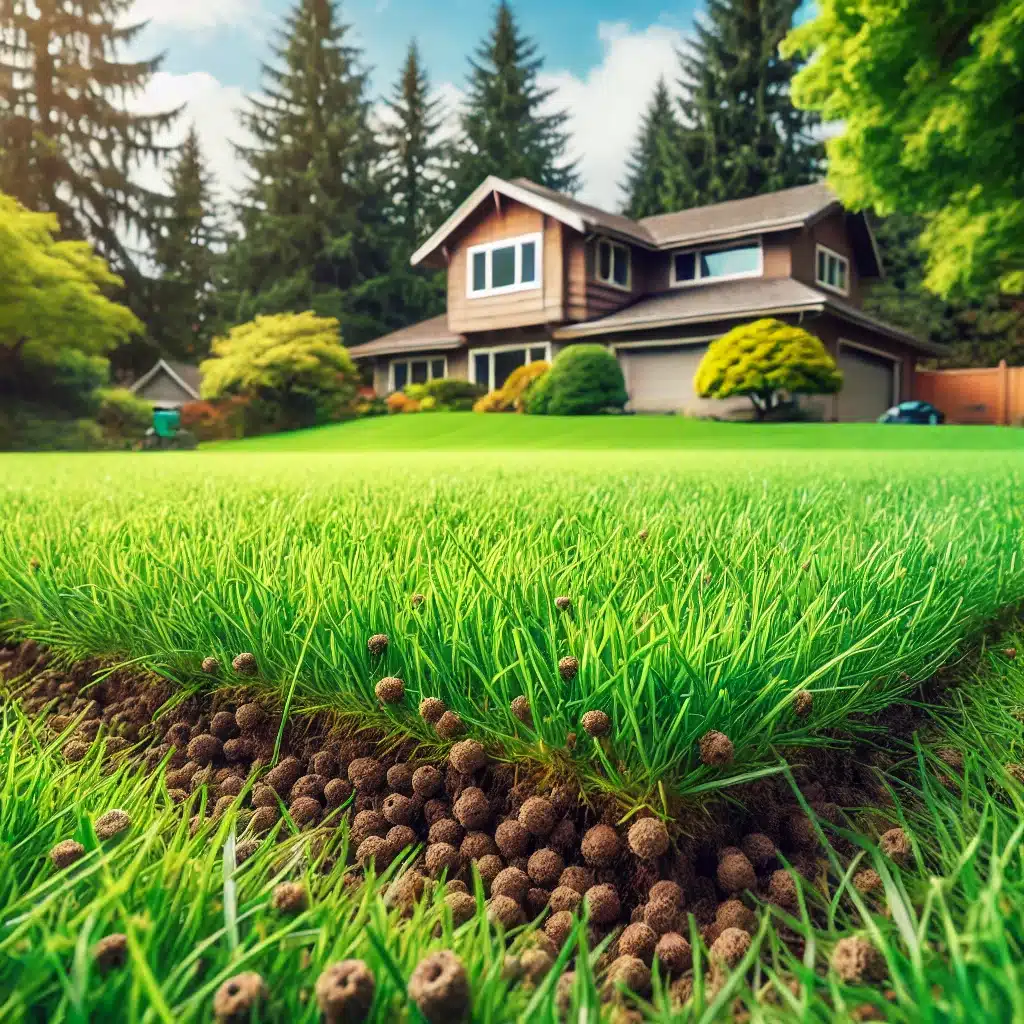
Core Aeration is the mechanical removal of soil plugs to relieve compaction and improve turf respiration. It’s the essential process for relieving compacted clay soil in Snohomish County. This mechanical restoration creates “pore space” for oxygen, water, and organic nutrients to reach the root zone. Without these holes, your soil stays tight and roots stay shallow. We perform Overseeding immediately following Core Aeration to ensure maximum seed-to-soil contact. This ensures the seed sits inside the soil rather than on top of it. This sequence is the backbone of a professional Lawn Tune Up Mountlake Terrace.
The 55°F-75°F Soil Temperature Rule
Overseeding success depends on soil temperature, not air temperature. The optimal range for consistent cool-season grass germination is 55°F-75°F (13°C-24°C). Germination can occur outside this range, but it’s often slower and less reliable. We don’t offer absolute guarantees on germination because factors like moisture, soil conditions, and local weather are unpredictable. Adhering to proven Pacific Northwest lawn care standards is the best way to support your new turf establishment during the spring and fall seasons.
Power Raking (Dethatching) for Heavy Buildup
Some yards have a thick layer of dead organic matter known as thatch. Power Raking (Dethatching) removes this “chokehold” that prevents water and seed from reaching the ground. In neglected Mountlake Terrace lawns, removing this buildup is critical for successful restoration. Our Full Meal Deal includes Power Raking (Dethatching), Core Aeration, Overseeding, and Fertilizing for a total reset. You can request a quote to see if your yard’s thatch levels require this extra mechanical step before seeding begins.
Organic Fertilizing vs. Synthetic Quick-Fixes
Green grass is easy to fake with high-nitrogen synthetic sprays. These products create short-term growth spikes that look good for a week but leave the soil depleted. Synthetic fertilizers act like a stimulant, forcing the plant to grow without supporting the roots. In contrast, organic fertilizing focuses on building the “soil bank.” It feeds the microbial life in the dirt, creating a self-repairing, resilient lawn that can handle the Pacific Northwest’s shifting weather. This long-term approach is a central part of any effective Lawn Tune Up Mountlake Terrace.
Healthy soil is alive. Organic nutrients support the beneficial fungi and bacteria that grass needs to thrive. When these microbes are active, the turf becomes more resistant to common local issues like red thread or moss. There is also a significant safety benefit to this method. Natural turf care is the preferred choice for families and pets in Mountlake Terrace. You won’t have to worry about harsh chemical residues on the lawn where your children and dogs play. Our signature Lawn Tune-Up includes organic-based fertilization as a core component to ensure your yard stays safe and healthy.
The Benefits of a Compost-Based Fertilizer
We use a specialized 5-4-5 organic blend that prioritizes soil health. This compost-based fertilizer provides a slow release of nutrients, which prevents the rapid, weak growth caused by synthetics. It boosts the microbial population, helping the soil hold onto water and air more effectively. Over time, natural fertilization reduces the need for chemical pest control. A thick, well-fed lawn naturally outcompetes weeds and resists insect damage without the need for toxic interventions. This sustainable cycle is the goal of our mechanical restoration services.
Lawn Tune Up Mountlake Terrace: Choosing Your Restoration Plan
Not every yard requires the same level of intervention. Selecting the right service depends on your current turf density and thatch levels. For many local properties, a standard Lawn Tune Up Mountlake Terrace provides the perfect maintenance baseline. This targeted three-step process consists of:
- Core Aeration
- Overseeding
- Fertilizing
It’s designed to keep healthy lawns resilient and thick. However, if your yard has been neglected or is losing the battle against moss, you may need a more aggressive approach. We encourage you to request a quote for a personalized assessment of your soil needs.
When to Choose the Full Meal Deal
If your lawn feels “spongy” underfoot or seems to be suffocating under a thick layer of brown debris, Power Raking (Dethatching) becomes mandatory. This is the primary indicator that you need the Full Meal Deal. This comprehensive restoration package includes:
- Power Raking (Dethatching)
- Core Aeration
- Overseeding
- Fertilizing
It provides the ultimate reset for moss-heavy lawns by physically removing the barrier between the seed and the soil. This allows the subsequent steps to actually reach the ground and establish new growth.
Post-Service Care for Natural Success
Once the mechanical work is done, your role in the restoration begins. Crucial watering is the most important factor in the weeks following service. You must keep the seedbed moist without flooding the new Overseeding. Light, frequent watering is better than a single heavy soak. Remember that natural care requires patience. You are building a biological foundation that lasts years, not just a quick green spike that fades. For more regional maintenance tips, check out our guide on Core Aeration in Snohomish to keep your yard thriving throughout the season.
Build a Resilient Mountlake Terrace Lawn
Restoring your yard doesn’t require harsh chemicals. It requires a pragmatic plan that addresses the heavy compaction and acidity found in our local soil. By combining mechanical restoration with organic treatments, you create a healthy environment where grass can actually outcompete moss. A professional Lawn Tune Up Mountlake Terrace provides the essential baseline of Core Aeration, Overseeding, and Fertilizing. If your yard has heavy thatch, the Full Meal Deal offers the deep reset you need to start fresh.
We’ve been owner-operated since 2004. Our specialized focus means we don’t handle mowing or hardscaping. Instead, we use advanced training from a Golf Course Superintendent to master the art of turf restoration. Remember to time your project when soil temperatures stay between 55°F-75°F (13°C-24°C) for the most reliable growth. You can create a thick, safe space for your pets and family by focusing on long-term soil health.
It’s time to stop fighting the PNW environment and start working with it. We look forward to helping you transform your property into a resilient, healthy landscape that lasts for years to come.
Frequently Asked Questions
Is natural turf care more expensive than traditional chemical lawn services?
Natural care is a long-term investment in soil health that often saves money by reducing the need for constant chemical interventions. While the initial cost of a professional Lawn Tune Up Mountlake Terrace might be higher than a synthetic spray, it builds a resilient lawn that requires fewer inputs over time. Organic methods focus on the soil bank, creating a self-sustaining environment that handles our local weather shifts without expensive, short-term growth spikes.
How long does it take for Overseeding to show results in Mountlake Terrace?
New grass usually begins to sprout within 14 to 21 days when soil temperatures are between 55°F-75°F (13°C-24°C). Outside this range, establishment will be slower and less consistent. We don’t provide absolute guarantees on germination because results depend on factors like consistent moisture and seed-to-soil contact. Keeping the seedbed damp is the most critical task you have after we complete our mechanical restoration work on your property.
Can I walk on my lawn immediately after a Lawn Tune-Up or Full Meal Deal?
You can walk on the turf, but it’s best to limit traffic for at least 21 days while the new grass establishes. Heavy activity from pets or children can displace seeds and compact the soil plugs removed during Core Aeration. To protect the investment of your Lawn Tune-Up or Full Meal Deal, try to avoid any aggressive use of the yard until the new blades have been mowed at least once.
What is the best time of year for Core Aeration in the Pacific Northwest?
Spring and fall are the peak seasons for mechanical restoration in our region. April and May provide the moisture needed for recovery, while September offers ideal soil temperatures before the winter freeze. Performing Core Aeration during these windows ensures the turf has enough active growth to fill in the holes and strengthen the root system. Avoid aerating during the heat of summer when the soil is too hard and dry.
Why is my lawn still mossy after using organic fertilizer?
Moss is a symptom of poor drainage, high acidity, or heavy shade rather than a lack of nutrients. Organic fertilizer feeds the grass, but it doesn’t change the soil’s physical structure or pH level. To truly stop moss, you often need a Lime Application to neutralize acidity and Core Aeration to relieve compaction. Fixing the environment is the only way to help grass outcompete moss in the long run.
Article by
Stewart Armour
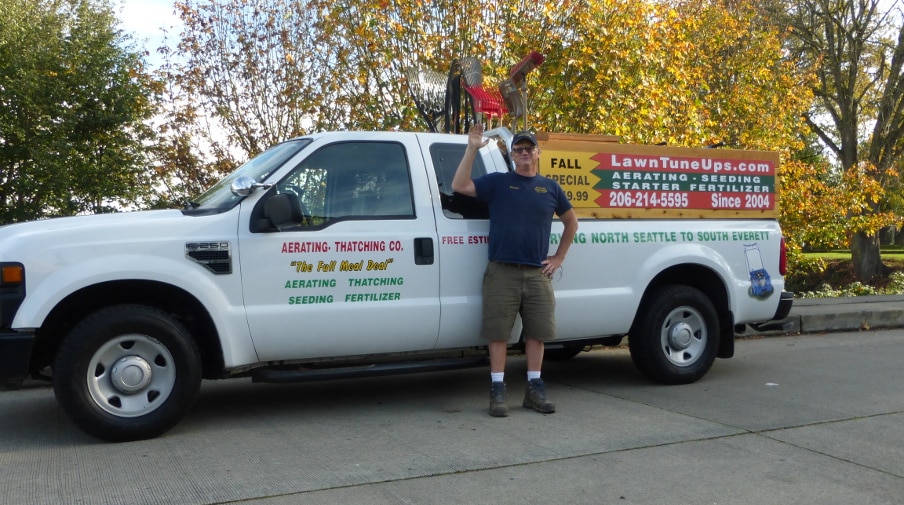
Stewart Armour is an independent lawn restoration expert, educator, and owner of Aerating Thatching Co., serving the greater Seattle area since 2004. With more than two decades of professional experience restoring Western Washington lawns, Stewart specializes in diagnosing lawn problems, improving soil health, and developing long-term lawn renovation strategies. His education includes turf management studies, advanced golf course turf training, and continuing education through Wilbur-Ellis University, State Turf Facilities, Soil First Academy, and Golf Course Applied Turf Physiology. Every article published on LawnTuneUps.com is grounded in practical field experience, current turf science, and a commitment to helping homeowners understand the why behind every recommendation—not just what to do.
Stewart has personally evaluated thousands of residential lawns throughout the Seattle area and remains committed to helping homeowners understand the science behind growing healthier, more resilient lawns.