Bothell’s heavy clay isn’t just soil; it’s essentially a layer of underground concrete. You’ve likely watched rainwater pool on the surface or noticed moss creeping into thin patches where grass used to thrive. It’s frustrating to spend money on seed and water only to see no results. The reality is that your lawn is suffocating. Professional core aeration Bothell services are the only way to break through that physical barrier. We understand that a healthy yard starts beneath the surface. When the ground is too tight for air or water to reach the roots, even the best fertilizer goes to waste.
This guide explains how our signature Lawn Tune-Up restores your property’s drainage and health. You’ll learn why we combine Core Aeration, Overseeding, and Fertilizing to tackle compaction head-on. We’ll also cover the technical details that matter, like why soil temperatures between 55°F and 75°F are the sweet spot for new growth. From timing your service for the Pacific Northwest rainy season to choosing between a standard refresh and the Full Meal Deal, we provide the local expertise you need. It’s time to stop fighting your soil and start fixing it with a methodical, results-driven approach.
Key Takeaways
- Learn why core aeration Bothell is the essential mechanical foundation for breaking through heavy clay deposits found throughout the Sammamish River valley.
- Compare our service levels to find the right fit, from the standard Lawn Tune-Up to the Full Meal Deal that includes Power Raking (Dethatching).
- Understand why soil temperatures between 55°F and 75°F are the primary factor for Overseeding success and reliable grass establishment.
- Follow a practical preparation checklist, such as flagging sprinkler heads and marking cables, to ensure our industrial equipment can work safely and effectively.
Solving Soil Compaction in Bothell’s Heavy Clay
Bothell sits in a unique geographic position along the Sammamish River valley. Over centuries, this location has created a landscape dominated by heavy clay deposits. While clay is nutrient-rich, its physical structure is incredibly dense. This density leads to severe soil compaction that prevents your grass from breathing. Core Aeration is the mechanical process of removing small soil “plugs” to create pathways for air, water, and nutrients to reach the root zone. By using a professional Lawn aerator, we physically break up the surface tension that keeps your lawn from thriving. Our core aeration Bothell services are designed specifically for these local conditions.
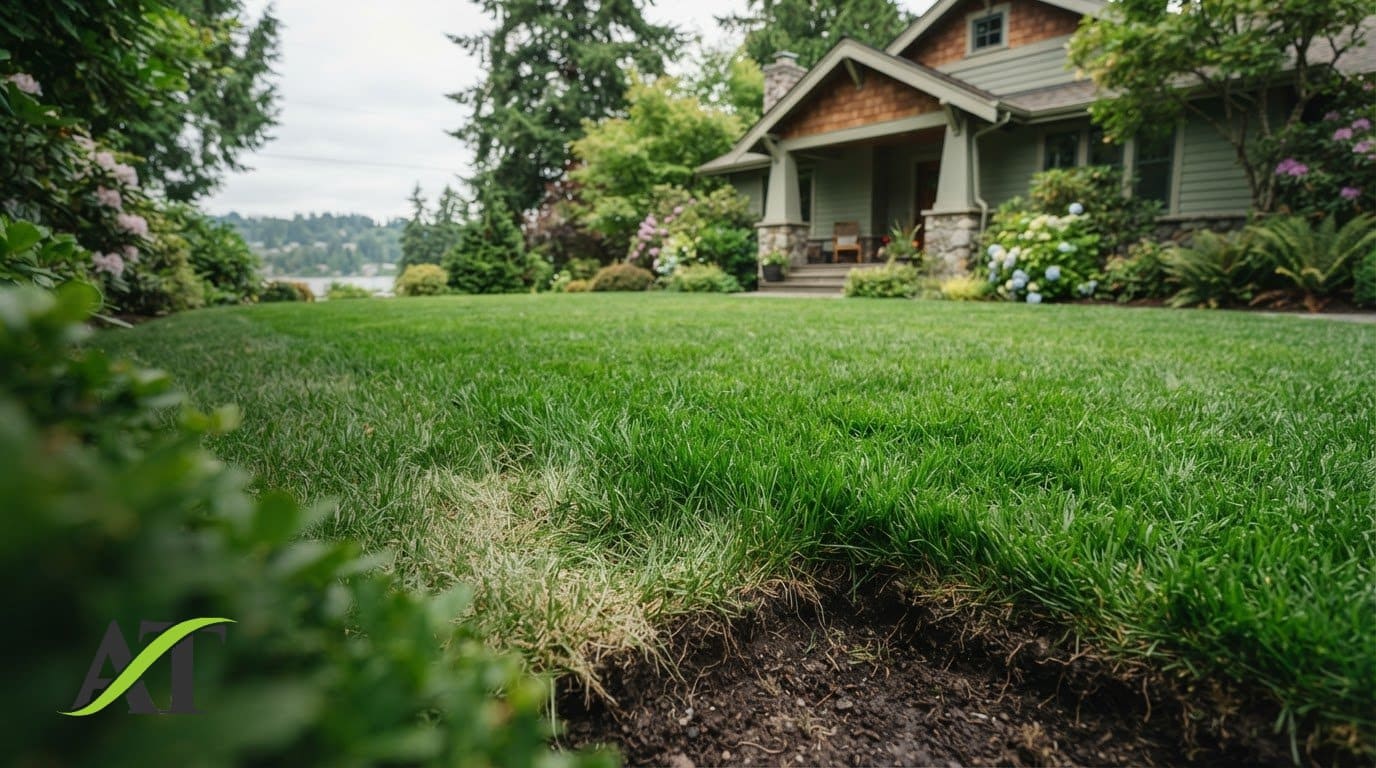
Signs of compaction are easy to spot if you know what to look for. You might see water runoff during a light PNW drizzle or notice moss taking over thin patches of turf. In many cases, the lawn feels “spongy” because of a thick thatch layer that can’t decompose into the hard ground. Core Aeration serves as the primary mechanical solution for PNW soil compaction.
Why Bothell Lawns Struggle with Drainage
Heavy foot traffic and vehicles parked on residential lots turn Bothell’s clay into a substance as hard as brick. This pressure eliminates the pore space needed for root development. When roots can’t penetrate deep into the soil profile, the grass becomes fragile. Professional core aeration Bothell services are necessary to reverse this damage and restore natural drainage patterns before the rainy season arrives.
The Role of Thatch in Soil Health
Thatch is a layer of organic debris between the grass blades and the soil. A little is good, but too much blocks moisture and fertilizer. When thatch is excessive, we use Power Raking (Dethatching) to strip away the buildup. This mechanical clearing prepares the surface so that Core Aeration can do its job effectively. It’s a methodical approach to restoration that prioritizes long-term soil health over quick fixes.
Choosing Between Core Aeration, Lawn Tune-Up, and the Full Meal Deal
Selecting the right service depends on the current state of your turf. Professional core aeration Bothell specialists know that timing and service depth are the keys to success. While standalone Core Aeration helps with compaction, it doesn’t address thinning grass or nutrient depletion. Most homeowners find that a comprehensive bundle delivers better results. Our methods align with regional research on Practical lawn care for western Oregon, emphasizing that mechanical aeration works best when paired with supporting treatments.
We offer two primary restoration packages to meet different needs. The Lawn Tune-Up consists of Core Aeration, Overseeding, and Fertilizing. For lawns requiring more intensive care, the Full Meal Deal includes Power Raking (Dethatching), Core Aeration, Overseeding, and Fertilizing. Choosing the right level saves you time and money in the long run.
When to Choose a Lawn Tune-Up
A Lawn Tune-Up is the ideal solution for yards that are generally healthy but starting to look thin. It targets soil compaction while introducing fresh genetics to your turf. By performing Core Aeration, Overseeding, and Fertilizing in one visit, we ensure the new seed has the best possible environment. The aeration holes act as protective nurseries for the seed. This package is perfect if you don’t have a thick, spongy layer of debris blocking the soil surface.
The Full Meal Deal for Total Restoration
Neglected lawns or those choked by moss need the Full Meal Deal. This package starts with Power Raking (Dethatching) to clear out the “carpet” of dead organic material. Without this first step, your Core Aeration and Overseeding won’t be as effective because the seed can’t reach the dirt. Combining Power Raking (Dethatching), Core Aeration, Overseeding, and Fertilizing provides a complete reset for your property. It’s the most reliable way to turn a struggling yard around. You can request a quote to get a professional recommendation for your specific lawn condition.
The Science of Seeding: Soil Temperatures and Timing in Bothell
Successful Overseeding depends on a factor many homeowners overlook: soil temperature. While you might feel a chill in the air, the ground holds heat much longer. For cool-season grass seed to germinate properly, soil temperatures must be between 55°F and 75°F (13°C–24°C). Germination can happen outside this range, but it’s often slower and less reliable. In the Bothell area, our soils typically hit this sweet spot from late August through mid-October. This “Bothell Window” is the most effective time for core aeration Bothell projects because it aligns mechanical restoration with biological growth.
Why Spring and Fall are the Critical Seasons
Fall is the prime season for lawn renovation in the Pacific Northwest. Warm soil from the summer combined with increasing moisture allows roots to establish before winter dormancy. This head start ensures the grass is strong enough to handle the following summer’s heat. Spring aeration is also valuable. It helps jumpstart a lawn that has been compacted by heavy PNW winter rains. While spring provides a boost, the window for those optimal soil temperatures is often shorter and more unpredictable than the fall season.
Factors Affecting Germination Success
Timing is only part of the equation. Success is also heavily influenced by moisture and seed-to-soil contact. The holes created during Core Aeration provide the perfect environment for seeds to tuck into the earth. However, results are never guaranteed. Factors like localized weather shifts, specific soil conditions, and consistent watering play huge roles in how well a lawn fills in. We focus on creating the best possible conditions so your investment has the highest chance of thriving. Our methodical approach ensures that every step of the Lawn Tune-Up or Full Meal Deal serves a specific purpose in the restoration process.

Professional Core Aeration: What to Expect and How to Prepare
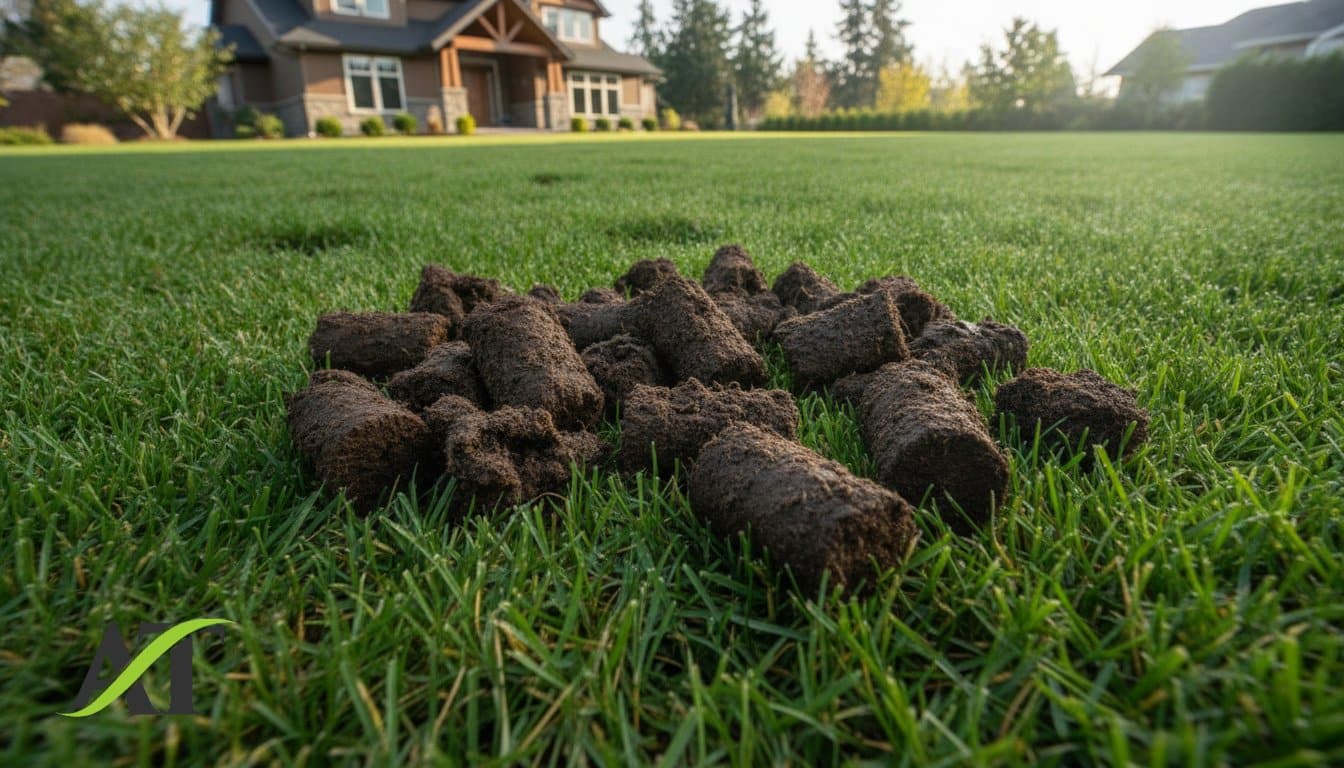
Professional core aeration Bothell requires more than just a rental machine. As owner-operators, we use industrial-grade equipment that pulls deeper, more consistent plugs than DIY alternatives. This process is physical and methodical. You can expect a technician who understands the local terrain and treats your property with professional respect. While the results are transformative, the immediate aftermath looks like a series of small soil plugs scattered across your lawn. These cores are vital for nutrient recycling and should remain where they fall.
Preparation Checklist for Homeowners
Success starts before we arrive. We ask that you mow your lawn to a height of about two inches. A shorter lawn allows our equipment to reach the soil directly. This ensures the tines penetrate as deep as possible into the heavy clay. You must also flag your sprinkler heads, hidden cables, and invisible fence lines. Our machines are powerful and heavy. Marking these utilities prevents avoidable damage and lets us focus on the restorative work without interruption.
Post-Service Care for Best Results
Once the Core Aeration, Overseeding, and Fertilizing components of your Lawn Tune-Up are complete, your primary job is moisture management. Keep the soil surface damp to encourage germination. Since results are influenced by weather and consistent watering, don’t let the new seeds dry out during the first few weeks. Leave the soil cores on the grass. They will break down naturally, returning beneficial microbes and organic matter to the root zone. For more details on maintaining your investment, check out our Core Aeration in Snohomish guide.
We take pride in restorative work that produces tangible outcomes for our neighbors. If you’re ready to fix your drainage issues and thicken your turf, we’re ready to get to work. Contact us today for a free estimate in Bothell.
Start Building a Thicker, Healthier Lawn Today
Bothell’s heavy clay doesn’t have to be a permanent barrier to a green yard. By addressing compaction through professional core aeration Bothell services, you create the necessary pathways for air and nutrients to reach the roots. Success depends on local expertise and mechanical restoration rather than just throwing down more seed. Remember that timing is everything; aiming for soil temperatures between 55°F and 75°F ensures your Overseeding has the best environment to establish. Whether you need a standard Lawn Tune-Up or the intensive restoration of the Full Meal Deal involving Power Raking (Dethatching), our owner-operated team has provided no-nonsense results since 2004.
We’ve spent decades navigating the specific challenges of King and Snohomish county soils. Our specialized approach focuses on PNW cool-season grass restoration that national chains often overlook. It’s time to stop fighting the clay and start working with it through a methodical, physical process. We look forward to helping you restore your property and achieving a thicker, greener lawn this season.
Frequently Asked Questions
When is the best time for Core Aeration in Bothell?
The best time for core aeration Bothell projects is between late August and mid-October. This window ensures soil temperatures are within the optimal 55°F to 75°F range for Overseeding. While spring is a secondary option to fix winter compaction, fall allows roots to establish before winter dormancy. Successful germination depends on this timing combined with consistent moisture and proper seed-to-soil contact during the restoration process.
How often should I have my Bothell lawn aerated?
Most Bothell lawns require service once per year due to the heavy clay content in the Sammamish River valley. If your property experiences high foot traffic or significant water pooling, we may recommend Core Aeration in both spring and fall. Annual maintenance prevents the soil from returning to a concrete-like state. Regular mechanical restoration is the most effective way to maintain a thick, healthy turf in the Pacific Northwest.
What is included in a professional Lawn Tune-Up?
A professional Lawn Tune-Up consists exclusively of three specific components: Core Aeration, Overseeding, and Fertilizing. This bundle is designed to address soil compaction while simultaneously introducing fresh grass genetics and essential nutrients. It doesn’t include Power Raking (Dethatching) unless you upgrade to our Full Meal Deal. We focus on these three pillars because they provide the mechanical and biological foundation needed for a total lawn reset without unnecessary fillers.
Do I need to be home when you perform Core Aeration?
You don’t need to be home for your service as long as we have clear access to the yard. We ask that you complete the preparation checklist beforehand, which includes mowing the grass short and flagging all sprinkler heads or hidden cables. Our owner-operated team works efficiently to complete the job, leaving behind the soil plugs to decompose naturally. We’ll leave a notice once the work is finished.
Will Core Aeration help get rid of moss in my lawn?
Core Aeration helps manage moss by fixing the underlying soil conditions that moss loves. Moss thrives in compacted, damp, and shady areas where grass struggles to grow. By improving drainage and air circulation, we create a healthier environment for turf to compete. For lawns with heavy moss buildup, we typically suggest the Full Meal Deal, which adds Power Raking (Dethatching) to physically remove the moss before the aeration process begins.
Article by
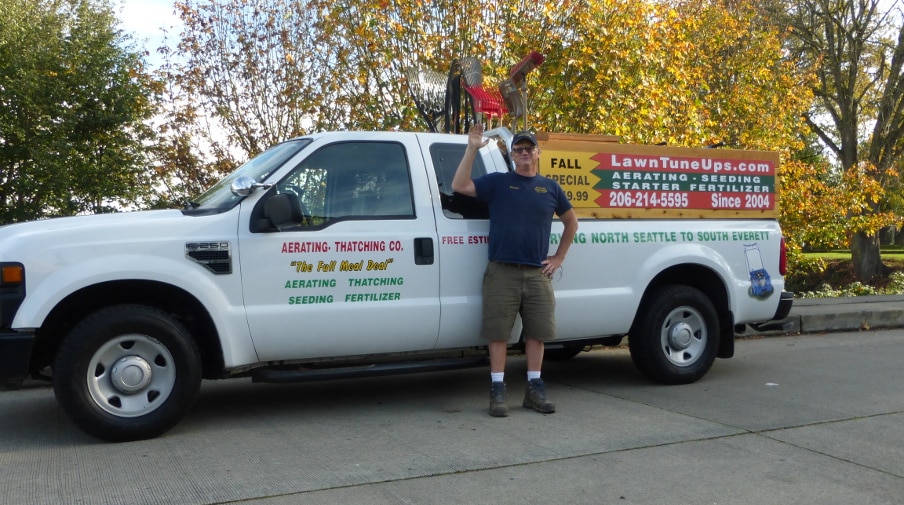
Stewart Armour
Stewart Armour is an independent lawn restoration expert, educator, and owner of Aerating Thatching Co., serving the greater Seattle area since 2004. With more than two decades of professional experience restoring Western Washington lawns, Stewart specializes in diagnosing lawn problems, improving soil health, and developing long-term lawn renovation strategies. His education includes turf management studies, advanced golf course turf training, and continuing education through Wilbur-Ellis University, State Turf Facilities, Soil First Academy, and Golf Course Applied Turf Physiology. Every article published on LawnTuneUps.com is grounded in practical field experience, current turf science, and a commitment to helping homeowners understand the why behind every recommendation—not just what to do.
Stewart has personally evaluated thousands of residential lawns throughout the Seattle area and remains committed to helping homeowners understand the science behind growing healthier, more resilient lawns.