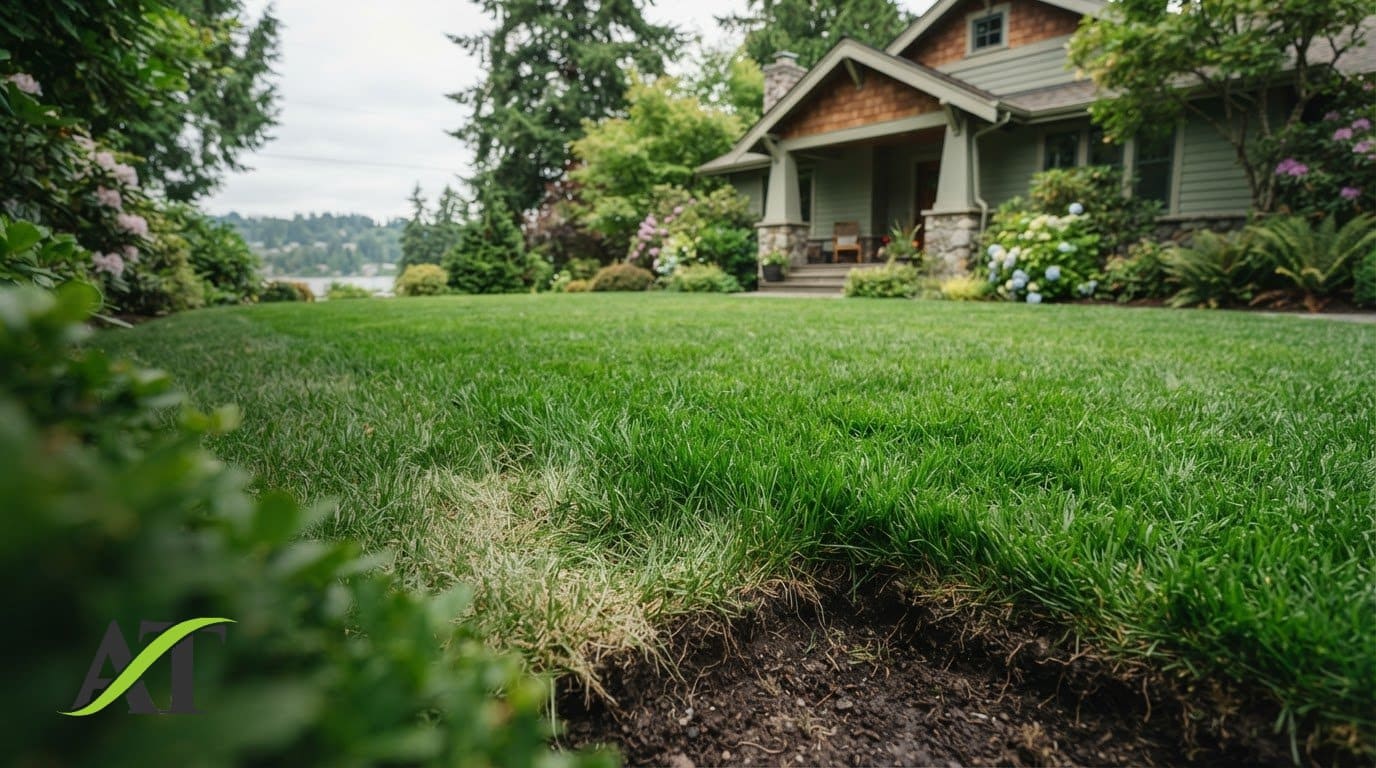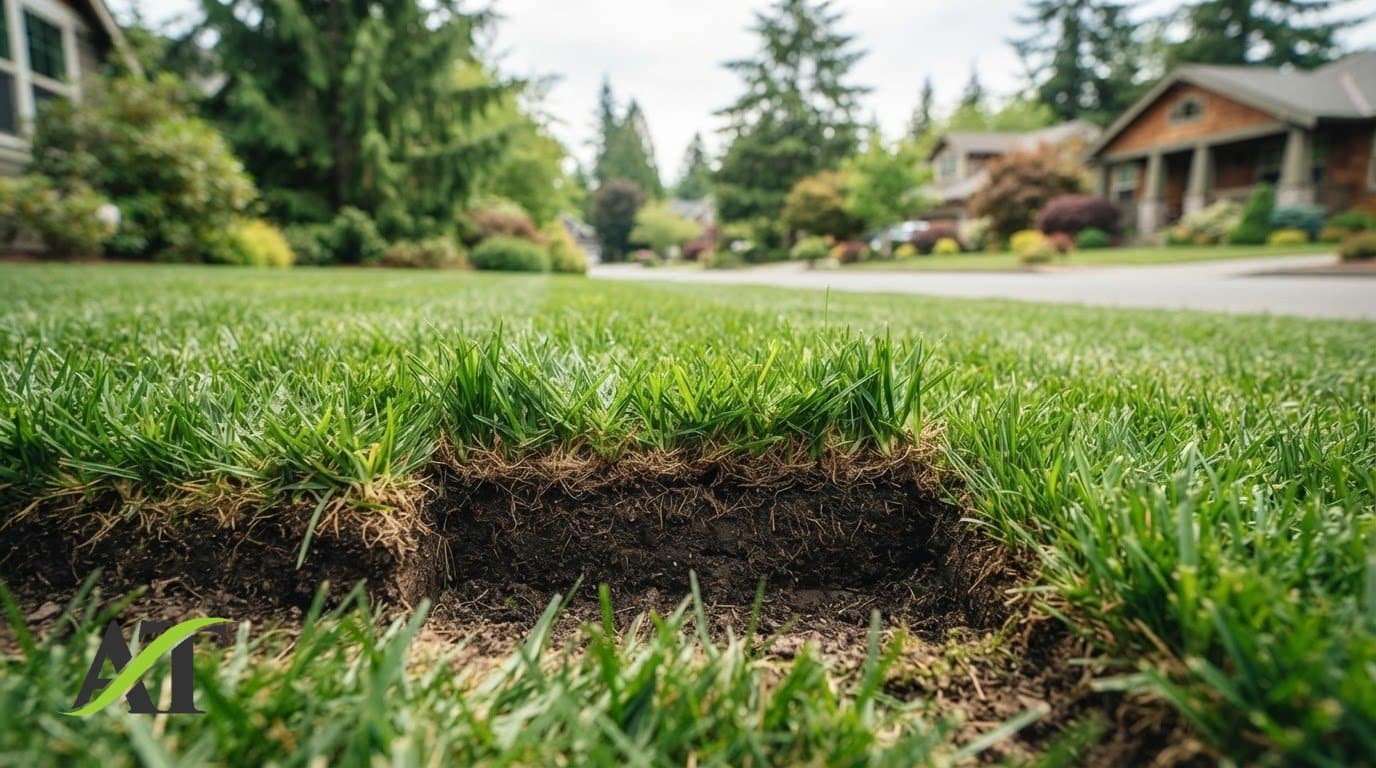
The expensive bag of fertilizer you just spread across your yard might be completely useless. In Western Washington, our heavy rainfall and conifer needles naturally create acidic soil with a pH often between 5.0 and 6.5. When your ground is this acidic, your grass literally cannot absorb the nutrients you provide, leaving plenty of room for moss to take over. Professional lawn soil testing Seattle homeowners can rely on is the only way to stop guessing and start growing.
We understand the frustration of battling persistent moss and drainage issues caused by thick Seattle clay. You want a lush, green carpet, but the local environment often has other plans. This guide will show you exactly how to pull an accurate soil sample and interpret the data to finally transform your thin, patchy turf into a healthy landscape.
We will walk through the specific steps of soil sampling and explain how correcting your pH makes your lawn less hospitable to moss. You’ll also learn whether your results call for a Lawn Tune-Up or the more intensive Full Meal Deal to get your yard back on track.
Key Takeaways
- Understand why lawn soil testing Seattle is the essential first step to diagnosing the acidic conditions and heavy clay that fuel persistent moss growth.
- Learn the proper technique for gathering sub-samples to ensure your laboratory results accurately reflect your lawn’s nutrient and pH levels.
- Discover how to read your results to identify nutrient lock-up and why maintaining soil temperatures between 55°F and 75°F is vital for establishment.
- Use your findings to choose the right restorative service, whether it’s a Lawn Tune-Up or a Full Meal Deal that includes Power Raking (Dethatching).
Why Lawn Soil Testing in Seattle is Non-Negotiable
You can’t fix what you haven’t measured. In neighborhoods like Ballard and Shoreline, homeowners often fight a losing battle against heavy clay and drainage issues. Lawn soil testing Seattle provides the scientific baseline you need to stop the guesswork and start growing. Understanding what a soil test entails helps you identify exactly which nutrients your turf lacks. It prevents you from wasting money on fertilizers your lawn can’t actually process. Seattle soil isn’t just dirt; it’s a complex environment shaped by our unique climate. Heavy clay doesn’t just hold water; it chokes out oxygen, making a diagnostic test your most valuable tool.
A professional test reveals three critical factors about your property:
- Specific deficiencies in Nitrogen, Phosphorus, and Potassium (NPK) that guide your fertilizer choice.
- The severity of compaction in the heavy clay typical of the Pacific Northwest.
- The precise amount of Lime Application needed to balance your soil’s pH levels.
- The “why” behind the need for mechanical services like Core Aeration.
The Seattle Moss Cycle: How pH Levels Rule Your Yard
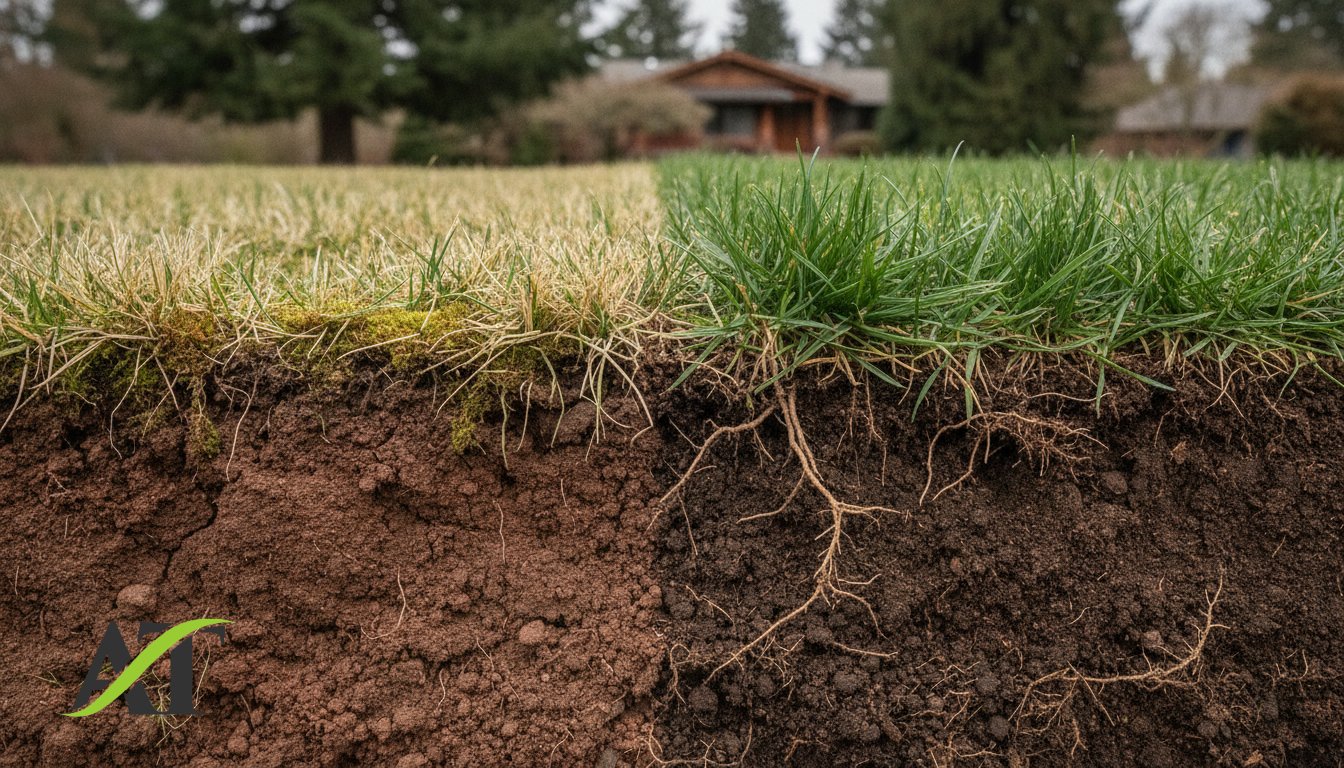
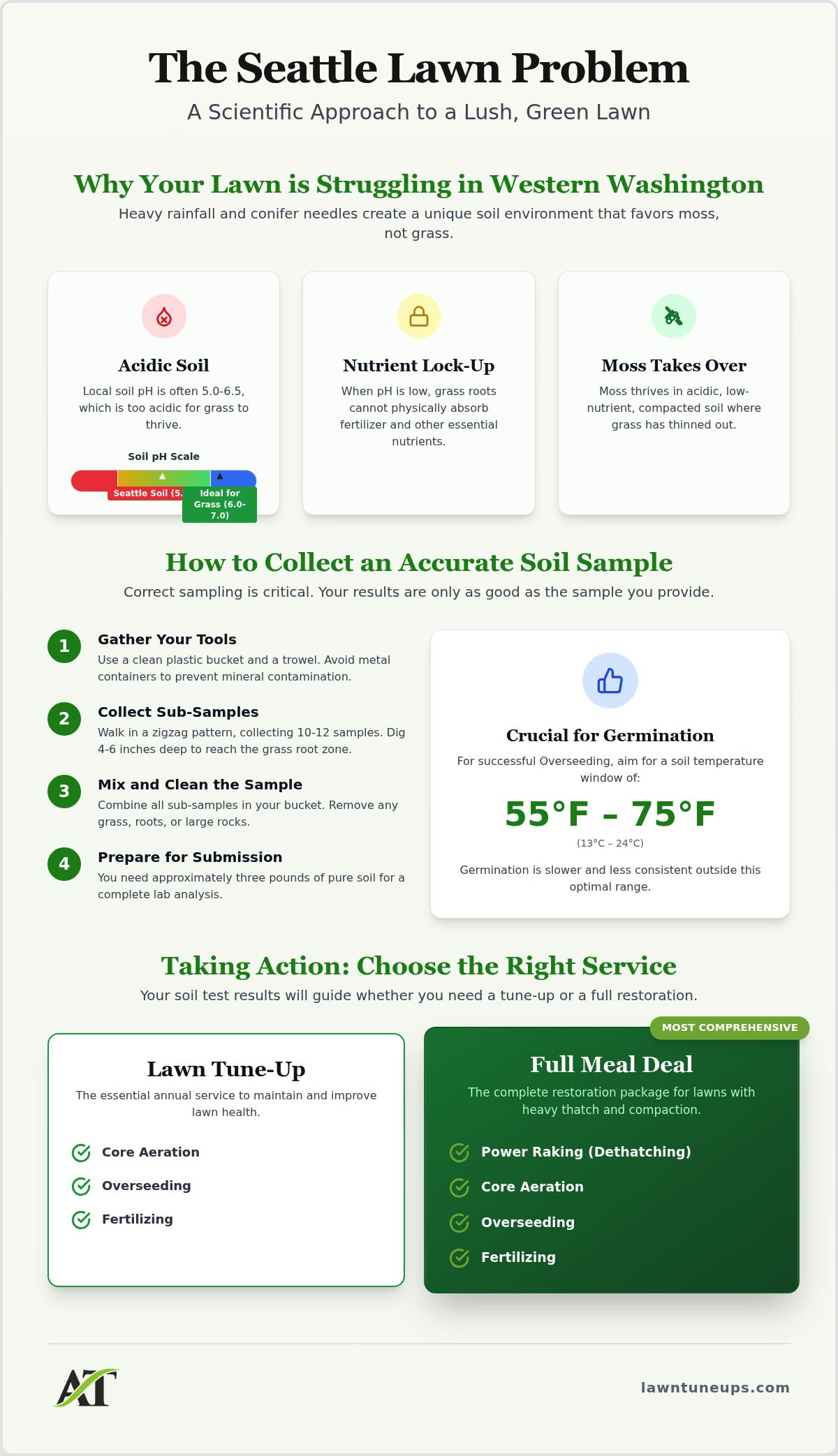
Cool-season grasses thrive in a pH range between 6.0 and 7.0. Unfortunately, Seattle’s native soil often dips much lower. High rainfall leaches out minerals, while acidic needles from evergreen trees push the pH down. This acidity causes “nutrient lock-up,” meaning grass roots are physically unable to absorb food. Moss thrives in these acidic, low-nutrient environments, quickly filling gaps where grass thins out. By utilizing lawn soil testing Seattle data, you can break this cycle. The results show why a Lawn Tune-Up, which includes Core Aeration, Overseeding, and Fertilizing, is the right mechanical fix to restore your lawn’s health.
How to Collect and Submit a Soil Sample in King County
Accurate lawn soil testing Seattle results depend entirely on your sampling technique. If you only pull dirt from one corner of the yard, you’ll get a skewed view of your property’s health. You need a representative average of your entire turf area to make informed decisions about amendments and mechanical services. Getting the physical process right is just as important as the laboratory analysis itself.
- Step 1: Gather a clean trowel and a plastic bucket. Don’t use metal containers, as they can contaminate the sample with trace minerals like zinc or lead, which ruins the data.
- Step 2: Walk your lawn in a zigzag pattern. Collect sub-samples from 10 to 12 different spots. Dig down 4 to 6 inches to reach the root zone where grass actually feeds.
- Step 3: Mix all sub-samples together in the bucket. Remove any large rocks, thick roots, or grass blades. You want pure soil for the lab technicians.
- Step 4: Ensure you have approximately three pounds of soil. This is the standard weight required for a complete analysis at most local facilities.
Where to Send Your Soil Samples in Seattle
Processing your lawn soil testing Seattle samples through the King County’s soil testing program is the most efficient choice. Managed by the King Conservation District (KCD), this program currently provides up to five free basic nutrient tests for residents within their service area. You’ll need to fill out their submittal form and either mail your sample or use their drop-off location in Renton. For those in a hurry, private labs offer faster turnarounds and advanced testing for heavy metals for an additional fee.
Once you have your results, you’ll know if your yard just needs a standard boost or a full restorative treatment. If you’re unsure how to read the report, you can request a quote and have a professional review your soil’s specific needs. Reliable data ensures your next steps actually produce a thicker, healthier lawn.
Interpreting Results: pH, Compaction, and Nutrient Needs
Once you receive your lawn soil testing Seattle report, look at the pH level first. If the reading is below 6.0, your soil is too acidic for healthy turf. Soil pH acts as the gatekeeper for nutrient absorption. If the pH is off, your grass cannot take in the food it needs to survive. A professional Lime Application is usually required to neutralize this acidity and unlock the soil’s potential.
Next, evaluate your Nitrogen levels. Low Nitrogen is a common finding in the Pacific Northwest because our heavy rains wash nutrients away. This deficiency requires Organic Fertilizing to rebuild the soil’s health. You should also assess your soil structure. If the report indicates high clay content, Core Aeration is essential for improving drainage and allowing oxygen to reach the roots. For more localized data on these metrics, the WSU Extension King County provides detailed resources for property owners.
Timing Your Restoration: The Soil Temperature Rule
Successful Overseeding depends on soil temperature, not air temperature. Optimal germination for our local cool-season grasses occurs when the soil is between 55°F–75°F (13°C–24°C). While germination can happen outside this specific range, it’ll be significantly slower and less consistent. This often leads to poor establishment and a thinner lawn.
Keep in mind that we don’t provide absolute guarantees regarding germination. Results are influenced by multiple variables, including moisture levels, weather patterns, and proper seed-to-soil contact. Using your lawn soil testing Seattle data as a guide ensures you’re applying the right treatments at the right time for the best possible outcome.
Taking Action: Choosing Between a Lawn Tune-Up and the Full Meal Deal
Your lawn soil testing Seattle results are the roadmap for your yard’s recovery. If your report shows compacted clay but your thatch layer is thin, the Lawn Tune-Up is your best path forward. This service consists of Core Aeration, Overseeding, and Fertilizing. It’s designed to open up the ground and get nutrients directly to the roots. This mechanical approach addresses the physical structure of your soil while providing the organic boost your grass needs to outpace the local moss.
If you noticed a thick, spongy layer of debris while sampling your soil, you likely have heavy thatch. In this case, you need the Full Meal Deal. This comprehensive package includes Power Raking (Dethatching), Core Aeration, Overseeding, and Fertilizing. Removing that heavy layer of organic matter ensures your new seed actually touches the soil rather than getting stuck in the debris. Without removing thatch, your efforts in Overseeding will largely be wasted. Once your service is complete, following a structured lawn care after aeration plan is essential to protect your investment and maximize seed germination.
Don’t ignore the moss. If your test confirms high acidity, a Lime Application is a necessary add-on to any restorative service. While we focus on mechanical health, we don’t offer absolute guarantees on germination. Success depends on consistent moisture, good seed-to-soil contact, soil conditions, and unpredictable Northwest weather. Using the data from your soil test simply gives you the best possible odds for success.
Professional Restoration vs. DIY
Rental aerators are often light and ineffective. Professional-grade Core Aeration equipment pulls deeper, cleaner plugs that truly relieve compaction in our local clay. These machines have the weight and power to penetrate the surface where a DIY unit might just bounce. We also use high-quality Organic Fertilizing products tailored to the specific nutrient gaps found in lawn soil testing Seattle reports. This level of precision is hard to match with store-bought spreaders and generic seed. You can learn more about our professional process by exploring our Lawn Tune Up Service Seattle options. We take the labor and the guesswork out of the equation.
Transform Your Turf with Data-Driven Care
Fixing a struggling yard starts with understanding the ground beneath it. By prioritizing lawn soil testing Seattle homeowners can finally move past the endless cycle of moss and thin grass. You now have a clear roadmap for collecting samples and interpreting results to choose between a Lawn Tune-Up or a Full Meal Deal. Balancing your soil’s pH and relieving compaction in our heavy local clay are the most effective ways to restore your yard’s health.
We’ve specialized in these exact PNW soil challenges since 2004. Our team provides pragmatic, professional service focused on mechanical restoration for North Seattle properties. While we don’t offer absolute guarantees on germination due to moisture and weather variables, we provide the expert Core Aeration and Power Raking (Dethatching) needed to give your lawn its best possible start.
It’s time to stop guessing and start growing. Your thick, healthy lawn is just a few steps away.
Frequently Asked Questions
How much does soil testing cost in Seattle?
King Conservation District (KCD) provides up to five basic nutrient tests for free to residents in their service area. This is the most common way to handle lawn soil testing Seattle homeowners use. After you use those five free tests, additional ones cost between $30 and $40 per sample. If you live in cities outside the KCD boundaries, you can still have samples processed for a fee of $40.
When is the best time of year to test my lawn soil?
You should test your soil in early spring or late summer before you plan any major restoration work. Testing during these windows allows you to receive results in time to schedule a Lawn Tune-Up during optimal weather. Remember that cool-season grass seeds require soil temperatures between 55°F and 75°F to germinate properly. Testing early ensures you have your Lime Application and Organic Fertilizing plan ready when the soil warms up.
How long does it take to get soil test results back from King County?
Turnaround times for King Conservation District results typically vary depending on the season and lab volume. Residents often receive their digital reports within two to four weeks of submission. It’s best to submit your samples well before you intend to book a Full Meal Deal to ensure the data is available for your service planning. Planning ahead prevents delays during the peak spring and fall restoration seasons.
Can I test my soil if I just applied fertilizer?
No, you should wait at least six to eight weeks after a fertilizer application before conducting lawn soil testing Seattle residents must follow. Recent applications can artificially inflate nutrient levels, leading to an inaccurate report. Washington law actually prohibits phosphorus fertilizer unless a test from the last 36 months confirms a deficiency. Waiting ensures your lab results are legal and accurate before you book a Lawn Tune-Up.
Will a soil test tell me why I have so much moss?
Yes, a soil test identifies the low pH levels and nutrient deficiencies that allow moss to thrive in the Pacific Northwest. Most Seattle yards are naturally acidic, which prevents grass from absorbing nutrients and creates a vacuum for moss. By revealing your soil’s exact pH, the test proves why a professional Lime Application is necessary. This data helps us determine whether your yard requires a Lawn Tune-Up or the more intensive Full Meal Deal.
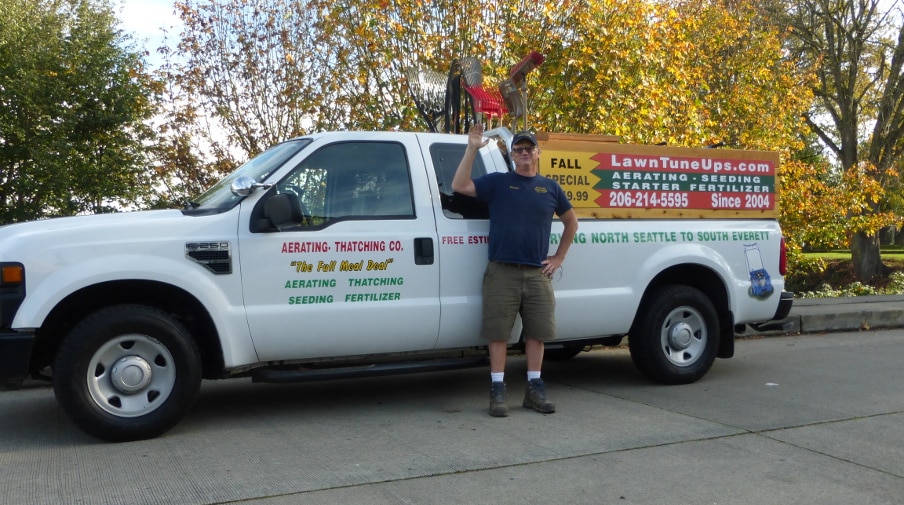
Article by
Stewart Armour
Stewart Armour is an independent lawn restoration expert, educator, and owner of Aerating Thatching Co., serving the greater Seattle area since 2004. With more than two decades of professional experience restoring Western Washington lawns, Stewart specializes in diagnosing lawn problems, improving soil health, and developing long-term lawn renovation strategies. His education includes turf management studies, advanced golf course turf training, and continuing education through Wilbur-Ellis University, State Turf Facilities, Soil First Academy, and Golf Course Applied Turf Physiology. Every article published on LawnTuneUps.com is grounded in practical field experience, current turf science, and a commitment to helping homeowners understand the why behind every recommendation—not just what to do.
Stewart has personally evaluated thousands of residential lawns throughout the Seattle area and remains committed to helping homeowners understand the science behind growing healthier, more resilient lawns.