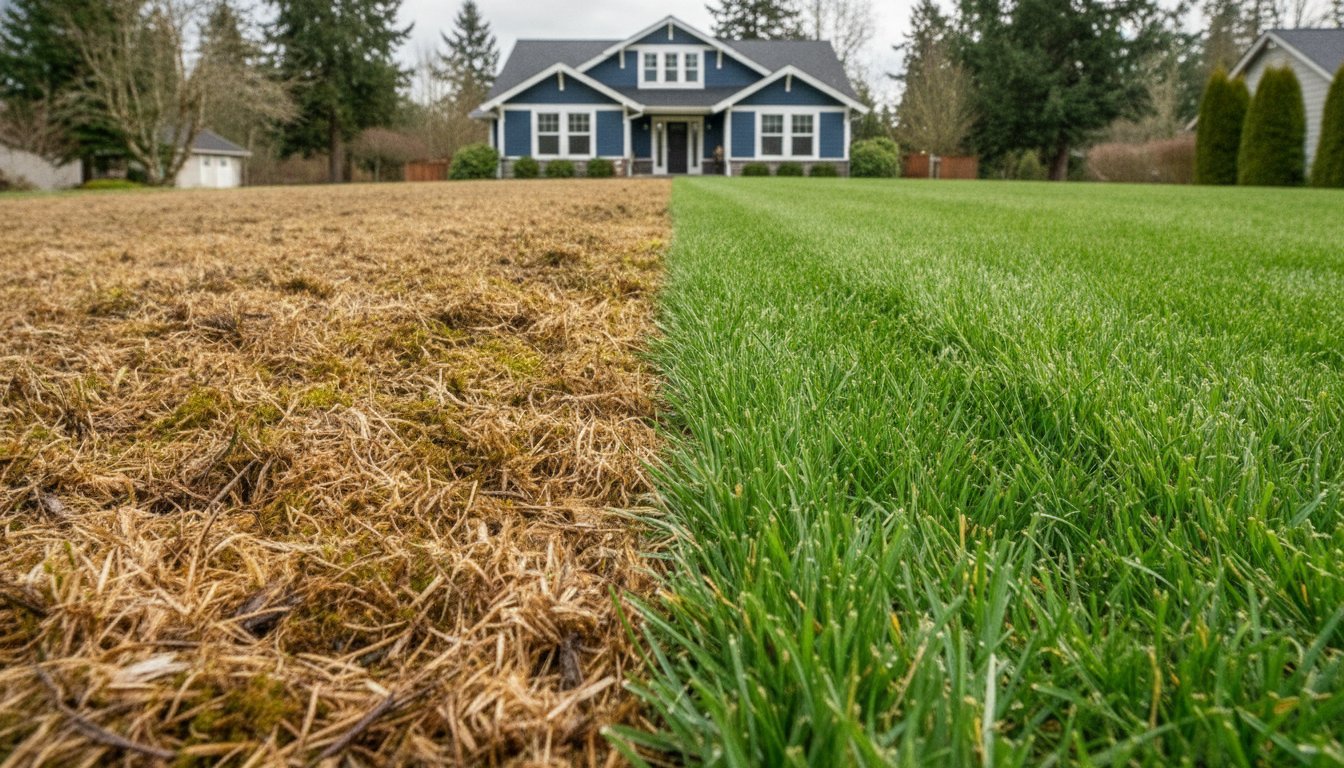
If your yard feels like walking on a soaked sponge, adding more fertilizer won’t solve the problem. In our damp Lynnwood climate, excessive moss and thick thatch often choke out healthy grass before it can even start to grow. You might be searching for a Lawn Tune Up Lynnwood to fix the patches, but sometimes your soil needs a more aggressive mechanical reset. It’s a common frustration for local homeowners who want a thick, green lawn but find themselves fighting a losing battle against drainage issues and suffocating debris.
This guide explains when your turf requires professional Power Raking (Dethatching) to clear the way for new growth. You’ll learn the specific differences between our standard Lawn Tune-Up, which consists of Core Aeration, Overseeding, and Fertilizing, and the restorative Full Meal Deal, which includes Power Raking (Dethatching), Core Aeration, Overseeding, and Fertilizing. We’ll also explain why successful germination depends on a soil temperature between 55°F–75°F (13°C–24°C). By the end of this article, you’ll know how to ensure your lawn finally gets the nutrients it needs to thrive. We’re here to help you move past the confusion and get your property back on track.
Key Takeaways
- Understand how Power Raking (Dethatching) acts as a mechanical reset by removing the debris layer that causes spongy turf in Lynnwood’s damp climate.
- Identify whether you need a standard Lawn Tune Up Lynnwood, which consists of Core Aeration, Overseeding, and Fertilizing, or the restorative Full Meal Deal.
- Recognize that the Full Meal Deal provides total turf restoration by combining Power Raking (Dethatching) with Core Aeration, Overseeding, and Fertilizing.
- Learn why successful Overseeding requires soil temperatures between 55°F–75°F (13°C–24°C) for the most consistent and reliable grass establishment.
- Ensure a smooth service by mowing your grass to two inches and marking all hidden obstacles like irrigation heads before the crew arrives.
Understanding Power Raking (Dethatching) for Lynnwood Lawns
Power Raking (Dethatching) isn’t a typical weekend chore or a standard maintenance task like mowing. It’s a mechanical restoration process designed to fix the foundation of your yard. We use specialized equipment with vertical blades to slice through the turf and pull up the thick layer of organic debris known as thatch. This layer sits right between the green grass blades and the soil surface. When this mat becomes too thick, it acts like a lid, preventing your grass from breathing or drinking.
Lynnwood properties often struggle with thatch more than other areas. Our damp climate and clay-heavy soils prevent organic matter from breaking down naturally. Instead of decomposing, the debris piles up and suffocates the root system. We aren’t a mowing company; we are restoration specialists. While many local landscaping teams rely on Mowing Route Density for their professional equipment needs, our focus is on deep-tissue soil recovery. If you are considering a Lawn Tune Up Lynnwood, it’s vital to know if your soil is even reachable. The goal of this service is to open the soil surface so water, air, and nutrients can actually reach the roots where they belong.
The Difference Between Thatch and Moss
In Western Washington, moss is a constant battle. It loves our shaded, wet environments and often weaves itself directly into the thatch layer. While some liquid treatments might kill the moss, they leave the physical carcass behind to continue choking the grass. Power Raking (Dethatching) physically rips out both the moss and the dead grass. This aggressive cleaning clears the deck so that our restorative treatments can make direct contact with the dirt. Homeowners in nearby communities face the same challenge, and the detailed walkthrough on power raking Edmonds lawns for thicker, greener turf shows how this same mechanical process resets moss-damaged yards across the region.
Signs Your Lynnwood Turf Needs Mechanical Dethatching
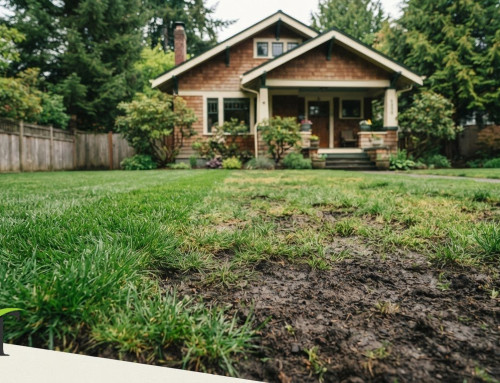
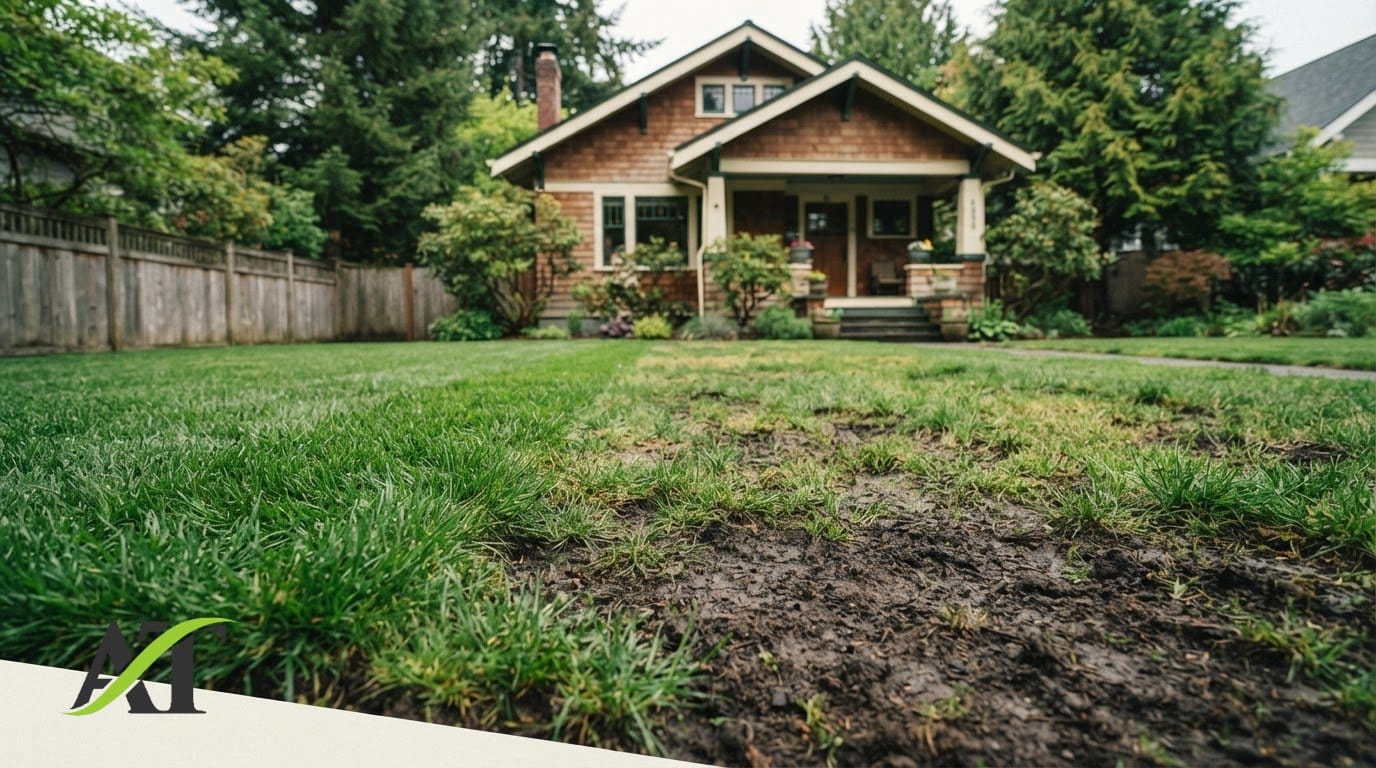
You can often tell if your lawn needs a mechanical reset just by walking on it. Try the ‘Sponge Test.’ If the ground feels bouncy or unusually soft underfoot, your thatch is likely more than half an inch thick. You should also watch how your yard handles rain. When water pools on the surface or runs off into the street instead of soaking in, a thick layer of debris is likely blocking the path. These signs indicate that a standard Lawn Tune Up Lynnwood might not be enough, and a deeper restoration is required. Neighboring communities face the same challenges, and understanding thatch buildup causes and solutions for Lake Forest Park lawns can help you recognize how widespread this Pacific Northwest problem truly is.
Lawn Tune-Up vs. The Full Meal Deal: Which Do You Need?
Choosing the right restoration path depends entirely on the current state of your soil. If you’ve been looking into a Lawn Tune Up Lynnwood, you’ve likely noticed we offer two distinct levels of service. A standard Lawn Tune-Up consists of three essential steps: Core Aeration, Overseeding, and Fertilizing. This is a powerful maintenance tool for established yards. However, if your lawn hasn’t been renovated in several years, you likely need a mechanical “reset.” That is where the Full Meal Deal comes in. This package includes Power Raking (Dethatching), Core Aeration, Overseeding, and Fertilizing. For more details on how we handle these regional issues, you can read our Lawn Tune-Up Service Seattle guide.
When to Choose the Signature Lawn Tune-Up
The Lawn Tune-Up is best for lawns with minimal thatch that simply need thickening and decompression. If your thatch layer is under half an inch, you don’t need the aggressive blades of a power rake. Instead, we focus on Core Aeration to pull out soil plugs and break up compaction. This allows the roots to dive deeper into the earth. When followed by Overseeding and Fertilizing, it’s the perfect annual boost to keep a healthy lawn looking its best. Homeowners throughout Snohomish County dealing with the same clay compaction issues can find detailed guidance in the Lawn Tune Up Snohomish buyer’s guide to Core Aeration and healthy turf.
Why the ‘Full Meal Deal’ is the Gold Standard for Lynnwood
Lynnwood’s damp environment often creates a thick barrier of moss and dead organic matter. If you spread seed on top of this layer, it won’t grow. The Full Meal Deal is our most requested restoration service because it addresses this problem head-on. By starting with Power Raking (Dethatching), we physically remove the barrier to ensure maximum seed-to-soil contact. Once the debris is gone, we proceed with Core Aeration, Overseeding, and Fertilizing. This four-step process is the only way to truly restore a yard that has been overtaken by moss or heavy thatch.
If you aren’t sure which service fits your grass type or soil condition, you can request a quote for a professional assessment of your property.
The Science of Overseeding and Soil Temperature
Successful growth isn’t about the weather forecast on your phone. It’s about the temperature of the dirt beneath your feet. When we perform a Lawn Tune Up Lynnwood, we track soil conditions closely. For cool-season grass seed to thrive, the soil temperature needs to stay within the 55°F–75°F (13°C–24°C) range. While seeds can technically sprout outside this window, the process is significantly slower and the results are less consistent. In Lynnwood, this makes the spring and fall our primary windows for restoration work. It’s also worth noting that even perfectly timed seeding can underperform if your soil pH is too acidic — a problem so common in Western Washington that many homeowners pair their restoration with professional lime application Edmonds specialists recommend to ensure nutrients are actually available to the new grass.
Achieving Seed-to-Soil Contact
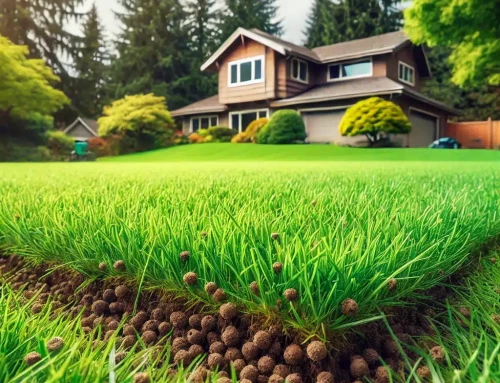
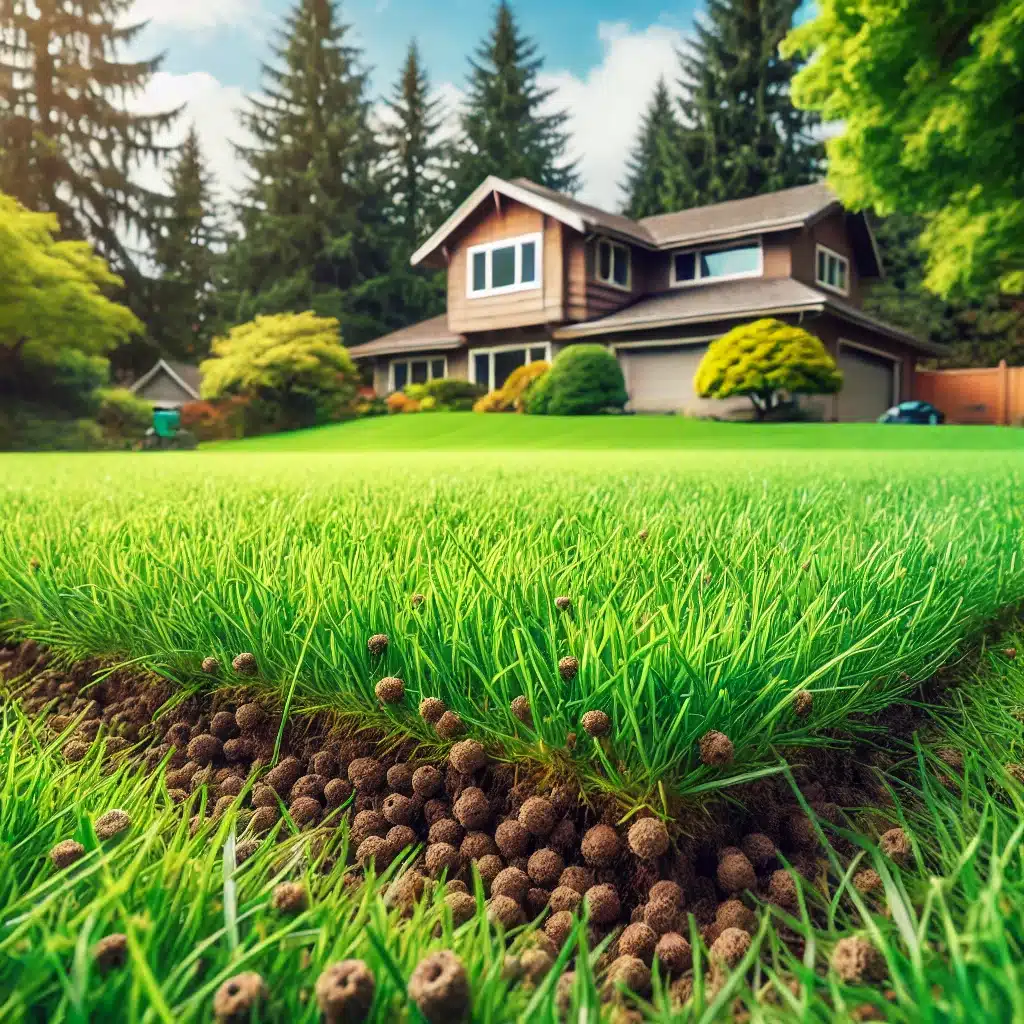
New grass seed needs to touch the soil to survive. If it gets caught in a layer of dead organic matter, it will dry out and die. Power Raking (Dethatching) acts like removing a old roof. It clears away the debris so the seed can fall directly onto the earth. This is why our Full Meal Deal, which includes Power Raking (Dethatching), Core Aeration, Overseeding, and Fertilizing, is so effective for neglected yards. We then follow up with Core Aeration to create thousands of small pockets in the soil. These holes act as protected nurseries where seeds can establish deep roots without being washed away.
Premium Seed Blends for the Pacific Northwest
We don’t use generic, big-box store seed. Our team uses a premium 60/40 Sun & Shade mix specifically selected for the unique light and moisture levels found in local landscapes. Even with the best seed, we don’t offer absolute growth guarantees. Nature is the ultimate boss. Factors like consistent moisture, soil quality, and unexpected weather shifts all play a role in how well your new lawn takes hold. Our job is to provide the best possible starting conditions through the Full Meal Deal or a standard Lawn Tune Up Lynnwood. If you want to see how these same principles apply across the region, the guide on identifying and solving thatch buildup for a Lawn Tune Up Lake Forest Park residents rely on offers a useful regional comparison.

Preparing for Your Lynnwood Power Raking Service
Preparation is the difference between a successful restoration and a wasted effort. We need your help to ensure our equipment can do its job safely and effectively. Before our crew arrives for your Lawn Tune Up Lynnwood, follow these four logistical steps to set your soil up for success. If you want a step-by-step look at how this preparation process works in practice, the complete guide to power raking Edmonds properties for thicker, greener turf walks through each stage of the restoration in detail.
- Mow short: Cut your grass down to approximately two inches. This allows our Power Raking (Dethatching) blades to reach the organic debris layer without getting bogged down in tall grass.
- Mark obstacles: Use flags or paint to identify irrigation heads, shallow cables, or hidden rocks. This prevents damage during the Core Aeration portion of the service.
- Check moisture: Soil should be damp but not muddy. If Lynnwood has been dry, water your lawn for about 30 minutes per zone roughly 24 to 48 hours before we arrive.
- Plan for watering: Once the seeds are in the ground, they cannot dry out. You will need to keep the surface moist until the new grass establishes.
What to Expect After the Full Meal Deal
Don’t panic when you see the “ugly phase.” Immediately after the Full Meal Deal, your lawn will look thin and brown. This is normal. We have just removed the dead debris and moss that were masquerading as green space. Since the Full Meal Deal combines Power Raking (Dethatching) with the standard Lawn Tune-Up components of Core Aeration, Overseeding, and Fertilizing, the recovery is already in motion. If soil temperatures stay between 55°F–75°F (13°C–24°C) and you maintain consistent moisture, you will typically see a green-up within a few weeks. Growth will be slower and less consistent if temperatures fall outside this range.
Requesting Your Lynnwood Lawn Assessment
Every yard has unique drainage and soil needs. We recommend visiting our Services page to see the full breakdown of our mechanical restoration options. If you’re ready to fix your spongy turf, you can Request a Quote for a professional evaluation of your property. We’ll help you decide if a standard Lawn Tune Up Lynnwood or a total reset is the right path for your home.
Restore Your Lynnwood Lawn Today
You now have the roadmap to fix a spongy, moss-filled yard. Power Raking (Dethatching) is the essential first step for any property struggling with a thick layer of debris. By choosing the Full Meal Deal, you receive a complete restoration that combines Power Raking (Dethatching), Core Aeration, Overseeding, and Fertilizing. If your yard simply needs a seasonal boost, a standard Lawn Tune Up Lynnwood provides the Core Aeration, Overseeding, and Fertilizing necessary to thicken your turf.
Our team has specialized in Lynnwood lawn restoration since 2004. We use no-nonsense, professional equipment to achieve maximum thatch removal. Every restoration is expertly timed for PNW soil temperatures to give your new seed the best chance to thrive. We know the local soil conditions and exactly what it takes to get results in our climate.
Your property doesn’t have to stay unhealthy. With the right mechanical restoration, you’ll finally see the thick, green results you want for your home.
For homeowners interested in complementing their healthy turf with sustainable landscape design, read more about professional residential outdoor space planning.
Frequently Asked Questions
What is the difference between power raking and dethatching?
Power raking and dethatching refer to the same restorative mechanical process. We use the terminology Power Raking (Dethatching) to describe the use of professional vertical blades that slice through the debris layer. This process clears out the dead organic matter and moss that chokes your grass. It is a more aggressive solution than standard raking and is designed to reset the foundation of your lawn.
Does a Lawn Tune-Up include power raking?
A standard Lawn Tune Up Lynnwood does not include power raking. It is a three step process featuring Core Aeration, Overseeding, and Fertilizing. For lawns with heavy thatch or moss buildup, we recommend the Full Meal Deal. That package includes Power Raking (Dethatching), Core Aeration, Overseeding, and Fertilizing to provide a total restoration for neglected turf.
When is the best time for power raking in Lynnwood, WA?
The best time for this service in Lynnwood is during the spring or fall when soil temperatures are between 55°F–75°F (13°C–24°C). These windows provide the natural moisture and warmth needed for recovery. Performing the service during these seasons ensures that the lawn has enough time to establish itself before the summer heat or winter dormancy sets in.
How long does it take for grass seed to germinate after a Full Meal Deal?
Germination typically begins within 10 to 21 days after the Full Meal Deal is completed. This timeline is heavily influenced by soil temperatures staying within the 55°F–75°F (13°C–24°C) range. We don’t offer absolute guarantees on growth because success also depends on moisture levels, weather, and soil conditions. If the ground is too cold, the establishment will be slower and less consistent.
Do I need to be home when Aerating Thatching Co. performs the service?
No, you don’t need to be home while we work on your property. We just need a clear path to the yard and all gates left unlocked. Please make sure pets are inside and that you have marked all irrigation heads or hidden obstacles. This preparation allows our crew to perform the mechanical restoration efficiently while protecting your underground systems from damage.
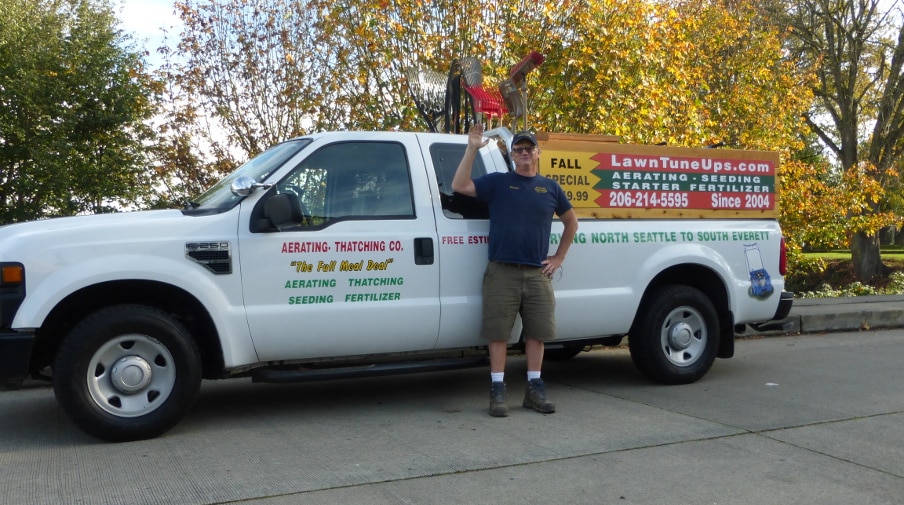
Article by
Stewart Armour
Stewart Armour is an independent lawn restoration expert, educator, and owner of Aerating Thatching Co., serving the greater Seattle area since 2004. With more than two decades of professional experience restoring Western Washington lawns, Stewart specializes in diagnosing lawn problems, improving soil health, and developing long-term lawn renovation strategies. His education includes turf management studies, advanced golf course turf training, and continuing education through Wilbur-Ellis University, State Turf Facilities, Soil First Academy, and Golf Course Applied Turf Physiology. Every article published on LawnTuneUps.com is grounded in practical field experience, current turf science, and a commitment to helping homeowners understand the why behind every recommendation—not just what to do.
Stewart has personally evaluated thousands of residential lawns throughout the Seattle area and remains committed to helping homeowners understand the science behind growing healthier, more resilient lawns.