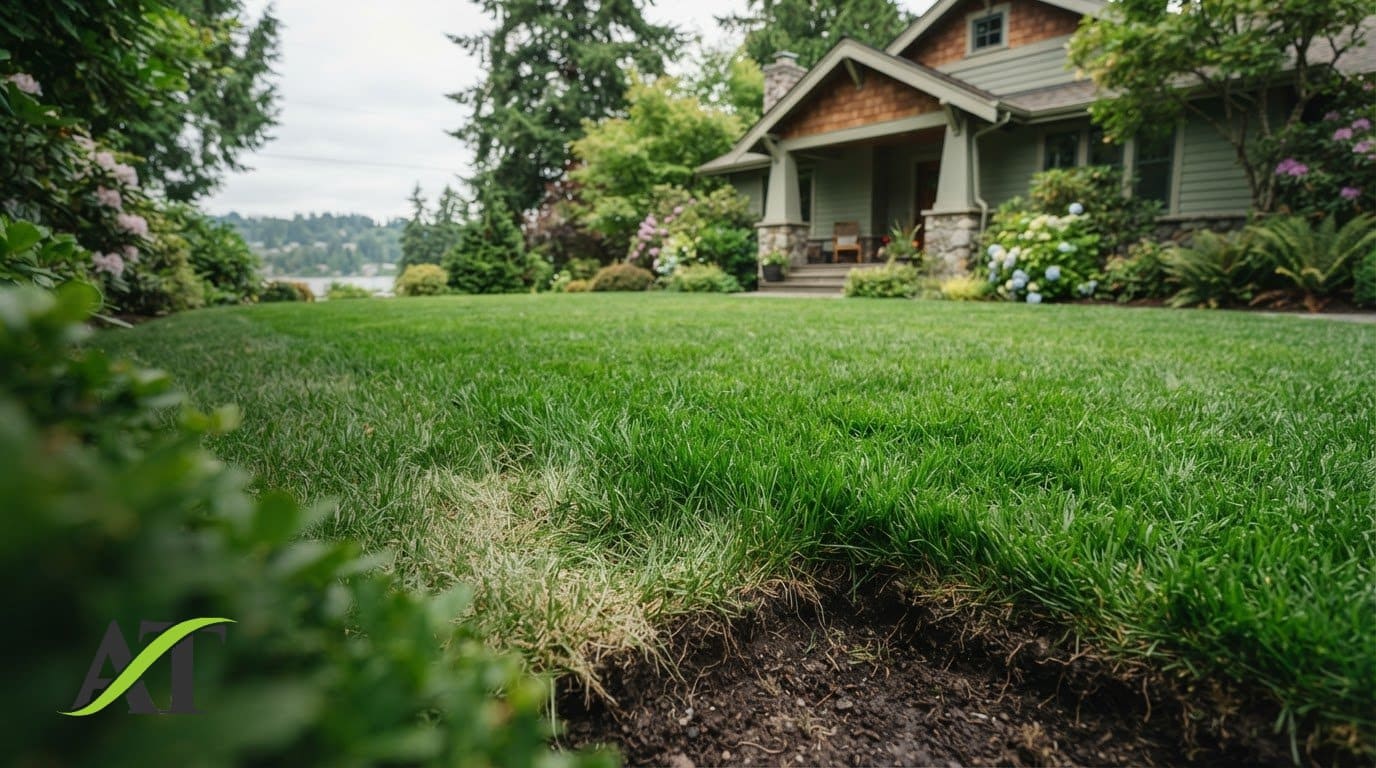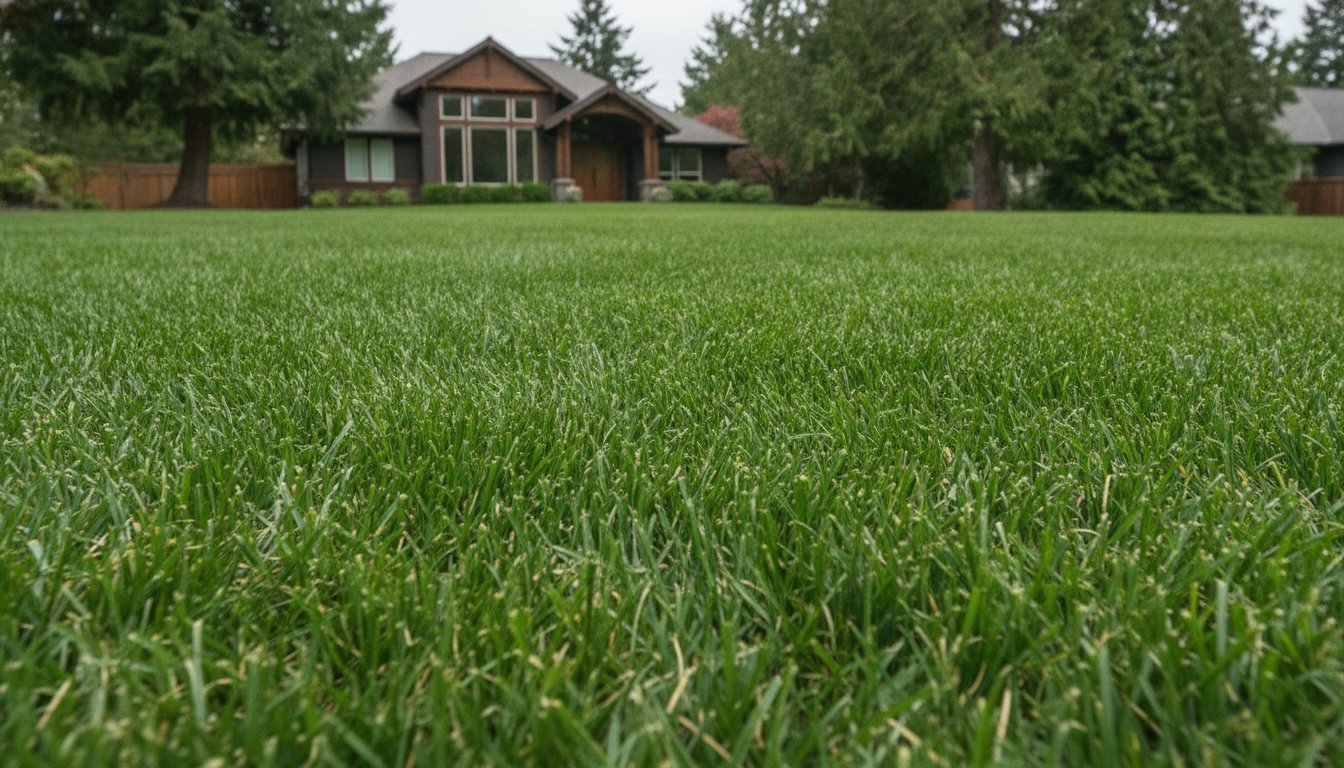
If you live in Snohomish County, you know that Everett winters don’t just bring rain. They bring a thick carpet of moss that chokes out your grass. You’ve likely spent weekends mowing and fertilizing only to see thin patches and poor drainage return every spring. The heavy clay soil common in our area makes standard maintenance feel like a losing battle. This is where a professional Lawn Tune Up Everett homeowners can rely on makes the difference between a temporary fix and a total restoration.
You probably agree that looking at a patchy, waterlogged yard is frustrating. I’m going to show you the exact steps to transform that mossy yard into a thick, resilient lawn using mechanical restoration techniques that actually work for our local climate. We will cover the specific timing for seeding based on soil temperatures between 55°F and 75°F (13°C to 24°C). You’ll learn how the Lawn Tune-Up, consisting of Core Aeration, Overseeding, and Fertilizing, builds a foundation for success. We’ll also discuss how factors like moisture and seed-to-soil contact influence results, and when your lawn needs the Full Meal Deal, which includes Power Raking (Dethatching), Core Aeration, Overseeding, and Fertilizing for deeper restoration.
Key Takeaways
- Learn why Everett’s heavy clay soil causes poor drainage and how mechanical restoration rebuilds turf density from the roots up.
- Discover the science of timing your seeding by monitoring soil temperatures, aiming for the optimal range of 55°F to 75°F for the best results.
- Get a clear step-by-step guide on preparing your yard, including mowing short and using Core Aeration to fix soil compaction.
- Understand when to choose a standard Lawn Tune Up Everett homeowners use for annual maintenance versus the more intensive Full Meal Deal.
What is Lawn Restoration and Why Does Everett Need It?
Lawn restoration is a mechanical process designed to rebuild turf density from the ground up. It goes beyond the surface level to address the health of the soil and the strength of the root system. In Everett, many homeowners struggle with lawns that look tired and thin despite regular mowing. This happens because the foundation is failing. Restoration fixes those underlying issues so your grass can actually thrive.
The biggest challenge for local yards is the “Everett Clay” problem. Snohomish County is known for heavy, dense clay soil that compacts easily under its own weight and foot traffic. When soil compacts, it squeezes out the tiny air pockets grass roots need to breathe. This suffocates the lawn. You’ll notice signs like moss taking over, water pooling on the surface after a light rain, or grass blades that stay thin. If your yard feels like a sponge in the winter and a brick in the summer, it’s time for a reset.
When water pools on the surface due to clay compaction, it doesn’t just hurt your grass—it can also threaten your home’s foundation. For comprehensive advice on protecting your property from moisture-related issues, Triangle Legacy Flood Restoration & Carpet Cleaning offers a detailed guide on how to prevent mold and water damage before they start.
Beyond foundation issues, shifting soil often causes outdoor masonry to sink or tilt. For those interested in how professional leveling can fix these issues, Airlift Concrete Experts showcases how polyurethane foam can effectively raise and stabilize sinking brick steps.
The Role of Core Aeration in Local Soils
Core Aeration is the most effective way to combat soil compaction in our region. This process uses a specialized machine to pull small plugs of soil and thatch out of the ground. By removing these cores, we create immediate pathways for air, water, and organic nutrients to reach the root zone. This mechanical treatment is essential because it physically breaks up the clay. It provides the same benefits as Core Aeration in Kenmore, where similar soil profiles require deep penetration to maintain a healthy, resilient lawn year after year.
Restoration vs. Maintenance: Know the Difference
Don’t confuse basic maintenance with restoration. Mowing, edging, and blowing keep your property looking tidy. They are the “haircut” for your yard. However, maintenance doesn’t improve the health of the soil or the density of the turf. If your lawn is already thinning or mossy, a standard mow won’t fix it.
This distinction between cosmetic care and structural health applies to all parts of your home. For instance, while cleaning gutters is routine maintenance, Thoughtful Roofer Inc. explains that only a professional inspection can determine if your roof requires deeper restorative work to prevent leaks and damage.
Restorative treatments like a Lawn Tune Up Everett homeowners use annually address the root causes of decline. While maintenance is about aesthetics, restoration is about biology. By combining Core Aeration, Overseeding, and Fertilizing, you aren’t just cleaning up the yard; you are installing a new generation of grass and giving it the room it needs to grow. For lawns with excessive debris buildup, we may even recommend the Full Meal Deal, which adds Power Raking (Dethatching) to the process for a complete overhaul.
The Science of Seeding: Soil Temperature and Timing
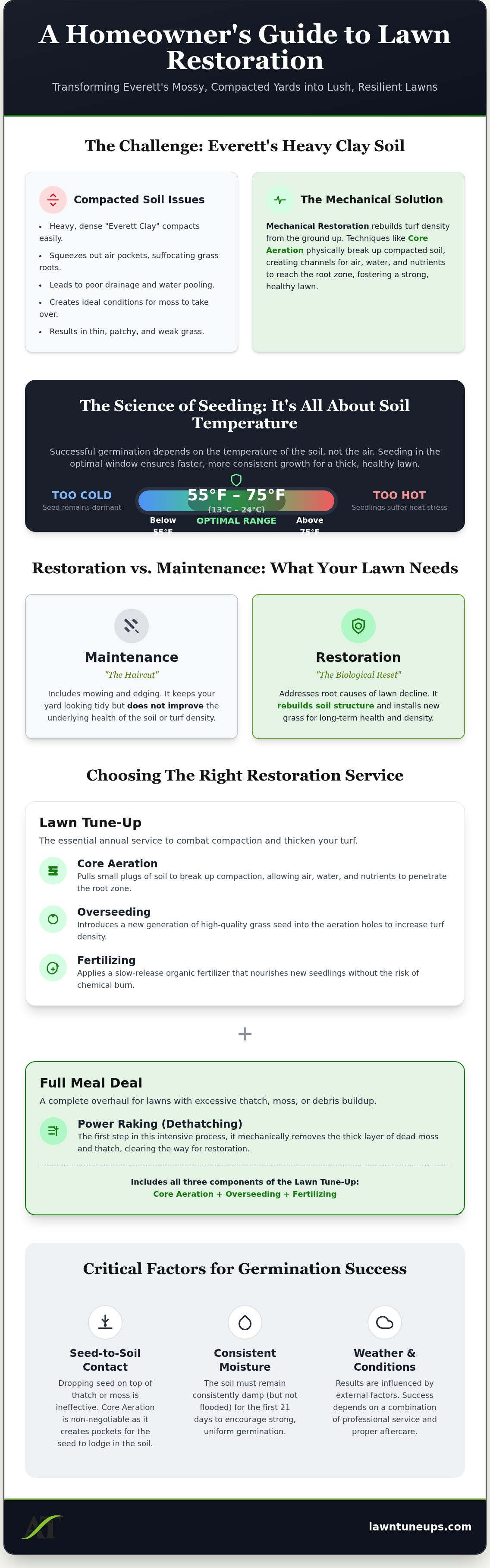
Many Everett homeowners wait for the first warm spring day to start their yard work. However, the air temperature is a misleading metric for seeding success. Your grass seed doesn’t care if the sun is out; it cares about the temperature of the dirt. For cool-season grasses common in Snohomish County, the optimal soil temperature range for germination is 55°F to 75°F (13°C to 24°C). If the ground is colder than this, the seed will sit dormant. If it’s hotter, the young plants will struggle to survive the heat stress.
Seeding when the ground is outside this range leads to slower, inconsistent germination. This leaves your expensive seed vulnerable to birds, rot, or being washed away by our heavy PNW rains. This is why the spring and fall windows in Everett are the sweet spots for a Lawn Tune Up Everett residents use to thicken their turf. By timing your restoration with these natural cycles, you give the new growth the best environment to establish deep roots. While germination can happen outside these temperatures, it’s rarely as reliable or thick as a well-timed application.
Factors Influencing Germination Success
Successful growth relies on more than just a calendar date. Seed-to-soil contact is the most critical factor for any restoration project. Dropping seed on top of a thick layer of moss or thatch is a waste of resources. This is why Core Aeration is a non-negotiable part of the process. It creates thousands of small openings that allow the seed to tuck into the earth. Once the seed is in place, moisture management becomes your full-time job for the first 21 days. The soil must stay consistently damp but not flooded. Results are influenced by many factors, including moisture, seed-to-soil contact, and weather, so keeping a close eye on your watering schedule is vital for progress.
Organic Fertilizing for Young Grass
New seedlings are delicate and require the right nutrition to mature. We use Organic Fertilizing because it provides a steady, slow-release nutrient stream that won’t burn tender new roots like harsh synthetic chemicals can. These natural products are also better for the local environment and are safe for pets and children in our residential neighborhoods. If you aren’t sure if your soil is ready for a reset, you can get a professional assessment to see if a Lawn Tune Up Everett is right for your yard’s current condition.
How to Restore Your Lawn: A Step-by-Step Guide
Restoring a yard in Snohomish County requires a methodical approach. You can’t just throw seed on a mossy patch and expect a golf course finish. It starts with preparation. You must mow your grass as short as possible before the restoration begins. This reduces competition for the new seedlings and allows the equipment to reach the soil. Clear away all leaves, sticks, and loose debris so nothing stands between the machines and the ground.
The core of the process is the mechanical treatment. For many yards, a Lawn Tune Up Everett residents rely on is the perfect solution. This service includes Core Aeration, Overseeding, and Organic Fertilizing. We use professional-grade aerators to pull deep soil plugs. This is followed by a heavy application of Overseeding blends tailored for our climate. Finally, we apply Organic Fertilizing to provide the nutrients needed for establishment. If your yard has significant debris buildup, we move to the Full Meal Deal, which adds Power Raking (Dethatching) to the start of the sequence.
When to Choose Power Raking (Dethatching)
Power Raking (Dethatching) is a heavy-duty mechanical process. It removes the thick layer of dead organic matter that builds up between the grass blades and the soil. When this layer gets too thick, it blocks water, air, and fertilizer from reaching the roots. If your lawn feels spongy when you walk on it, you likely have a thatch problem. Removing this debris is essential for ensuring the new seed makes direct contact with the soil.
The Importance of Lime Application
Everett’s soil is notoriously acidic. This low pH environment makes it difficult for grass to absorb nutrients, even if you fertilize regularly. Moss, however, thrives in acidic conditions. Lime Application is a soil amendment that raises the pH level, making the ground more alkaline. This simple addition helps your grass grow stronger and naturally outcompete the moss for space and food. If you’re looking for a long-term fix, don’t skip the lime.
Choosing the Right Restoration Service in Everett
Selecting the right level of service depends on the current state of your yard. Most properties in Snohomish County benefit from a standard Lawn Tune Up Everett homeowners use as an annual foundation. This specific service consists of Core Aeration, Overseeding, and Fertilizing. It’s designed to maintain turf density and prevent moss from gaining a foothold. If your lawn is already relatively healthy but needs a boost to stay thick and green, this is your best option.
Some yards require more aggressive intervention to see results. If your turf feels spongy or is completely overtaken by debris, you likely need the Full Meal Deal. This comprehensive restoration package includes four specific components: Power Raking (Dethatching), Core Aeration, Overseeding, and Fertilizing. By adding the Power Raking (Dethatching) step, we strip away the barrier of dead organic matter. This ensures that the subsequent steps actually reach the soil foundation.
Why Local Expertise Matters for Snohomish County Lawns
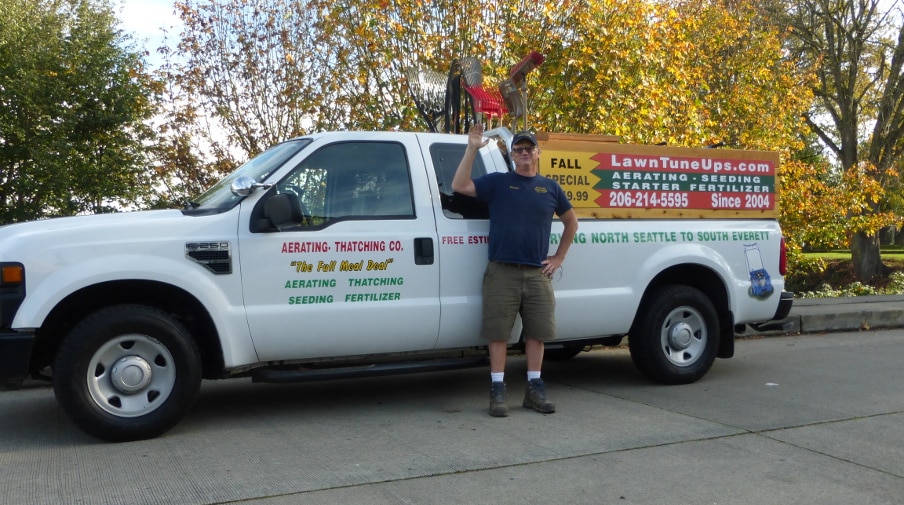
Hiring a local specialist makes a significant difference in the outcome of your project. National chains often use generic schedules that don’t account for Everett’s specific clay soil or the way our rain patterns affect drainage. Aerating Thatching Co. is an owner-operated business that has been working in this community since 2004. We understand the physical labor required to move the needle on local soil health. You can find a full breakdown of our restoration options on our services page.
Requesting a Professional Evaluation
Every property has its own set of challenges, from shade issues to drainage pits. If your grass is struggling under a heavy canopy, working with a team like CDA TREE AND UTILITY can help optimize sunlight through professional tree care. A cookie-cutter approach won’t give you the thick lawn you’re looking for. Getting a tailored plan ensures you aren’t paying for services you don’t need. It also guarantees that the treatments you do receive are applied at the right time for our climate. We focus on mechanical results that provide a long-term fix for your yard. When you are ready for a transformation, you can request a quote for a professional Lawn Tune-Up or a full restoration plan.
Build a Resilient Lawn for the Seasons Ahead
You now have the professional framework to move beyond simple mowing and address the root causes of a thin, mossy yard. Success in our region depends on mechanical restoration and precise timing. By targeting soil temperatures between 55°F and 75°F (13°C–24°C), you ensure your new grass has the environment it needs to thrive. Remember that results are influenced by many factors, including moisture and seed-to-soil contact, so consistent care after the service is vital.
Choosing the right service is the final piece of the puzzle. A professional Lawn Tune Up Everett homeowners trust provides the essential Core Aeration, Overseeding, and Fertilizing needed for annual health. For yards struggling with heavy debris, the Full Meal Deal offers the deep restoration required to clear thatch and reset the soil foundation. Aerating Thatching Co. has been serving the North Seattle and Everett area since 2004. We focus exclusively on specialized mechanical restoration to deliver superior turf density.
Your yard doesn’t have to be a source of frustration. With the right plan and professional equipment, you can enjoy a thick, green lawn that stands up to the PNW weather. As you focus on this transformation, Anderson Carpet & Tile Cleaning can help maintain your home’s interior beauty as well. We look forward to helping you transform your property.
Frequently Asked Questions
How long does it take for grass seed to germinate in Everett?
Grass seed typically takes 10 to 21 days to germinate in our local climate. This timeline depends heavily on the soil temperature being within the optimal 55°F to 75°F (13°C–24°C) range. Growth will be slower and less consistent if the ground is colder than this. Results are influenced by many factors, including moisture and seed-to-soil contact, so you must keep the area damp during this three-week window.
What is the difference between a Lawn Tune-Up and a Full Meal Deal?
A Lawn Tune-Up consists of Core Aeration, Overseeding, and Fertilizing, which is the standard for annual maintenance. The Full Meal Deal is a more intensive restoration that includes Power Raking (Dethatching), Core Aeration, Overseeding, and Fertilizing. You should choose the Full Meal Deal if your yard has a thick layer of dead organic matter blocking water and nutrients from reaching the soil.
Do I need to be home for my lawn restoration service?
You don’t need to be home when we perform a Lawn Tune Up Everett homeowners have scheduled. As long as your gates are unlocked and pets are safely inside, our crew can complete the mechanical restoration while you’re away. We’ll leave a service notice once the job is finished so you know exactly what was completed and how to start your watering schedule.
Can I walk on my lawn after it has been aerated and seeded?
It’s best to limit traffic on your yard for at least three to four weeks after seeding. While walking across it once won’t ruin the project, heavy foot traffic or pets playing can disturb the seed-to-soil contact and damage tender new sprouts. Once the grass has reached a height of about three inches and has been mowed for the first time, it can handle normal use again.
Why is moss growing in my Everett lawn instead of grass?
Moss thrives in Everett because of our acidic soil and heavy clay compaction. When the soil is too tight for grass roots to breathe, moss moves in to fill the gaps. We use Core Aeration to break up that compaction and often recommend a Lime Application as an add-on to balance the soil pH. This makes the environment less hospitable for moss and gives your grass the competitive edge it needs to grow thick.
Article by
Stewart Armour
Stewart Armour is an independent lawn restoration expert, educator, and owner of Aerating Thatching Co., serving the greater Seattle area since 2004. With more than two decades of professional experience restoring Western Washington lawns, Stewart specializes in diagnosing lawn problems, improving soil health, and developing long-term lawn renovation strategies. His education includes turf management studies, advanced golf course turf training, and continuing education through Wilbur-Ellis University, State Turf Facilities, Soil First Academy, and Golf Course Applied Turf Physiology. Every article published on LawnTuneUps.com is grounded in practical field experience, current turf science, and a commitment to helping homeowners understand the why behind every recommendation—not just what to do.
Stewart has personally evaluated thousands of residential lawns throughout the Seattle area and remains committed to helping homeowners understand the science behind growing healthier, more resilient lawns.