Seattle Lawn Timing Guide
Best Time to Aerate and Overseed a Seattle Lawn
For Seattle-area lawns, early fall is generally our preferred time for aeration and overseeding when the goal is rebuilding lawn density, with spring providing a strong second opportunity. The calendar is only part of the decision: workable soil, active lawn growth, favorable weather ahead, and your ability to consistently water new seed all matter.
Quick Answer
When should you aerate and overseed in Seattle?
Think in windows, not one exact date
Early fall is generally our preferred overseeding and lawn-restoration window. Spring is another strong opportunity, particularly for lawns coming out of winter thin, worn or compacted.
Before proceeding, the soil should be workable rather than saturated, there should be enough favorable growing weather ahead for new grass to establish, and the homeowner needs to be able to provide dependable after-care.
Fall vs. Spring
Which season is better for aeration and overseeding?
Both spring and fall can provide useful Seattle-area lawn-improvement windows. When overseeding and rebuilding density are the priorities, we generally favor early fall. Spring remains an important second opportunity when lawn and weather conditions cooperate.
Early Fall
- A strong opportunity for overseeding and lawn-density improvement.
- Summer heat and dryness are beginning to ease.
- New grass can establish during a period of active cool-season lawn growth.
- There is less immediate pressure from the approaching dry summer season.
Spring
- Useful for lawns that emerge from winter compacted, thin or worn.
- Provides an opportunity to rebuild density when fall work was missed.
- Allows new grass to establish before the driest part of summer when timing is appropriate.
- Watering becomes increasingly important as Seattle moves toward warmer, drier weather.
Year-Round Perspective
Seattle aeration and overseeding through the seasons
Seattle's wet winters and dry summers create very different lawn conditions throughout the year. Use the seasons as a planning guide, then make the final decision based on the lawn in front of you.
What about summer?
Core Aeration can sometimes be considered separately from overseeding based on lawn conditions, but summer overseeding requires a dependable watering plan and suitable weather. If new grass will immediately face significant heat or dry conditions, waiting can make more sense.
What about winter?
Winter is not automatically off limits because of a date on the calendar, but wet Seattle soil often becomes the limiting factor. If equipment would rut, smear or further compact saturated soil, the lawn is not ready.
Timing Includes Knowing When Not to Proceed
When NOT to aerate and overseed
Sometimes the best lawn decision is to wait. Overseeding is an investment in new grass, so the conditions afterward need to support establishment.
The soil is saturated
If the surface is excessively soft, squishy or likely to rut under equipment, aeration can do more harm than good. Wait for workable soil.
Hot or dry weather is arriving too quickly
Newly seeded areas need dependable moisture. A poor establishment window can make overseeding unnecessarily difficult.
You cannot consistently water new seed
Overseeding and after-care are linked. If newly seeded areas will repeatedly dry out during establishment, choose a better time.
Another problem should be addressed first
Drainage, heavy surface buildup, severe shade, ongoing watering problems or other site conditions may need attention before simply adding seed.
The lawn is already dense
If compaction is the problem but grass density is already good, Core Aeration may be enough. Overseeding does not need to be automatic.
Recent lawn treatments conflict with seeding
If herbicides or other lawn-control products were recently applied, read the product label before overseeding. Different products have different reseeding directions and waiting periods.
Seattle Lawn Conditions
Thin grass, moss and heavy buildup need different answers
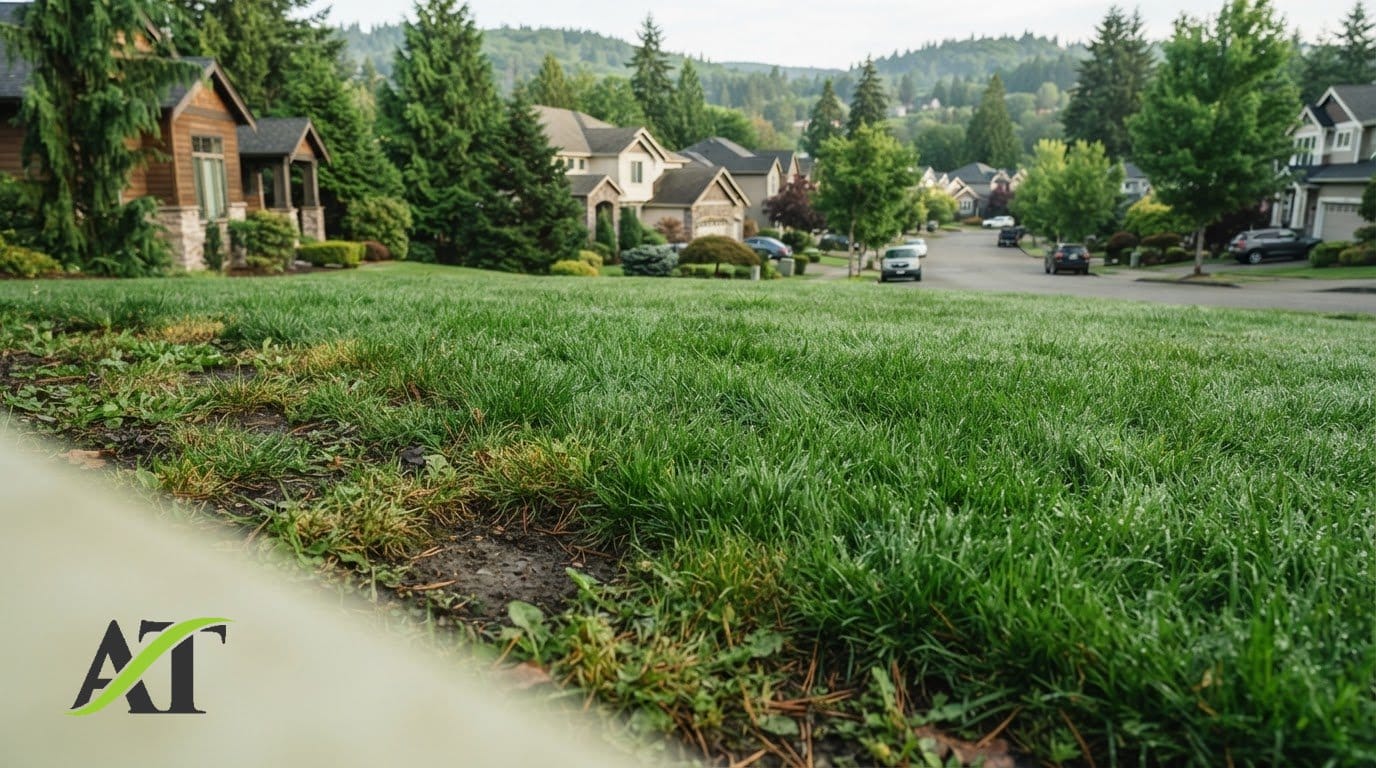
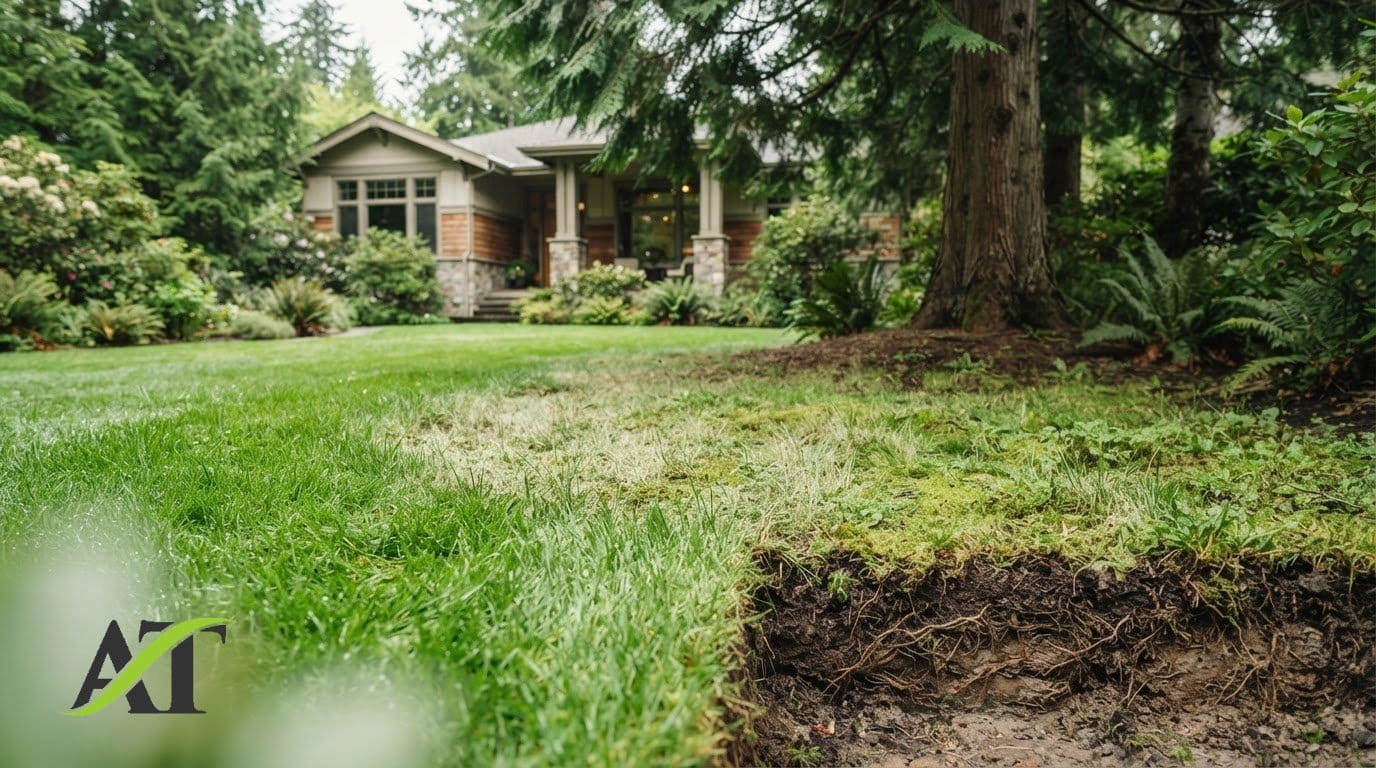
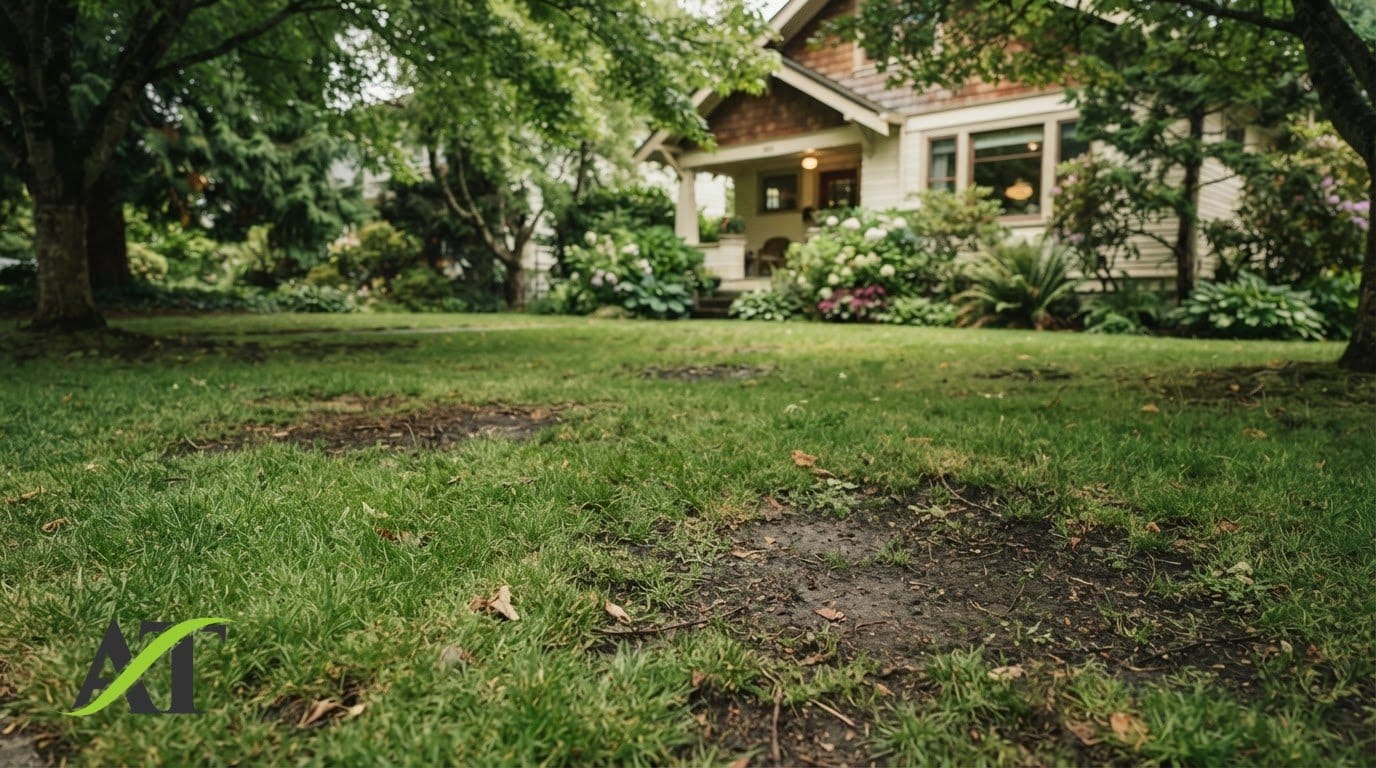
A homeowner may see a thin or mossy lawn and assume the answer is automatically “aerate and seed.” Sometimes it is. Sometimes the lawn is telling you that another condition needs to be addressed first.
Compacted but reasonably dense
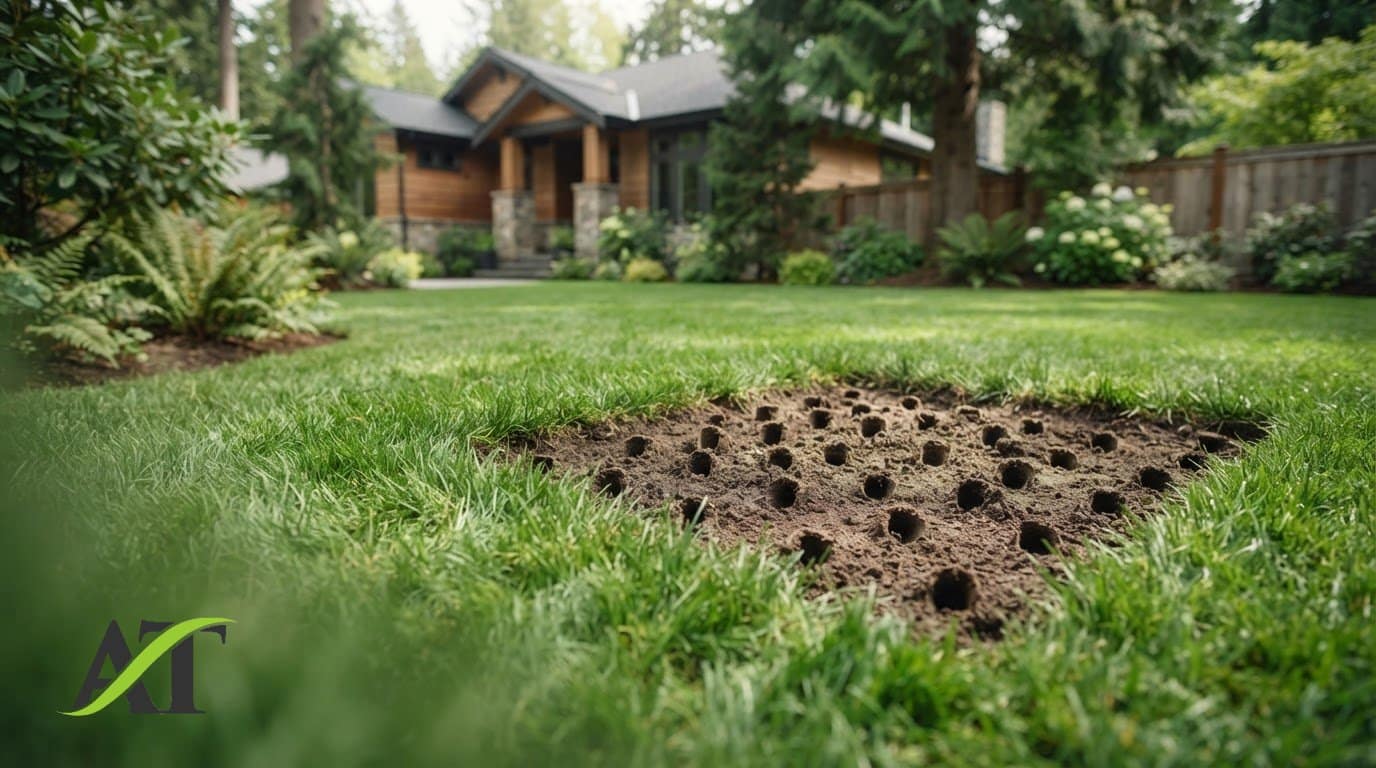
If the grass coverage is already good and hard soil is the main concern, Core Aeration may provide the focused treatment the lawn needs without automatically adding overseeding.
Thin or worn
When the lawn needs both compaction relief and more grass density, combining Core Aeration with Premium Overseeding can make more sense.
Heavy thatch, moss or surface buildup
If accumulated material is interfering with the soil surface, Dethatching (Power Raking) may be appropriate before aeration and overseeding as part of a stronger renovation.
Choose by Lawn Condition
Core Aeration, Lawn Tune-Up or Full Meal Deal?
The right service depends on what your lawn needs, not simply whether the calendar says it is a good time to aerate.
Core Aeration
Best when the lawn is already reasonably dense and compaction relief is the main goal.
- Relieves soil compaction mechanically.
- Does not automatically add seed.
- Keeps the service focused when density is already good.
Lawn Tune-Up
Best when the lawn needs both compaction relief and improved grass density.
- Core Aeration
- Premium Overseeding
- Starter Fertilizer
Full Meal Deal Lawn Renovation
Best when substantial thatch, moss or accumulated surface material also needs to be removed before rebuilding.
- Dethatching (Power Raking)
- Core Aeration
- Premium Overseeding
- Starter Fertilizer
When Overseeding Is Part of the Plan
Seed choice matters, but timing comes first
Aerating Thatching Co. uses a Premium 60/40 Sun & Shade Grass Seed Mix for many typical Seattle-area overseeding projects. It is part of the material strategy when overseeding is appropriate, but even good seed still needs suitable conditions and proper after-care.
The standard Lawn Tune-Up coordinates Core Aeration + Premium Overseeding + Starter Fertilizer. An organic fertilizer option is also available by request for homeowners who prefer that feeding approach.
Want to understand the seed?
See how the Premium 60/40 Sun & Shade Grass Seed Mix fits typical Seattle-area lawns.
See the Premium 60/40 Seed MixProtect the Establishment Window
After-care is part of choosing the right time
A date can look perfect on the calendar and still be the wrong time to overseed if the lawn cannot receive appropriate care afterward. Newly seeded grass should not be treated like an established lawn.
A Different Service Model
Advice from the person doing the work
Aerating Thatching Co. has been owner-operated since 2004. Stewart personally performs the lawn services, so the person associated with the recommendation is also the person working on the property.
That matters on a timing question like this because not every lawn needs the same service. A dense lawn may need Core Aeration alone. A thin lawn may benefit from a Lawn Tune-Up. A lawn with substantial surface buildup may need the stronger Full Meal Deal approach.
Common Questions
Seattle aeration and overseeding timing FAQ
What is the best time of year to aerate and overseed a Seattle lawn?
Early fall is generally our preferred window when the goal is to combine Core Aeration with overseeding and rebuild lawn density. Spring is a strong second opportunity. The final decision should still account for soil condition, weather ahead and whether newly seeded areas can receive consistent after-care.
Is fall better than spring for overseeding?
For many Seattle-area lawn restoration projects, we generally prefer early fall because summer stress is easing and new grass has an opportunity to establish during a favorable cool-season growth period. Spring can also work very well, especially for lawns that need repair after winter or missed the previous fall window.
Is March too early to aerate and overseed in Seattle?
The month alone does not answer the question. If the soil is excessively wet or the lawn is not ready for equipment and new seed, waiting is appropriate. Spring work should be based on workable soil, lawn growth, the weather ahead and the homeowner's watering plan rather than a fixed calendar date.
Can I aerate and overseed during summer?
Core Aeration and overseeding should be considered separately. Aeration may sometimes make sense based on lawn conditions, but overseeding during hot or dry weather can be difficult because new seed requires dependable moisture. If establishment conditions are poor, waiting for a better seeding window is usually more practical.
How wet is too wet for lawn aeration?
If the lawn is saturated enough that equipment is likely to create ruts, smear the soil or cause additional compaction, it is too wet to aerate properly. The goal is workable soil, not waterlogged ground.
How often should a Seattle lawn be aerated?
There is no single schedule for every property. Lawns with recurring compaction, heavier traffic or difficult soil may benefit from more frequent Core Aeration than lawns with loose soil and light use. Let the soil and lawn condition guide the decision rather than aerating only because another year has passed.
Does every aerated lawn need overseeding?
No. If the lawn is already reasonably dense and compaction is the main concern, Core Aeration alone may be enough. Overseeding makes more sense when lawn density also needs improvement.
Do I need Dethatching (Power Raking) before overseeding?
Not automatically. Dethatching (Power Raking) is more appropriate when substantial thatch, moss or accumulated surface material needs to be removed before rebuilding the lawn. If that surface removal is not needed, a Lawn Tune-Up may be the more focused option.
How soon do I need to water after overseeding?
Newly seeded areas need an establishment-focused watering plan rather than normal established-lawn watering. Follow the instructions provided for your service and keep the seedbed appropriately moist during germination and early growth.
What if I cannot consistently water new grass seed?
That is a good reason to reconsider the timing of overseeding. Good seed and professional preparation cannot replace the moisture new grass requires during establishment. Core Aeration may still be considered separately if it fits the lawn, while overseeding can be scheduled for a time when proper after-care is realistic.
Continue Your Lawn Plan
Choose the next step based on what your lawn needs
Lawn already reasonably dense?
Learn how Core Aeration addresses compaction without automatically adding overseeding.
Explore Core AerationNeed to rebuild density?
See the coordinated Core Aeration + Premium Overseeding + Starter Fertilizer service.
Explore the Lawn Tune-UpHeavy surface buildup?
Compare the stronger renovation option that adds Dethatching (Power Raking) before rebuilding.
Explore the Full Meal DealPlanning overseeding?
Understand the watering, traffic and mowing steps that matter after new seed is applied.
Read Lawn After-CareWant to understand the seed?
Learn about the Premium 60/40 Sun & Shade Grass Seed Mix used for many Seattle-area lawns.
See Premium 60/40 Grass SeedWant to compare costs?
Review current service pricing before deciding whether to request a quote.
View Current PricingWant to see real lawn work?
Browse before-and-after results, project photos and Seattle-area lawn examples.
Browse the GalleryWant more lawn guidance?
Browse Seattle lawn-care articles, problem guides and service-selection resources.
Browse Lawn-Care ResourcesNot sure which service fits?
Describe what the lawn is doing and let Stewart recommend the appropriate level of work.
Request a QuoteNot sure whether your lawn needs aeration, overseeding or a stronger renovation?
Tell Stewart what your lawn is doing. The goal is to match the service and timing to the actual lawn condition rather than automatically choosing the largest package. If you are targeting a preferred spring or fall window, planning ahead gives you more scheduling flexibility.