North Seattle-area lawn care • Aerating Thatching Co.
Beyond the Mower: Does Your Seattle Lawn Need Aeration or Dethatching?
Regular mowing keeps grass at a useful height, but it does not remove soil compaction or excess thatch. The next step depends on what is limiting your lawn.
Whether you use a push mower, a riding mower or a robotic mower, start with the grass cover, soil and surface layer. This guide helps you decide when routine care is enough and when aeration, dethatching or overseeding deserves a closer look.
Does every lawn need aeration and dethatching?
No. Core aeration addresses soil compaction; dethatching/power raking addresses excess surface buildup. A reasonably dense lawn with suitable soil conditions may need only routine care. A thin lawn may also need overseeding, while recurring wet or shaded patches deserve an assessment of the site.
Choose work according to the problem you find. A mowing schedule alone does not establish a need for either treatment.
Start with the condition of your lawn
The grass is dense and growing well
Keep up appropriate mowing, watering and feeding. Monitor the lawn rather than adding work simply because a season has changed.
Soil is compacted in worn areas
Repeated traffic or equipment use can compact soil. Ask whether core aeration fits those areas. Persistent puddles may also indicate a drainage issue that needs separate attention.
The surface feels spongy
Examine a small soil-and-turf sample to check the thatch layer. A thin layer can be normal; confirmed excess buildup is a reason to discuss dethatching.
Grass cover is thin or patchy
Look for the cause before adding seed. Overseeding may fit, but it will not correct deep shade, ongoing saturation or repeated wear on its own.
See OSU Extension’s Practical Lawn Care for Western Oregon for Pacific Northwest guidance on routine care and soil aeration.
What aeration and dethatching actually do
Core aeration: work in the soil
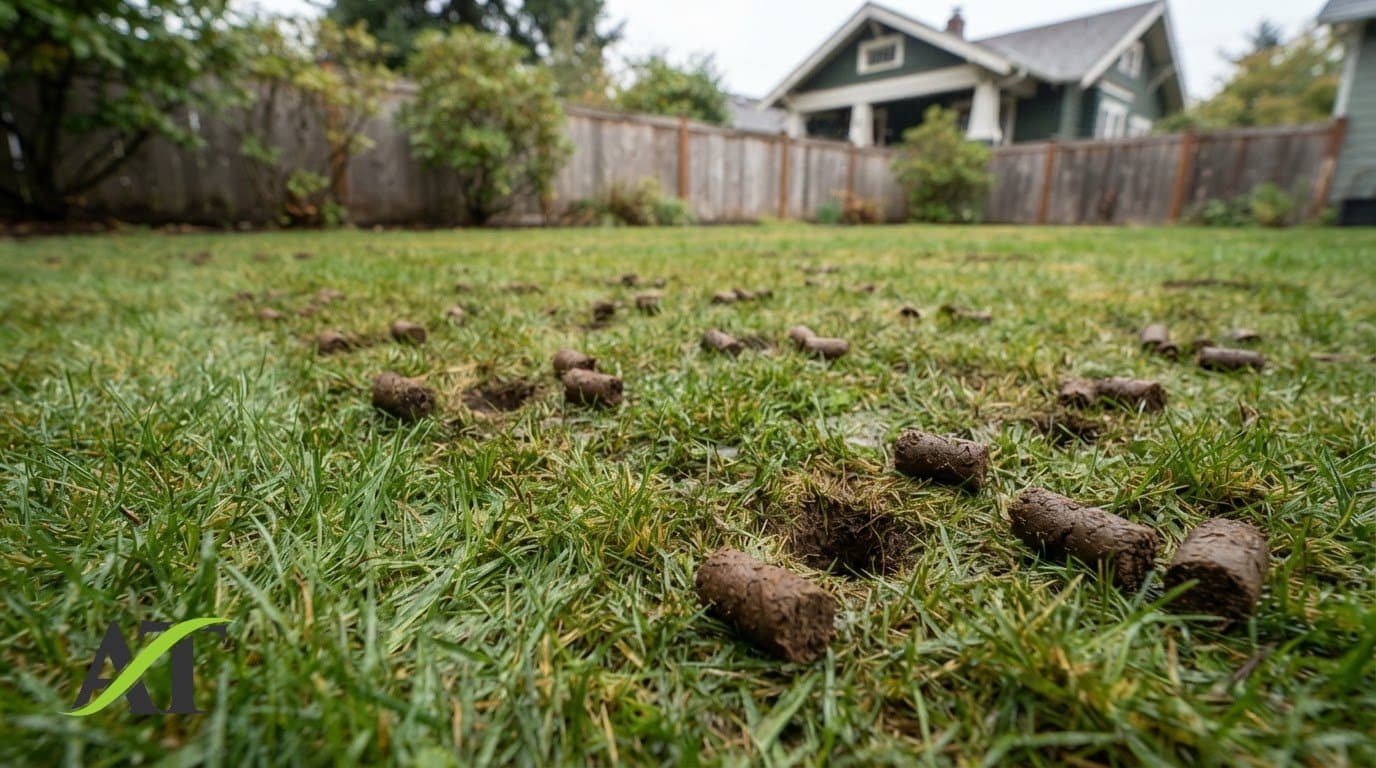
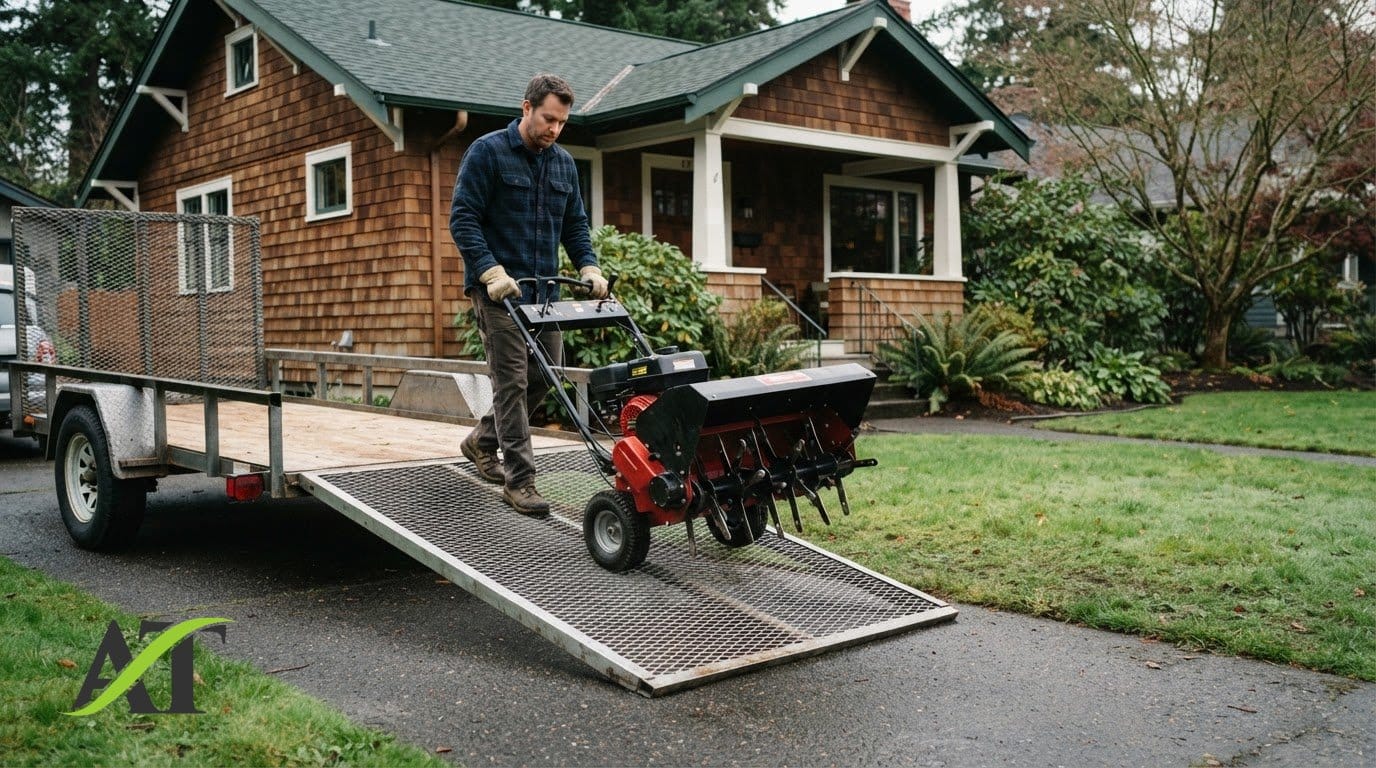
A core aerator removes small soil plugs, creating openings that can help air and water move into compacted ground. This is different from simply poking holes with solid spikes.
Core aeration does not add seed, remove all surface moss or solve every drainage problem.
Dethatching: work at the surface
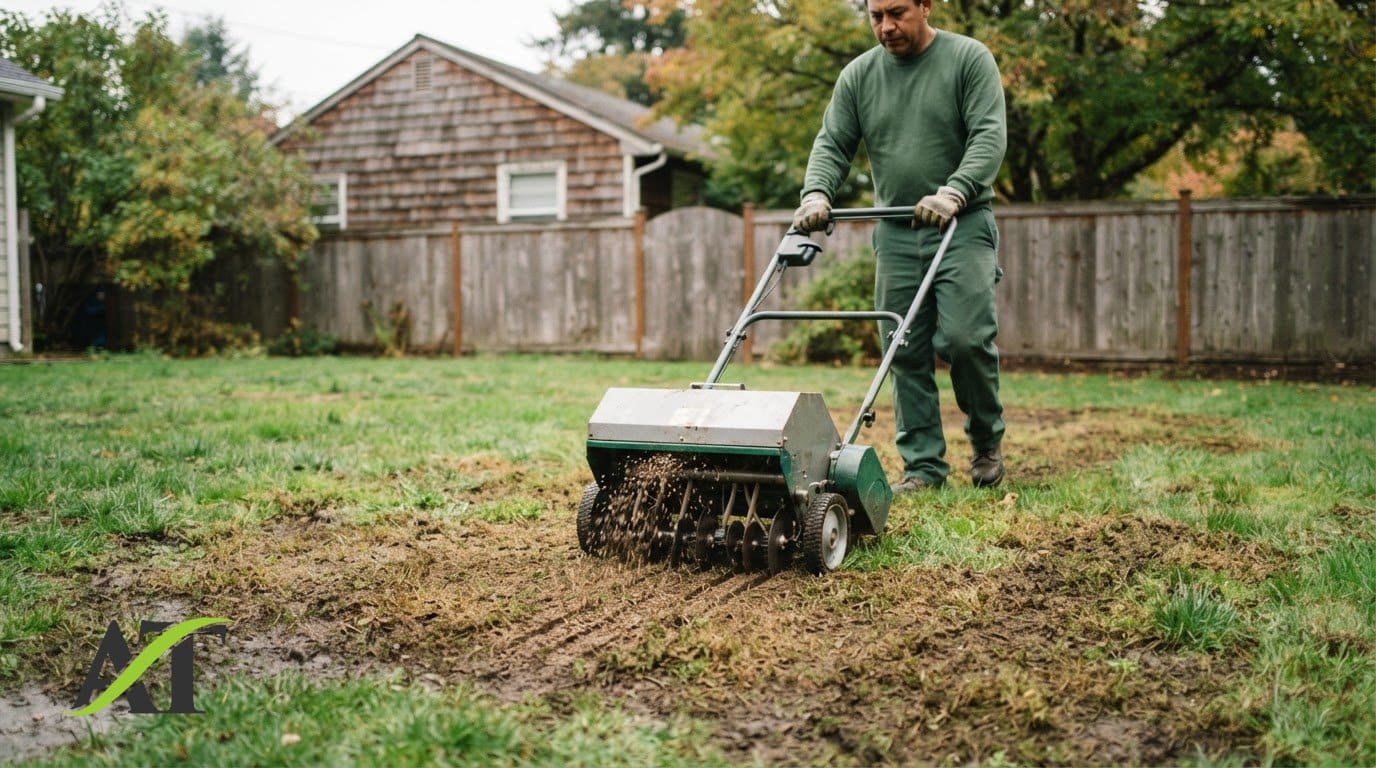
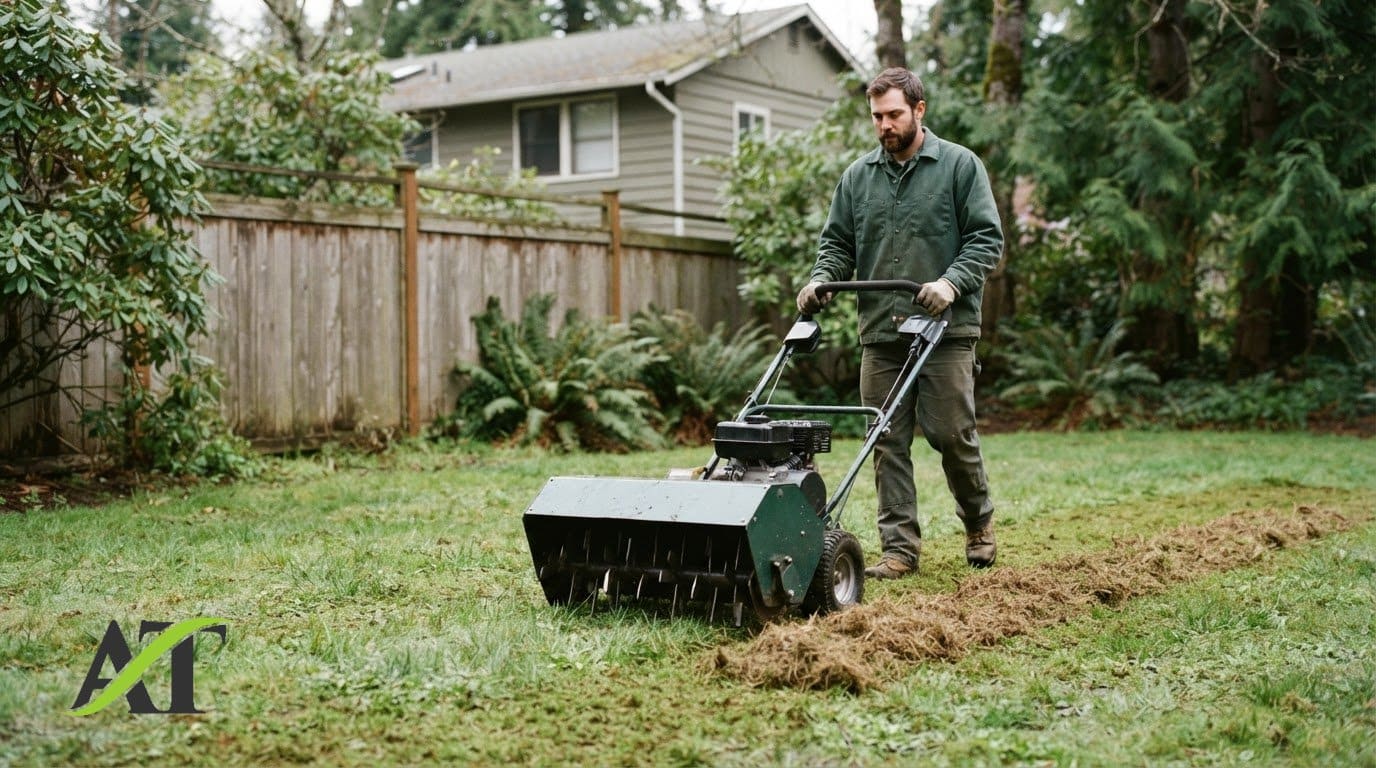
Thatch is a layer of living and dead stems and roots between the grass blades and soil. Dethatching/power raking removes excess buildup and can also lift moss and dead material.
The lawn may look more open afterward. Discuss whether seed is needed and how the grass will recover before choosing the extent of removal.
OSU’s turf guidance recommends checking the actual thatch layer before deciding to dethatch.
Keep mowing in the plan
Renovation supports a lawn-care routine; it does not replace one. Use a mowing height appropriate for your grass and avoid removing more than one-third of the blade height at once.
Returning ordinary grass clippings does little to contribute to thatch buildup. A robotic mower’s frequent small cuts are not, by themselves, a reason to schedule dethatching. Assess the lawn’s surface and soil instead.
Choose the service that fits the work needed
Some lawns need one targeted service. Others benefit from several steps coordinated around grass recovery.
Core Aeration
Consider this when compaction is the main concern and grass cover is still reasonably good. Discuss the affected areas and access before booking.
Lawn Tune-Up
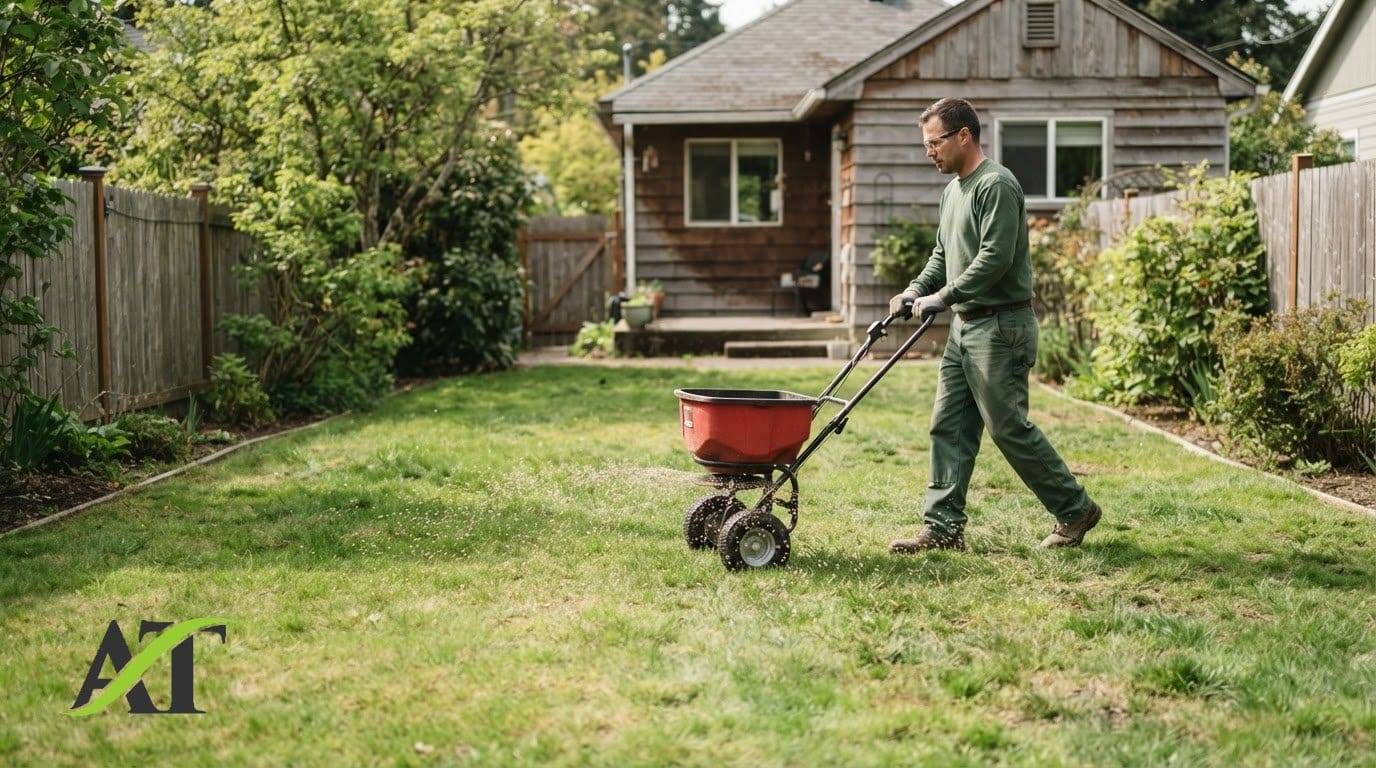
The Lawn Tune-Up combines core aeration, premium overseeding and starter fertilizer. It may fit a lawn that needs more grass without extensive surface removal.
Full Meal Deal Lawn Renovation
The Full Meal Deal combines dethatching/power raking, optional raking, core aeration, overseeding and starter fertilizer when assessment supports broader repair.
Compare current service pricing and confirm the scope, raking arrangements and aftercare. Your lawn’s size, access and condition help determine the appropriate work.
DIY tools for specific lawn tasks
For a small repair, these tools offer different ways to work on the lawn. Select the task first: pulling soil cores and removing surface material are separate jobs.
As an Amazon Associate, I earn from qualifying purchases.

Yard Butler Manual Lawn Coring Aerator
A manual coring tool can be useful for tiny lawn patches or localized areas of compaction. Working across a full lawn by hand takes substantially more effort.
Use it for soil cores, rather than surface dethatching, and identify irrigation lines and other hidden obstacles before starting.

Greenworks 40V (2-In-1) Dethatcher / Scarifier
A powered DIY option for surface dethatching or scarifying when that work is appropriate. It does not perform hollow-tine core aeration.
Follow the manufacturer’s operating guidance, check the battery and charger details in the listing, and plan for any raking and reseeding needed after use.
For a large lawn, difficult access or uncertain lawn conditions, compare the effort of DIY work with a professional assessment and service.
Plan timing, preparation and aftercare together
Choose a time when the lawn can recover and the soil is suitable for equipment. Avoid forcing work on saturated ground or a stressed lawn just to meet a calendar date. If removing extensive moss, discuss whether spring offers a better recovery window.
- Before work: Confirm mowing and watering preparation, access, and sprinkler heads or shallow utilities that need marking.
- If adding seed: Plan how you will keep the seedbed suitably moist and reduce traffic while seedlings establish.
- After work: Follow the instructions for the actual service performed, including when to resume mowing.
Use our lawn after-care guide before booking so you know what care to plan for.
Common questions about going beyond mowing
Does a robotic mower replace aeration or dethatching?
No. A robotic mower cuts grass; it does not remove soil cores or excess thatch. Whether you need either service depends on your lawn’s condition, not the type of mower you own.
Does returning grass clippings cause thatch?
Ordinary mulch mowing contributes little to thatch buildup. Check the actual layer of stems and roots before deciding to dethatch.
Will aeration or dethatching fill bare patches?
Neither service adds seed by itself. If the goal is to rebuild grass cover, discuss overseeding and the cause of the bare areas as part of the plan.
Should I book both services every year?
Assess the lawn first. Service history is useful background, but it does not establish that both treatments are needed. Confirm compaction, surface buildup and recovery needs before choosing work.
Owner-operated since 2004
Ask Stewart what your lawn needs next
Stewart Armour personally performs the work at Aerating Thatching Co. Tell him about your grass cover, problem areas, mowing routine and any recent lawn treatments.
He can help you compare routine care, a targeted service or a coordinated renovation based on the condition of your lawn.