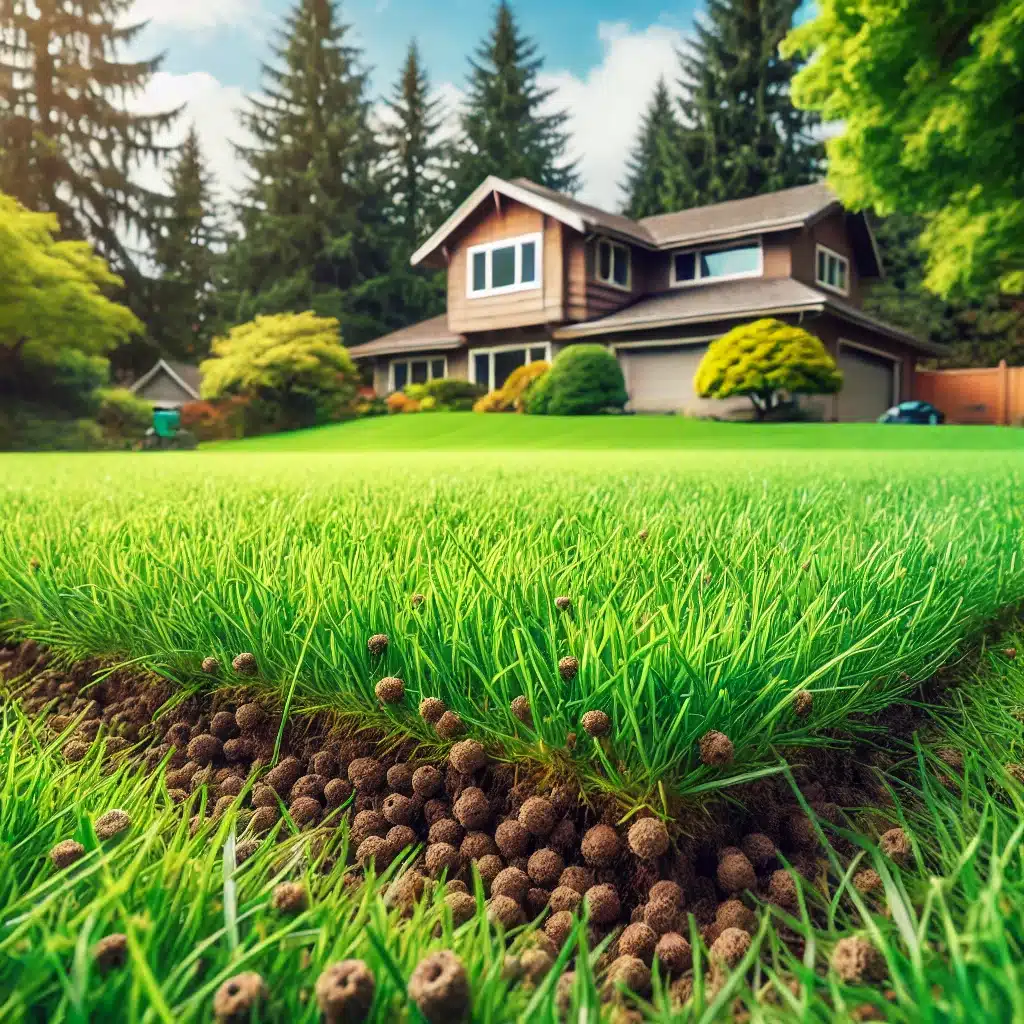
Rent a Lawn Aerator or Hire a Professional?
Both can be reasonable choices. The better option depends on your lawn, your comfort with heavy equipment, transportation, the time you want to spend and how much you value having an experienced operator perform the aeration.
DIY vs. Professional Aeration Is Mostly About the Work Around the Aerator
The rental charge is only one part of the DIY decision. You also need to consider pickup and return, moving the equipment, physical effort, operating the machine, covering the lawn effectively and fitting everything into the rental period.
Professional aeration costs more than doing the labor yourself, but it removes most of those logistical and physical demands from the homeowner.
| Factor | Rent & DIY | Professional Core Aeration |
|---|---|---|
| Equipment transportation | Rent & DIYYou arrange pickup, transportation and return according to the rental provider's requirements. | Professional ServiceThe equipment arrives with the person performing the service. |
| Loading & unloading | Rent & DIYYou are responsible for getting the aerator safely on and off your transport setup. | Professional ServiceThe homeowner does not need to handle the aerator. |
| Physical effort | Rent & DIYHigher. You operate and maneuver a substantial piece of lawn equipment. | Professional ServiceMinimal equipment-related effort for the homeowner. |
| Time commitment | Rent & DIYIncludes rental pickup, transport, setup, aerating, cleanup, reloading and return. | Professional ServiceYou schedule the service rather than organizing the rental process yourself. |
| Machine operation | Rent & DIYYou learn the controls and determine how to work the property effectively. | Professional ServiceAn experienced operator handles the machine and coverage. |
| Access & terrain | Rent & DIYYou determine whether you can safely move the equipment around slopes, gates, steps and tight areas. | Professional ServiceProperty access and terrain are considered as part of performing the job. |
| Convenience | Rent & DIYLower, but some homeowners prefer doing their own lawn work. | Professional ServiceHigher because the equipment and labor are handled for you. |
| Best fit | Rent & DIYA homeowner comfortable with equipment, physical work and the rental logistics. | Professional ServiceA homeowner who prioritizes time, convenience and experienced operation. |
On phones, the comparison above automatically changes from three columns into individual labeled cards so each factor can be read vertically without horizontal scrolling.
What a DIY Aeration Day Actually Involves
Aerating the lawn is only part of the job. The rental process and equipment handling deserve just as much consideration.
Arrange the Rental
Choose an appropriate core aerator, understand the rental period and confirm the provider's pickup, transportation and loading requirements.
Transport the Equipment
You need a practical way to pick up, transport, unload, reload and return a heavy piece of lawn equipment.
Learn the Machine
You will need to understand the controls and become comfortable maneuvering the machine before working across the entire lawn.
Cover the Lawn
The goal is useful, thorough aeration rather than simply making a few passes where the machine is easiest to operate.
Work Around the Property
Slopes, gates, steps, planting beds, tight corners and other access conditions can make a straightforward lawn job more demanding.
Finish & Return It
After aerating, you still need to wrap up the equipment, load it again and return it within the agreed rental period.
DIY Problems Are Usually About Effectiveness, Not Disaster
A homeowner who is new to an aerator is more likely to lose effectiveness than seriously harm an otherwise healthy lawn. Incomplete coverage, difficulty maneuvering, working under unsuitable soil conditions or simply not getting useful coring across the property can reduce the benefit of the effort.
That does not mean DIY aeration is a bad idea. It means the job is more than bringing home a machine and making a single trip around the lawn.
When Renting Makes Sense — and When Hiring Makes More Sense
Renting May Be a Good Fit If…
- You are comfortable operating heavy lawn equipment.
- You have a practical way to transport the aerator.
- Your lawn has reasonably straightforward access and terrain.
- You have enough time for pickup, aerating and return.
- You are comfortable learning how to get useful coverage.
- You prefer doing your own lawn work and value the DIY experience.
Hiring May Be a Better Fit If…
- You would rather avoid pickup, loading, unloading and return.
- You do not want the physical work of maneuvering an aerator.
- Your lawn has access, terrain or layout challenges.
- Your time is worth more to you than doing the rental process yourself.
- You prefer an experienced operator to handle coverage and current conditions.
- You want to discuss whether Core Aeration is actually the right level of service.
The deciding question is not simply “Which one costs less?” It is whether the savings from doing the labor yourself are worth the transportation, equipment handling, time and physical effort involved for your particular property.
Soil Condition Matters More Than Picking a Date on the Calendar
For Core Aeration to do useful work, the soil needs enough moisture for the machine to remove plugs effectively without being excessively wet.
That matters in the Seattle area because lawn conditions can change significantly between long wet periods and dry summer conditions. A date that looks good on the calendar is not automatically a good aeration day if the soil is saturated, extremely dry or the turf is otherwise stressed.
Spring and fall are common aeration periods, but current lawn and soil conditions should still guide the decision.
Moist Enough to Core, Not Saturated
Aeration is most useful when the machine can remove actual soil plugs. Conditions that are excessively dry or wet can affect how effectively the equipment works.
If you are renting, consider the current conditions before committing to your rental period rather than assuming the weather will cooperate.
Does Your Lawn Need Core Aeration — or More Than Aeration?
DIY versus professional service is only the right comparison if Core Aeration is actually the work your lawn needs.
Reasonably Dense Lawn + Compaction
If the lawn already has good grass coverage and compaction is the main concern, Core Aeration alone may be the focused choice.
Learn about Core Aeration →Thin Lawn + Compaction
If grass density also needs improvement, aeration creates a useful opportunity for overseeding. The Lawn Tune-Up combines Core Aeration, Premium Overseeding and Starter Fertilizer.
Explore the Lawn Tune-Up →Thatch, Moss or Surface Buildup
If substantial surface buildup also needs to be removed, Core Aeration alone does not perform that job. Dethatching (Power Raking) may be part of the better restoration approach.
Learn about Dethatching (Power Raking) →A Bigger Package Is Not Automatically Better
A reasonably dense lawn may only need Core Aeration. A thin lawn may benefit from a Lawn Tune-Up. A lawn with substantial thatch, moss or accumulated surface material may need Dethatching (Power Raking) as part of a stronger renovation approach. The point is to match the work to the condition of the lawn.
How to Choose a Lawn Aeration Service in Seattle
If you decide not to rent, compare providers on more than price. A good hiring decision should help you understand who is doing the work and what you are actually receiving.
You can also review Aerating Thatching Co. customer testimonials when evaluating Stewart's service.
Owner on Every Job
With Aerating Thatching Co., Stewart Armour personally performs the lawn service.
Direct Communication With the Person Doing the Work
Aerating Thatching Co. operates differently from a service model where your initial conversation and the person arriving at the property may be separate.
Stewart is the owner and the person performing the work. That keeps the recommendation and the actual service connected, and it gives homeowners direct access to the person operating the equipment on their lawn.
When performing Core Aeration, Stewart considers the condition of the lawn, access, terrain, compaction, existing turf and other observable property conditions while working for thorough coverage.
DIY Can Be a Good Choice. Professional Aeration Can Be a Good Value.
Rent if the project fits you.
If you are comfortable transporting and operating heavy equipment, have enough time and have a lawn that is reasonably straightforward to access, renting a core aerator can be a perfectly reasonable DIY project.
Hire if you value convenience and experience.
If you would rather avoid rental logistics and physical equipment handling, have a more challenging property or simply prefer experienced operation, professional Core Aeration can be worth the additional cost.
If professional aeration is the better fit for you, Aerating Thatching Co. has been owner-operated since 2004, and Stewart personally performs the service.
Renting vs. Professional Lawn Aeration FAQ
Is it cheaper to rent a lawn aerator or hire someone?
Renting may reduce the amount you pay for labor, but the rental charge is not the only factor. Consider transportation, pickup and return, loading and unloading, the time required to aerate the lawn and the value you place on doing the physical work yourself. Professional service costs more than supplying your own labor, but the equipment handling and aeration work are performed for you.
How difficult is it to use a rented lawn aerator?
A core aerator is a substantial piece of lawn equipment, so operating one can require physical effort and some time to become comfortable with the controls. Difficulty also depends on the property. Open, level lawns are generally easier to work than lawns with slopes, narrow access, steps or tight areas.
Can I aerate my Seattle lawn myself?
Yes. A homeowner who is comfortable transporting and operating the equipment can rent a core aerator and perform the work. Before renting, consider current soil conditions, property access, the time needed to complete the job and whether you are comfortable maneuvering the machine across the entire lawn.
When is soil too wet or too dry to aerate?
The soil should have enough moisture for useful cores to be removed without being saturated. Excessively dry or wet conditions can make aeration less effective or unsuitable for the equipment. In the Seattle area, current soil and lawn conditions can therefore matter more than simply choosing a particular date on the calendar.
Is Core Aeration alone enough for a thin lawn?
Not always. Core Aeration relieves compaction, but it does not replace missing grass. If greater grass density is also needed, the Seattle Lawn Tune-Up combines Core Aeration with Premium Overseeding and Starter Fertilizer. If significant thatch, moss or accumulated surface material also needs removal, Dethatching (Power Raking) may also be relevant.
How often does a Seattle lawn need Core Aeration?
There is no need to treat every lawn as if it requires the same fixed schedule. How often aeration makes sense depends on compaction, lawn use, soil conditions and how the turf is performing. A lawn that receives frequent traffic or develops compacted soil may benefit more from recurring aeration than a lawn with little compaction.