How to Identify and Control Annual Bluegrass (Poa annua) in North Seattle Lawns
Annual bluegrass, or Poa annua, is a light-green grass that can become conspicuous in North Seattle lawns, especially during cool, moist weather. Managing it is usually less about finding a one-time cure and more about correctly identifying it, reducing conditions that favor it, removing small infestations where practical, and maintaining dense desirable turf.
How Do I Control POA Grass in My Lawn?
If the unwanted grass is annual bluegrass (Poa annua), start by confirming the identification. Small patches can often be hand-pulled or carefully dug out. For larger populations, focus on maintaining dense desirable turf, avoiding unnecessarily frequent shallow irrigation, addressing compaction where it exists, and repairing thin areas with appropriate grass seed.
Annual bluegrass produces abundant seed and can persist in the soil seed bank, so long-term management is generally more realistic than expecting one treatment to permanently eliminate it.
What Is POA Grass?
“POA” is commonly used by homeowners to describe annual bluegrass, but Poa is actually an entire genus of grasses. Not every grass in the Poa genus is an unwanted lawn weed.
This guide is specifically about annual bluegrass (Poa annua). Washington State University describes annual bluegrass as a light-green grass with folded leaves, a distinct midvein, cupped or boat-shaped leaf tips and loose branching seedheads. Both annual and more persistent biotypes can occur.
In the Pacific Northwest, annual bluegrass is especially well adapted to cool conditions and available moisture. Oregon State University notes that it commonly behaves as a winter annual in this region, although perennial-type populations can also develop in managed and irrigated turf.
How to Identify Annual Bluegrass
Look at the plant itself as well as how the patch behaves through the seasons.
Light-Green Color
Annual bluegrass often appears lighter or more yellow-green than surrounding desirable lawn grasses, making individual clumps or patches noticeable.
Boat-Shaped Leaf Tips
The leaf blade has a characteristic cupped tip often described as looking like the prow of a small boat or canoe.
Clumping Growth
Annual bluegrass can form distinct clumps within otherwise more uniform turf, although growth habit varies among different Poa annua populations.
Pale Seedheads
One of the easiest homeowner clues is the appearance of loose, pale seedheads. Annual bluegrass can produce seed even when regularly mowed.
Why Is Annual Bluegrass a Problem in North Seattle Lawns?
Annual bluegrass is extremely adaptable. In North Seattle and Western Washington, long periods of cool weather and available moisture can provide conditions in which it competes successfully with desirable turf.
Uneven Appearance
Its lighter color and seedhead production can create visibly different patches in an otherwise uniform lawn.
Heavy Seed Production
Annual bluegrass is an effective seed producer. New plants can continue appearing even after existing plants have been removed.
Summer Changes
Some annual types decline or go dormant under hot, dry conditions, potentially leaving thin or brown areas. More persistent biotypes may survive when conditions remain favorable.
Conditions That Can Favor POA
- Thin or open turf where new seedlings have room to establish.
- Compacted lawn soil and heavily trafficked areas.
- Frequently moist lawn conditions.
- Frequent shallow irrigation.
- Low mowing that reduces the competitive advantage of desirable turf.
- Shaded or persistently damp areas.
These conditions do not prove that a lawn contains Poa annua, but they can help explain why annual bluegrass becomes established once seed is present.
How POA Changes Through the Year
Weather varies from year to year, but understanding the general annual bluegrass cycle helps homeowners choose more realistic management strategies.
Establishment
Moisture returns and temperatures cool. Annual bluegrass commonly germinates during favorable fall conditions, making lawn density important.
Cool-Season Growth
North Seattle’s mild, wet winters can allow annual bluegrass to remain active while many lawns are growing slowly.
Seedheads Become Obvious
Seed production can make POA much easier to spot. Small patches may be practical to remove before they become more extensive.
Stress & Thinning
Annual types may decline during dry summer weather. Persistent or irrigated populations can behave differently, so summer browning alone does not guarantee the plant is gone.
Effective Strategies to Manage Annual Bluegrass
The most practical approach combines removal where feasible with lawn-management practices that give desirable turf a better chance to remain dense.
1. Mow for the Grass You Want
Avoid mowing unnecessarily short. A healthy canopy of desirable turf helps occupy space and reduces the open conditions in which unwanted grasses can establish.
2. Address Compaction
Compaction is frequently associated with annual bluegrass populations. Where the soil is genuinely compacted, Core Aeration can improve the growing environment for desirable turf.
3. Avoid Constant Shallow Watering
Frequent surface moisture can favor shallow-rooted annual bluegrass. Water based on the needs of the lawn and current weather rather than keeping the surface continuously wet.
4. Rebuild Thin Turf
Where removal or summer decline leaves openings, overseeding with an appropriate lawn seed blend can help rebuild desirable grass density instead of leaving bare soil available for new weeds.
5. Hand-Pull Small Patches
Washington State University includes hand-pulling and careful digging among non-chemical management options. This is most practical when infestations are still small enough to remove individually.
6. Correct the Underlying Lawn Problem
If the desirable turf remains thin because of shade, compaction, drainage, inappropriate irrigation or another site limitation, repeatedly removing POA without improving those conditions may simply leave space for it to return.
Overseeding With Desirable Grass
Overseeding thin or disturbed areas can help rebuild lawn density. The objective is not that new seed somehow kills annual bluegrass; it is to establish more of the grass you want so fewer open areas remain available for unwanted plants.
For a thin or compacted lawn that needs both aeration and additional grass density, Aerating Thatching Co.’s Lawn Tune-Up combines Core Aeration, Premium Overseeding and Starter Fertilizer. A lawn with heavier moss, thatch or surface buildup may instead warrant the Full Meal Deal Lawn Renovation, which adds Dethatching (Power Raking).
What About Pre-Emergent or Post-Emergent Herbicides?
Chemical control of annual bluegrass is more complicated than simply applying a general lawn weed killer. Product suitability depends on the desirable turf species, the annual bluegrass population, application timing, current labeling and what you plan to do with the lawn afterward.
Pre-emergent programs work by targeting germinating seedlings rather than removing the underlying reasons POA became established. They can also conflict with plans to seed desirable grass because a product that interferes with grass-seed germination may interfere with the grass you are trying to establish.
If considering an herbicide, first confirm the grass identification and use only a product specifically labeled for the site, turf species and intended use. Follow the current product label. For many homeowners, cultural management, removal of small patches and improvement of desirable turf are the more practical starting points.
Useful Products for Lawn Maintenance & Repair
These products can support lawn maintenance and repair work discussed in this guide. Product needs vary with the lawn, so use them for their intended purpose rather than treating every product as a direct annual-bluegrass treatment.

Scotts DiseaseEx Lawn Fungicide
A granular lawn-care product for homeowners maintaining turf and dealing with labeled lawn-disease concerns. Always follow the current product label and use only for listed applications.
View on Amazon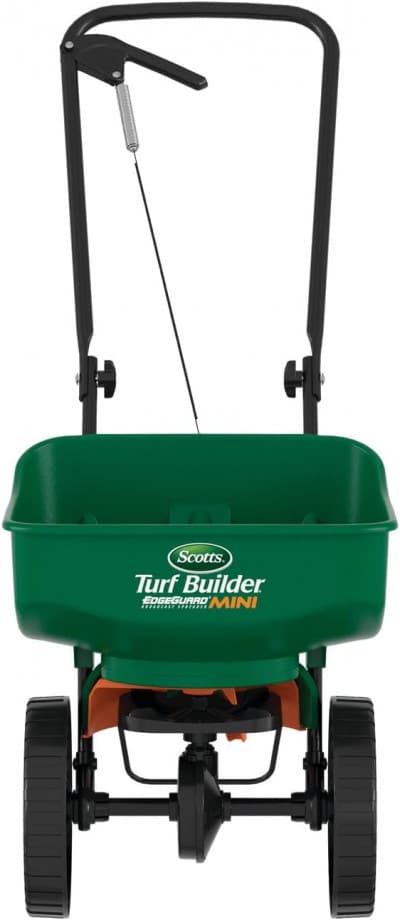
Scotts EdgeGuard Mini Broadcast Spreader
A compact broadcast spreader useful for applying compatible granular lawn products evenly across smaller residential lawns.
View on Amazon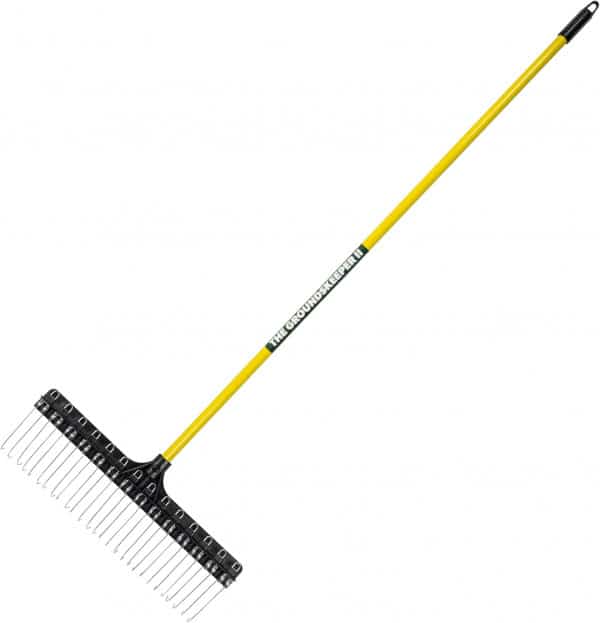
Dethatching Rake
A manual option for small lawn areas where you want to rake out loose dead material, surface buildup or thatch without using powered equipment.
View on AmazonAffiliate disclosure: LawnTuneUps.com may earn a commission from qualifying purchases made through affiliate links, at no additional cost to you.
Preventing POA From Becoming the Dominant Grass
Annual bluegrass management is usually a long-term lawn-density problem rather than a one-day weed-removal project. Once seed is present in the soil, new plants may continue to emerge when conditions are favorable.
Keep Desirable Turf Dense
Repair thin areas rather than leaving open soil. Where growing conditions support turf, a denser lawn provides stronger competition for space.
Water According to Need
Avoid keeping the soil surface continuously wet with frequent light irrigation. Adjust watering for rainfall, temperature, soil and lawn condition.
Manage Compaction
High traffic and compacted soil can create conditions associated with annual bluegrass. Core Aeration can be useful when actual compaction is part of the lawn problem.
Watch Thin Areas Early
Light-green clumps and seedheads are easier to deal with while they are isolated than after they occupy a substantial portion of the lawn.
When Professional Lawn Restoration Makes Sense
Aerating Thatching Co. does not treat every lawn problem as a reason to automatically choose the largest service package. The appropriate work depends on what else is happening in the lawn.
Compacted but Reasonably Dense
Core Aeration may be the focused choice when compaction is the main issue and the lawn already has adequate grass density.
Thin or Patchy Lawn
A Lawn Tune-Up adds Premium Overseeding and Starter Fertilizer to Core Aeration when rebuilding density is also important.
Thatch, Moss & Surface Buildup
When physical surface removal is also warranted, the Full Meal Deal Lawn Renovation adds Dethatching (Power Raking) before aeration and overseeding.
Annual Bluegrass FAQ
Is all POA grass bad?
No. Poa is a genus containing many grass species. This article is specifically discussing annual bluegrass, Poa annua, when it is unwanted in a residential lawn.
How can I tell if the light-green grass in my lawn is Poa annua?
Look for several clues together: lighter green color, folded leaves, boat-shaped leaf tips, clumping growth and loose pale seedheads. Color alone is not enough because other grasses can also produce lighter patches.
Does annual bluegrass die in summer?
Some annual populations decline or die under summer drought and heat, but not every population behaves identically. More persistent biotypes can survive, particularly where moisture and growing conditions remain favorable. Summer browning therefore does not mean the underlying POA problem is permanently gone.
Will POA come back after I pull it?
New plants can appear because annual bluegrass produces seed that can remain in the soil. Pulling is useful for small infestations, but long-term management also means maintaining dense desirable turf and addressing conditions that favor reinvasion.
Does pulling annual bluegrass work?
Hand-pulling or careful digging can be practical when only a small number of plants are present. It becomes much less practical once annual bluegrass occupies a large portion of the lawn.
Will overseeding get rid of POA?
Overseeding does not directly kill annual bluegrass. Its value is rebuilding desirable grass density in thin or disturbed areas so the lawn has fewer open spaces available for unwanted plants to establish.
Does Dethatching (Power Raking) control annual bluegrass?
Dethatching (Power Raking) should not be treated as a direct POA-control treatment. It is appropriate when thatch, moss or accumulated surface material actually needs to be removed. Whether a lawn needs Dethatching depends on the lawn condition, not simply on the presence of annual bluegrass.
Can Core Aeration help a lawn with POA?
Core Aeration does not directly kill annual bluegrass. It can be useful when soil compaction is weakening the desirable lawn. Improving the growing environment for the turf you want can be part of a broader long-term management strategy.
Can I permanently eliminate annual bluegrass from my lawn?
Complete permanent elimination can be difficult once annual bluegrass is established and seed is present in the soil. For many North Seattle lawns, reducing POA pressure while maintaining stronger desirable turf is a more realistic long-term goal.
Regional and University Turf Resources
These resources were used for information in this article about annual bluegrass identification, biology, Pacific Northwest behavior and management.
- Washington State University Hortsense — Annual Bluegrass (Poa annua)
- Oregon State University — Annual Bluegrass, Poa annua L.
- Oregon State University Extension — Managing Poa annua in Lawns
- Purdue Extension / University of Illinois Extension — Identification and Control of Annual Bluegrass and Rough Bluegrass in Lawns
Not Sure What Is Growing in Your Lawn?
You do not need to diagnose every grass or choose the largest lawn service before contacting us. Tell Stewart what you are seeing in your North Seattle area lawn and what you would like to improve.
If annual bluegrass is only a small part of the problem, the right next step may be simple maintenance. If the lawn is also thin, compacted, mossy or worn, Stewart can help determine which level of lawn improvement makes sense.
Aerating Thatching Co. specializes in lawn restoration and improvement for North Seattle area lawns.