North Seattle Area Lawn Guide
Organic Lawn Care in Seattle: Practical Steps for a Healthier Lawn
You can make a lawn easier on the soil, local waterways and the people and pets who use the yard without relying on blanket treatments. Start with the lawn's actual needs, choose products carefully, and remember: “natural” or “organic-based” does not automatically mean harmless or pet-safe.
Quick answer: how do I start organic lawn care?
Test the soil before choosing fertilizer, mow at a suitable height, water according to the soil and weather, and improve lawn density with the right seed and care. Pull or carefully manage weeds rather than applying a blanket treatment. Read every product label and follow its instructions around children and pets. These steps can reduce unnecessary inputs, but no lawn treatment can be promised completely risk-free.
What does “organic lawn care” mean?
Homeowners use “organic” to mean different things: feeding with organic-derived materials, avoiding synthetic pesticides, using fewer products, or following a fully organic program. Those are not interchangeable claims. Some products made from natural sources are still pesticides, and products described as organic-based still need to be used as directed. EPA explains that organic production can use pesticides derived from natural sources; the source alone does not tell you how to use a product or what precautions apply.
A practical lower-input plan focuses first on prevention and lawn health: identify the cause of thin or discolored grass, correct mowing and watering, and apply fertilizer only when it is appropriate. It does not mean every product is unnecessary, or that a “natural” treatment is automatically safe for pets, children, soil or nearby plants.
Six practical steps for a healthier North Seattle lawn
-
Find out what the soil needs
A soil test can measure pH and nutrients and help avoid adding something the lawn does not need. Use results to guide fertilizer and lime choices instead of guessing. Learn what a soil test can tell you.
-
Fertilize based on the lawn and the label
Choose a fertilizer for the lawn's actual condition, follow its application rate, and keep product off pavement and out of drains. Washington restricts phosphorus-containing turf fertilizer, with exceptions such as establishing or repairing grass during the growing season and a recent soil test showing phosphorus deficiency. See the current Washington law and WSDA's plain-language explanation before applying a phosphorus fertilizer.
-
Mow regularly at a suitable height
Set the mower for your grass type and growing conditions. Avoid cutting so short that you scalp the lawn, and do not remove too much leaf growth in one mowing. Leaving finely chopped clippings on the lawn can return nutrients when the grass is not diseased and the clippings are not too long or clumped.
-
Water for the soil, not by the calendar
Check how quickly your soil dries and adjust for rainfall, sun and temperature. When watering is needed, aim for moisture through the root zone rather than frequent light sprinkling. Avoid runoff onto sidewalks, streets or storm drains. The WSU Pacific Northwest lawn guide explains how soil type affects lawn watering.
-
Build density instead of chasing every weed
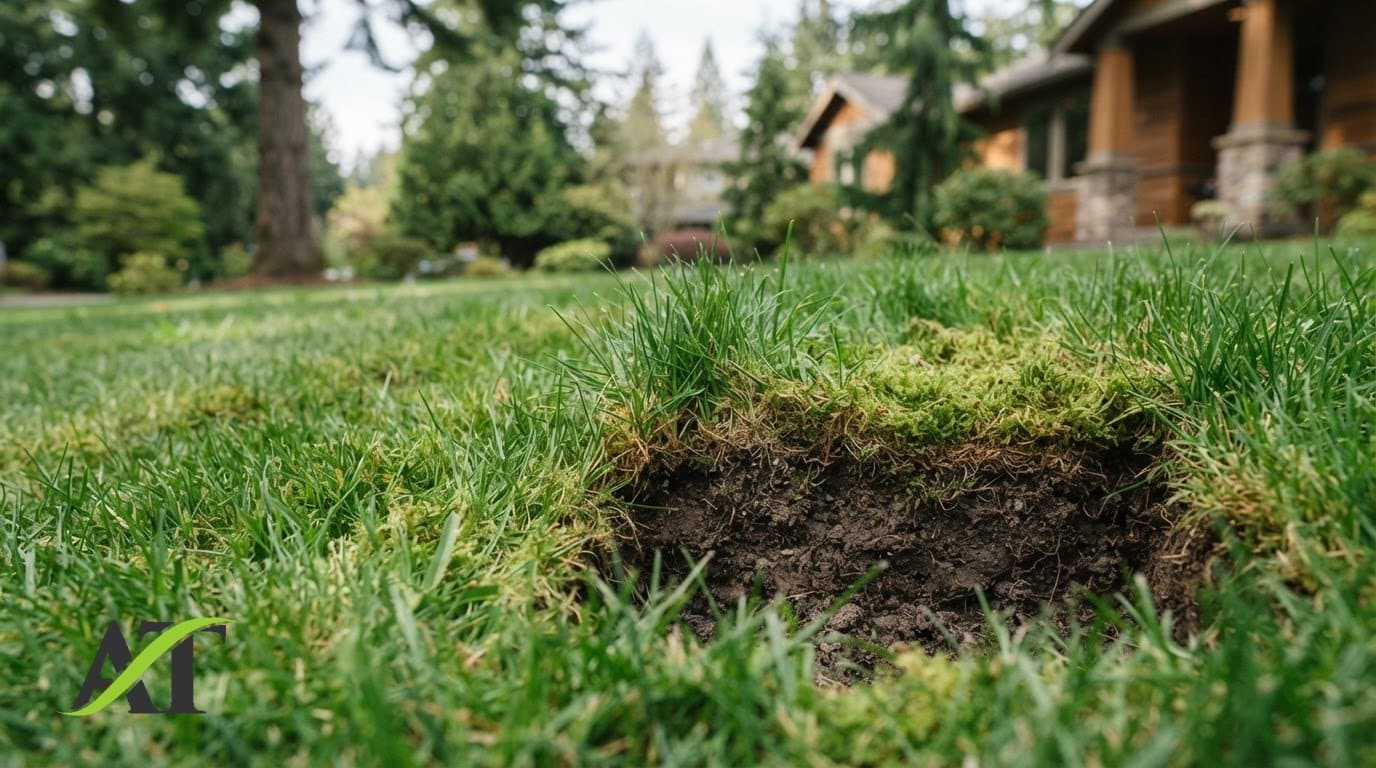
Hand-pull individual weeds when practical, including as much root as possible, and repair thin areas with suitable seed when conditions support establishment. A denser lawn can compete for space, though seed will not solve the underlying cause if shade, compaction, poor drainage or excess thatch remains.
-
Use aeration or renovation only when it fits
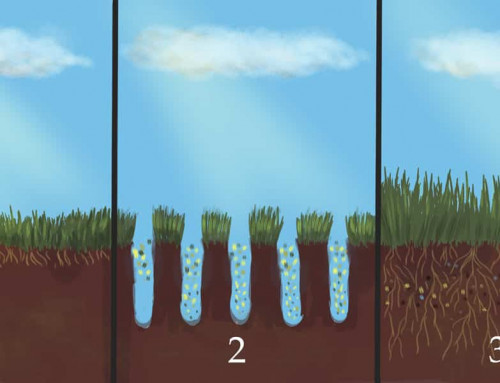
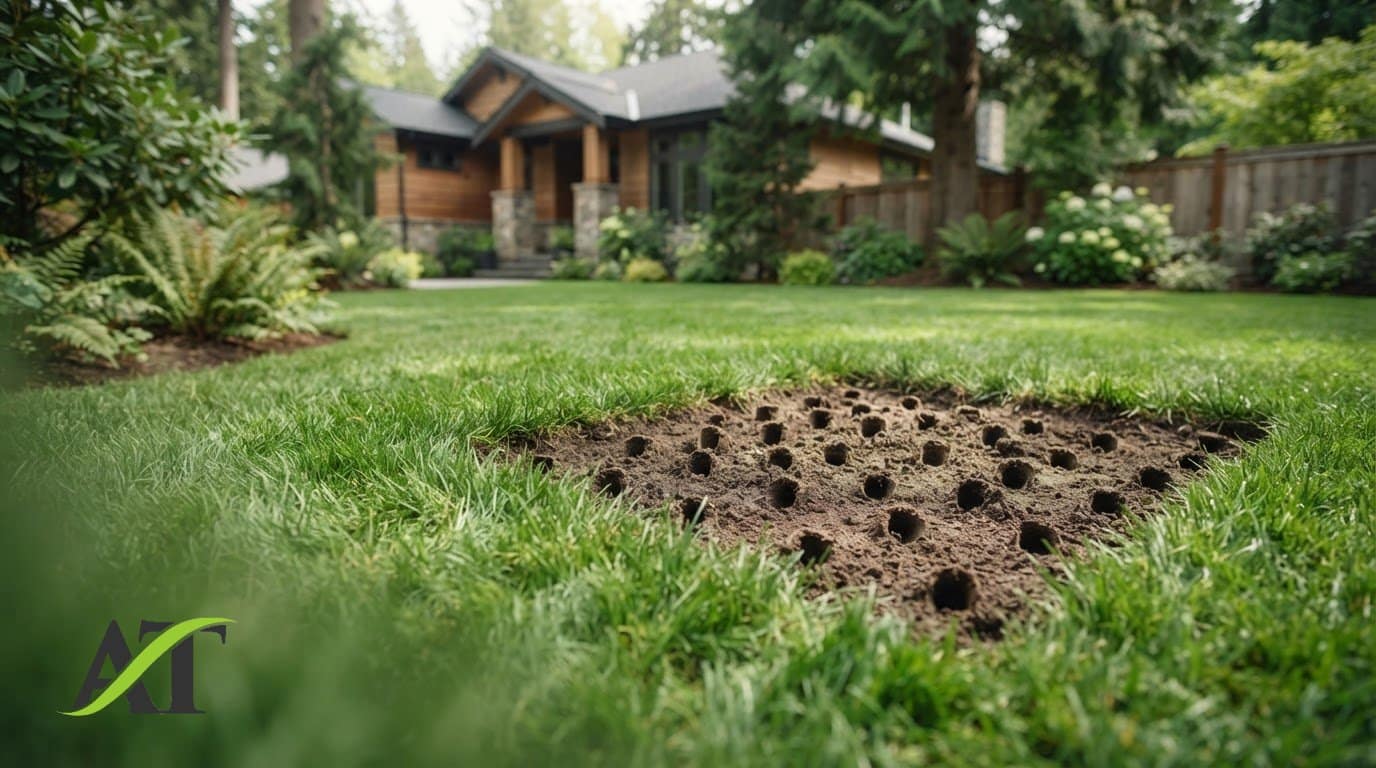
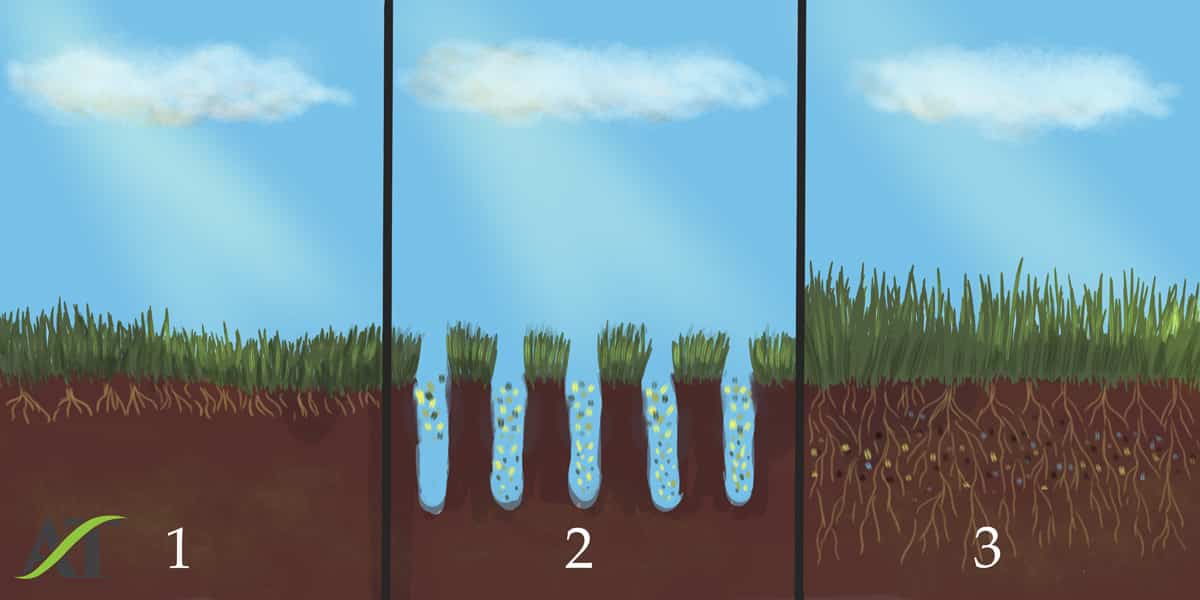
Core aeration can help where soil is compacted. Overseeding can add grass to thin areas. Dethatching (Power Raking) may be appropriate when a substantial layer of thatch or surface buildup needs removal. They solve different problems; many lawns do not need all of them. Compare a Lawn Tune-Up with a Full Meal Deal renovation only after identifying what your lawn needs.
Is organic lawn care safe for pets?
There is no universal “pet-safe” rule for every lawn product. Risk depends on the specific product, how it is applied, how much contact a pet has, and the product directions. Fertilizers and natural or organic-derived products can still require precautions. Follow the label for each product rather than relying on the word “organic.”
When a product is applied to the yard:
- Keep pets away during application and for the exact time stated on the label.
- Follow any watering, drying or re-entry directions. Do not substitute a general “until dry” rule if the label says something different.
- Store bags, granules, concentrates and tools where pets cannot reach them, and clean up spills promptly.
- Ask the applicator which product was used and request the label or safety directions. Contact your veterinarian if you think your pet has been exposed.
The U.S. EPA’s pesticide safety guidance says to keep pets away until a product has dried or for the longer period required by its label. That guidance is product-specific; it does not mean every product is safe as soon as the lawn is dry.
Our organic-based fertilizer is one option—not a full organic lawn-care program
Aerating Thatching Co. offers an organic-based fertilizer upgrade with Lawn Tune-Ups and lawn renovations. The current option is a 5-4-5 fertilizer selected for gradual feeding. “Organic-based” describes this fertilizer; it is not a claim that the full service is a certified-organic program. The fertilizer is not a weed killer, moss killer or pesticide, and it will not correct compaction, drainage or bare spots by itself.
Whether fertilizer belongs in your plan depends on the lawn, soil, season and product directions. If you prefer this option, Stewart can help determine whether it fits a coordinated lawn-improvement service. See the organic-based fertilizer upgrade details, or request a recommendation for your lawn.
Two optional tools and references
These products are optional references; neither replaces identifying what is causing a lawn problem. The motion-activated sprinkler is a yard tool, not an organic lawn treatment.
Disclosure: We may earn a commission if you buy through these links, at no additional cost to you. As an Amazon Associate, we earn from qualifying purchases.

Orbit Yard Enforcer Motion-Activated Sprinkler
If animals are entering or digging in a specific part of the yard, a motion-activated sprinkler is one tool you could consider. Check the product details and placement needs before buying.

The Lawn Bible
A general lawn-care reference for homeowners who want more background while planning routine lawn maintenance.
Organic lawn care FAQs
Does “organic” mean a lawn product is harmless to pets?
No. “Organic” or “natural” does not replace product-specific precautions. Read the label, follow its pet re-entry directions and store products securely.
Can I use salt or household vinegar to kill weeds in my lawn?
They can damage grass and nearby plants, and repeated salt use can harm soil. WSU Extension advises against treating these household ingredients as a harmless lawn weed solution. Hand-pulling and correcting the conditions that favor weeds are better starting points.
Should I use fertilizer if I want a more organic lawn?
Only if it fits the lawn’s needs. A soil test can help guide nutrient decisions. In Washington, phosphorus-containing turf fertilizer is restricted, with exceptions including new grass or repairs during establishment and a qualifying soil test within the previous 36 months.
Does organic-based fertilizer control weeds or moss?
No. Aerating Thatching Co.’s organic-based fertilizer upgrade feeds grass; it does not include weed control and does not kill moss. Those concerns require separate diagnosis and, if needed, a different treatment.
Does Aerating Thatching Co. provide a complete organic lawn-care program?
The company offers an organic-based fertilizer option as an upgrade with lawn improvement services. That is not the same as a complete or certified-organic lawn-care program. The appropriate service depends on the lawn’s condition and your goals.
Helpful sources
- Washington State University Extension: Pacific Northwest lawns
- Washington State University Extension: salt and vinegar for weed control
- U.S. EPA: pesticide safety tips, including pets
- U.S. EPA: organic farming and naturally derived pesticides
- Washington State Legislature: RCW 15.54.500, phosphorus in turf fertilizer
- Washington State Department of Agriculture: phosphorus-containing fertilizers
Choose the next step that fits your lawn
If you are comfortable with DIY care, start with a soil test and adjust mowing, watering and weed management. If the lawn is thin, compacted or covered in heavy surface buildup, identify that problem before choosing a service or fertilizer.
See the organic-based fertilizer option Ask for a lawn recommendation