Lawn Aeration in Seattle: When It Helps, When to Do It & What to Expect
Core Aeration can be a useful way to relieve compacted lawn soil, create openings for air and water, and improve root-zone growing conditions. The important part is knowing when compaction is actually the problem—and when your lawn needs something different or something more.
What Core Aeration Does—and What It Doesn’t Do
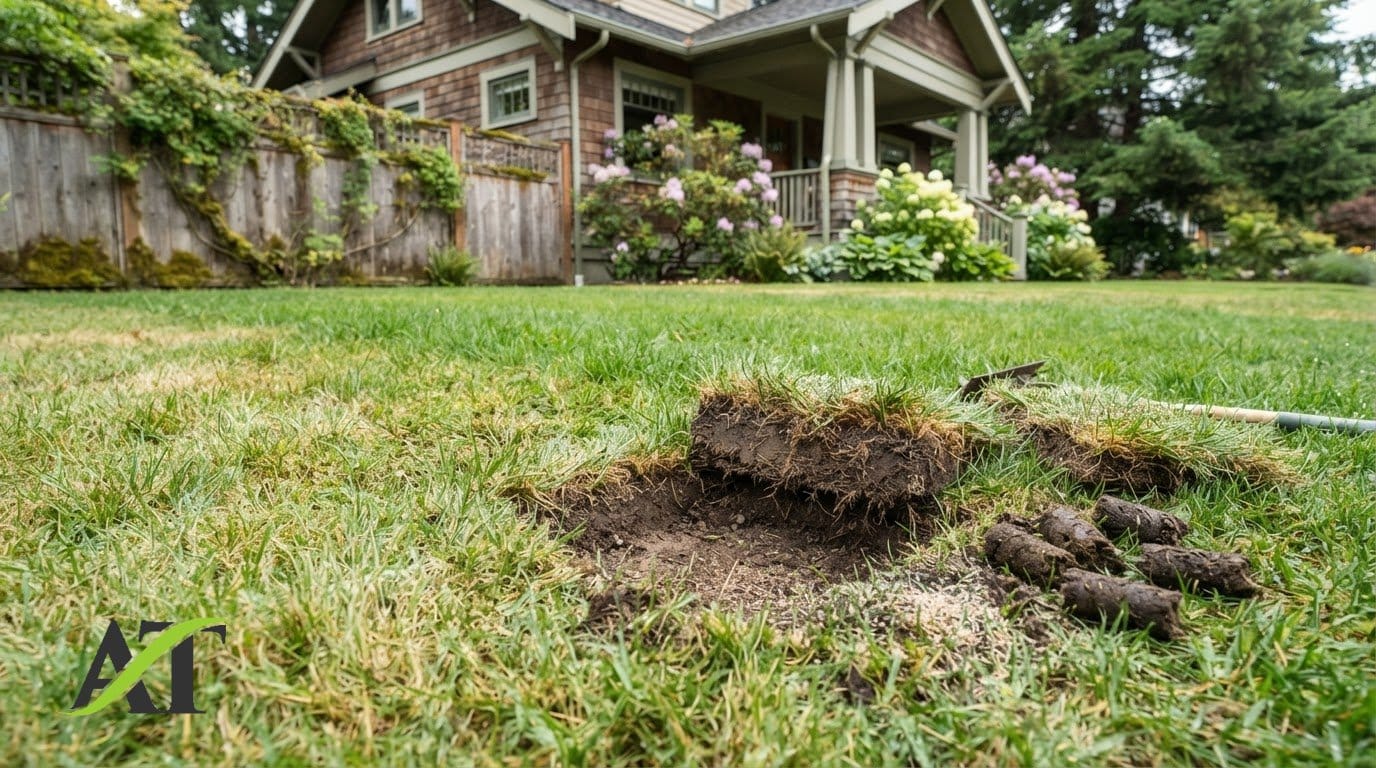
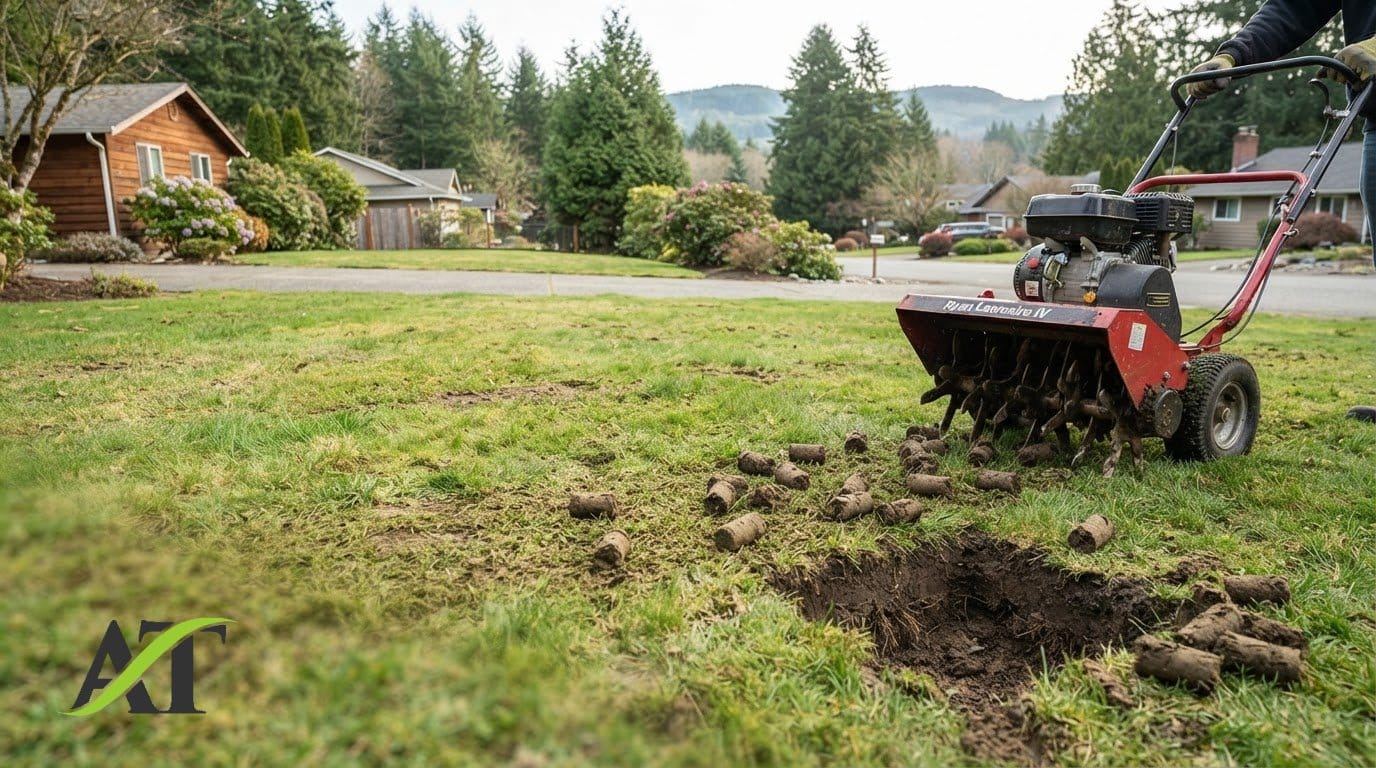
A true core aerator removes plugs of soil from the lawn. Those openings reduce the effects of compaction and create space for air and water to enter the root zone. That is different from assuming aeration fixes every lawn problem.
Core Aeration Can Help With
- Compacted lawn soil
- Air movement into the root zone
- Water infiltration where surface compaction is contributing
- Root-zone growing conditions
- Creating better seed-to-soil opportunities when overseeding is appropriate
Core Aeration Does Not by Itself
- Remove moss
- Remove a significant thatch layer
- Correct major drainage or grading problems
- Correct severe shade
- Replace missing or thin grass
- Solve every cause of poor lawn performance
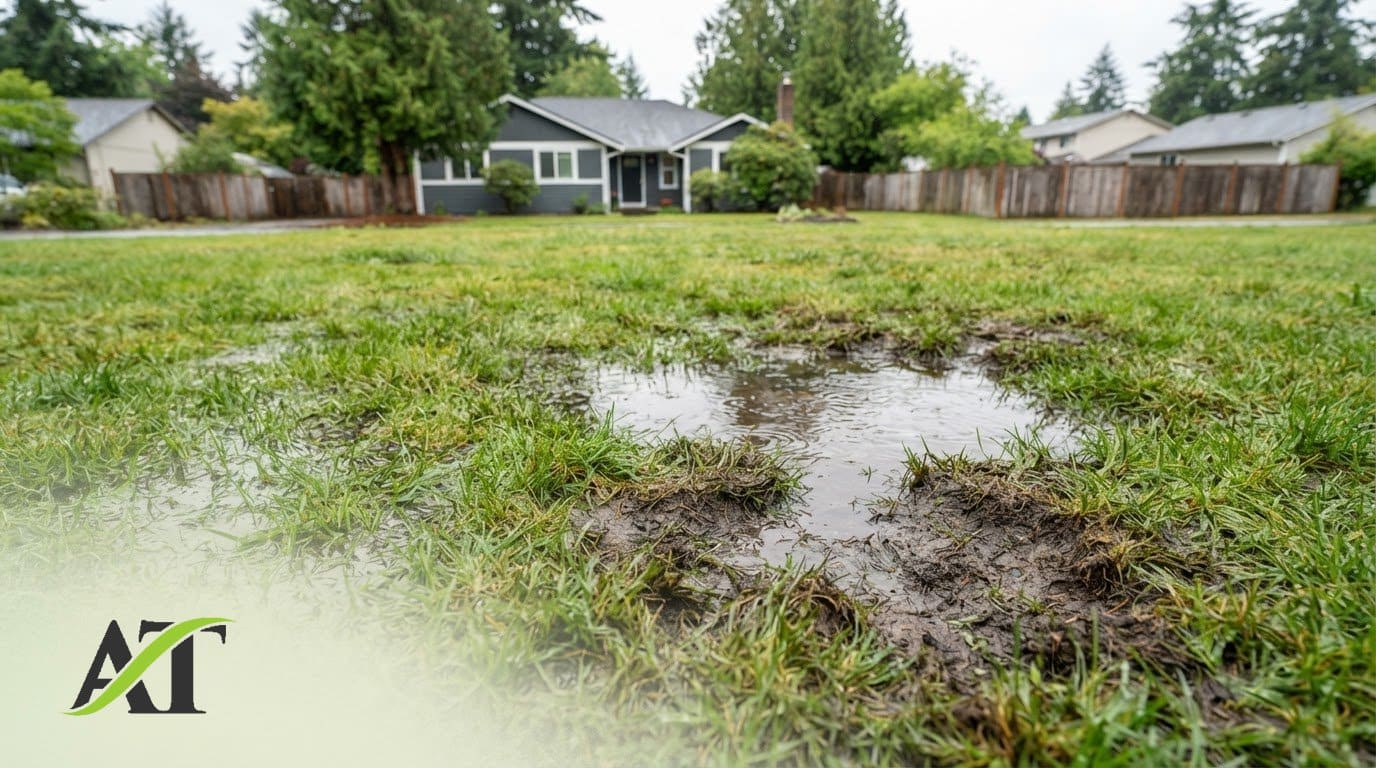
If compacted surface soil is preventing water from entering the ground, Core Aeration may help. If water has nowhere to go because of grading, chronically saturated soil, or a larger drainage problem, aeration is unlikely to be the complete solution.
Signs Your Lawn May Benefit From Core Aeration
No single symptom proves that a lawn needs aeration. Look for signs that point toward compaction rather than assuming that every thin, wet, or mossy lawn needs the same treatment.
Heavy thatch, major drainage problems, severe shade, irrigation problems, or a lawn that has lost substantial density may call for a different or broader approach.
When Is the Best Time to Aerate a Lawn in Seattle?
For North Seattle-area lawns, spring and fall are generally the most useful aeration windows because the lawn is more likely to be actively growing. Actual soil and weather conditions matter more than a rigid calendar date.
How Often Should You Aerate?
There is no need to automatically aerate every Seattle lawn twice a year. Frequency should depend on compaction, traffic, soil conditions, lawn performance, and whether aeration is being coordinated with another service such as overseeding.
A lawn that remains reasonably healthy and uncompacted may need Core Aeration less often. A lawn subject to heavier use or recurring compaction may benefit from more regular aeration.
When to Wait Before Aerating
More aeration is not automatically better. Sometimes waiting for better conditions—or addressing a different problem first—is the better choice.
Wait When the Soil Is Saturated
Core Aeration works best in moist, workable soil. Saturated or muddy soil can make effective aeration difficult and creates poor working conditions.
Wait During Severe Lawn Stress
A severely drought-stressed or dormant lawn may not be in a good position to respond to the disturbance.
Wait if Conditions Don’t Favor Recovery
The most useful timing is when the existing lawn is actively growing and capable of recovering.
Address the Real Problem First
If the primary issue is major drainage, grading, severe shade, or another condition that Core Aeration will not correct, aerating first may not solve what the homeowner is seeing.
How to Core Aerate a Seattle Lawn: Practical DIY Guide
DIY Core Aeration can be practical for small areas or homeowners comfortable operating the equipment. The goal is to remove actual soil cores under appropriate moisture conditions—not simply make holes.
- Use a true core or plug aerator.A core aerator removes plugs of soil. Spike-type tools primarily create openings by displacing soil and do not provide the same compaction-relief mechanism.
- Judge the soil moisture before you start.The soil should be moist and workable enough for the machine to pull useful cores, but not saturated or muddy. Recent Seattle rain may provide all the moisture you need. Very dry, hard soil may benefit from watering beforehand.
- Mow beforehand when needed.If tall grass would interfere with operating the machine or seeing obstacles, mow first at an appropriate normal height. Do not scalp the lawn simply because you plan to aerate.
- Identify and mark known obstacles.Clearly mark sprinkler heads, irrigation components, shallow landscape lighting or wiring, invisible-fence components, and other known lawn fixtures that could be damaged.
- Know what is below the lawn.Do not assume that marking visible sprinkler heads identifies every potentially vulnerable feature below the turf. Avoid powered aeration in an area when you are uncertain about potentially vulnerable buried components.
- Make adequate passes.Work the lawn evenly and give genuinely compacted areas appropriate coverage rather than making a single token pass everywhere.
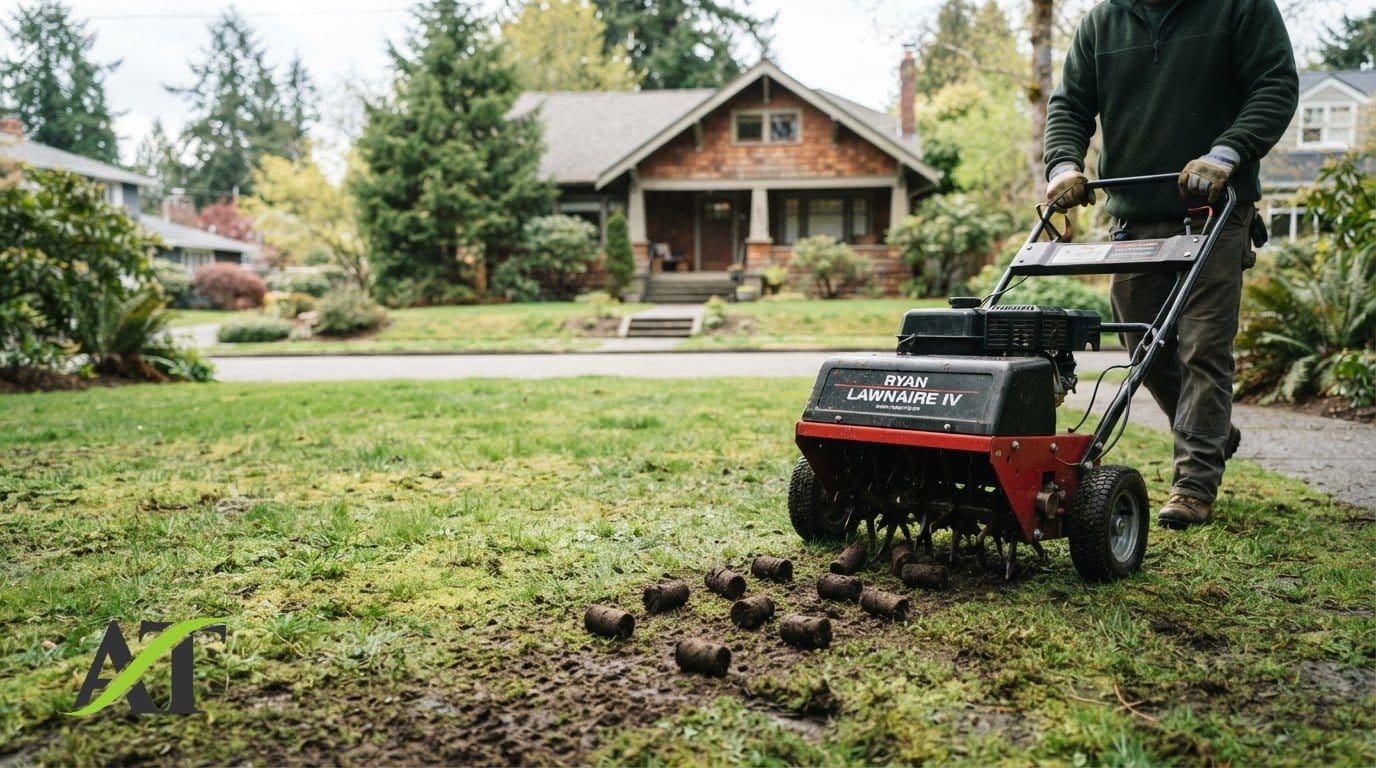
- Look for actual soil plugs.A true core aerator should be removing visible plugs of soil. Plug size and depth vary with equipment, compaction, soil conditions, and moisture, so there is no single universal plug measurement that applies to every lawn.
- Decide whether overseeding belongs in the plan.A dense lawn with compaction may need Core Aeration alone. A thin lawn with compaction may benefit more from Core Aeration plus Premium Overseeding.
Leave the Cores—Don’t Rake Them Up
The soil cores will dry, break apart, and work back into the lawn naturally. They may make the lawn look temporarily messy, but they are a normal part of Core Aeration and do not need to be collected.
Before Professional Core Aeration
A little preparation helps make professional aeration straightforward and protects known lawn fixtures.
Mark Known Lawn Fixtures
Clearly mark sprinkler heads and other known vulnerable or shallow components in the lawn before service.
Provide Clear Access
Make gates and access routes available and mention unusual steps, narrow passages, or access limitations when requesting service.
Clear Movable Items
Remove hoses, toys, furniture, and other movable objects from the areas that will be aerated.
Don’t Water Automatically
Soil conditions matter. Additional watering may be unnecessary after recent rain, while very dry soil may need moisture before effective aeration.
Compaction and Thatch Are Different Lawn Problems
Homeowners sometimes use “aeration” and “dethatching” as if they solve the same problem. They do different jobs.
Compaction = Soil / Root-Zone Problem
Core Aeration physically removes plugs from compacted lawn soil, creating space and openings through the root zone.
A lawn can be compacted without having an excessive thatch layer.
Thatch = Surface-Layer Problem
Dethatching (Power Raking) addresses excessive surface buildup when that material is interfering with the lawn.
Core Aeration should not be treated as a substitute for removing a significant thatch layer.
Does Core Aeration Help With Moss in Seattle?
Sometimes indirectly, but Core Aeration is not a moss-removal treatment. Moss often appears where grass is already struggling because of shade, moisture, poor turf density, compaction, or a combination of conditions.
Where Aeration May Help
If soil compaction is one of the conditions weakening the grass, Core Aeration can improve the root-zone environment and water infiltration through that compacted surface.
If the lawn is also thin, overseeding may then be considered to rebuild density.
What Aeration Will Not Correct
Core Aeration does not remove existing moss, eliminate severe shade, or repair a major drainage problem.
If heavy surface buildup is also present, Dethatching (Power Raking) may need to be considered separately.
Should You Overseed After Aeration?
Not every aerated lawn automatically needs seed. The answer depends on whether the existing grass is already dense enough.
Dense Lawn + Compaction
A reasonably healthy, dense lawn may need only Core Aeration when relieving compaction is the primary objective.
Aeration alone can be the correct service.
Thin Lawn + Compaction
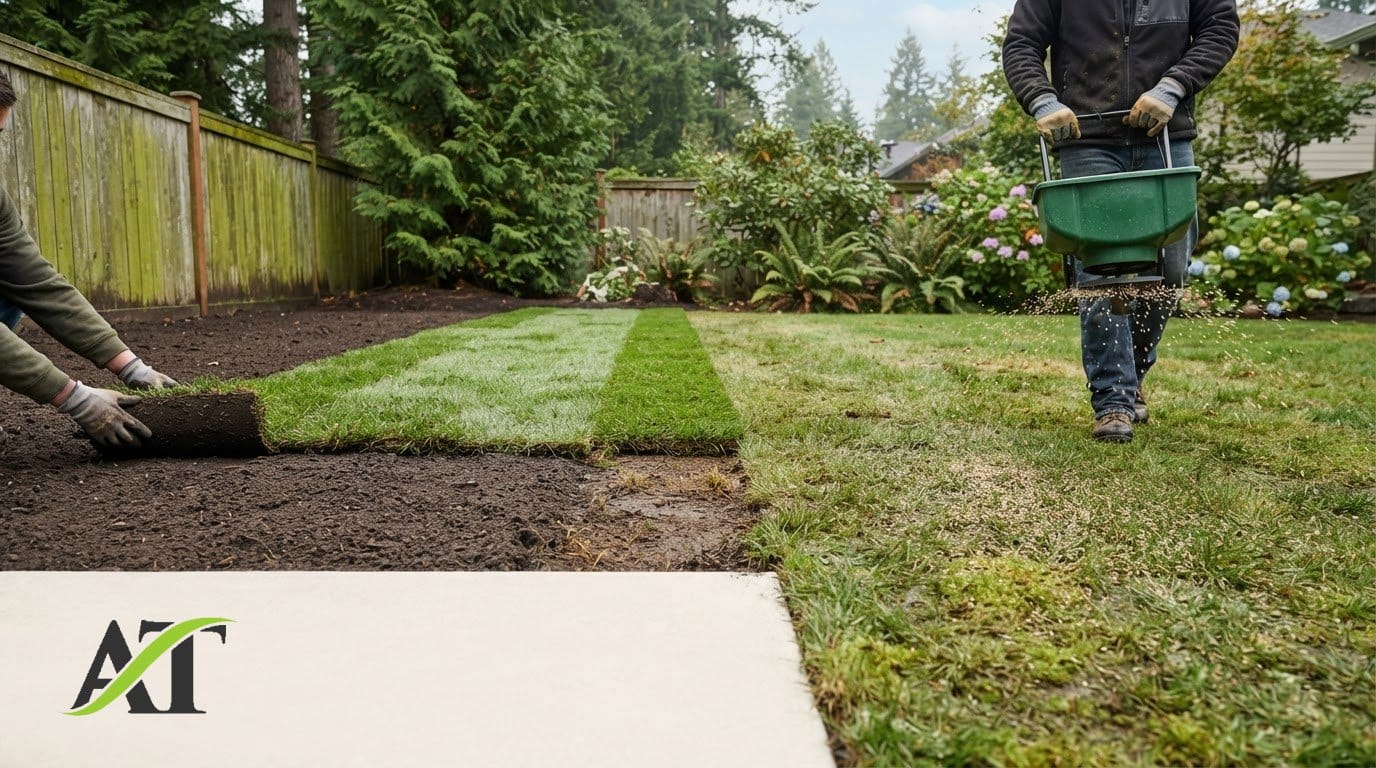
When the lawn also needs more density, Core Aeration creates exposed soil and openings that provide better seed-to-soil opportunities for an overseeding program.
This is where Lawn Tune-Up may make more sense.
Does Your Lawn Need More Than Aeration?
Choose the service based on the lawn problem rather than automatically choosing the largest package.
Core Aeration
Best for a lawn already in reasonably good condition when compaction relief is the main goal.
Core Aeration details →Lawn Tune-Up
Core Aeration + Premium Overseeding + Starter Fertilizer for lawns that also need improved density.
Lawn Tune-Up details →Full Meal Deal
Dethatching (Power Raking) + optional raking + Core Aeration + overseeding + Starter Fertilizer for lawns needing a stronger renovation approach when conditions warrant it.
Full Meal Deal details →DIY Core Aeration vs. Professional Aeration
DIY is a reasonable choice in the right situation. Professional service is primarily about equipment, scale, convenience, and avoiding the work of transporting and operating a machine.
DIY Can Make Sense For
- Small lawn areas
- Localized compaction
- Homeowners comfortable using or renting equipment
- Someone willing to make adequate passes and work carefully around known obstacles
Professional Aeration Can Make Sense For
- Larger lawns
- Widespread compaction
- Multiple lawn sections
- Difficult terrain or access
- Homeowners who do not want to rent, transport, operate, and return aeration equipment
Stewart’s Recommended DIY Lawn Tools
For homeowners who prefer to work on smaller areas themselves, these existing recommendations can be useful. A manual core tool is suited to small-scale aeration; the dethatcher/scarifier addresses surface cleanup rather than soil compaction.
As an Amazon Associate, I earn from qualifying purchases.

Yard Butler Manual Lawn Coring Aerator
A manual coring tool can be practical for tiny lawn patches and localized areas where bringing in powered equipment would be unnecessary.
For a full lawn or widespread compaction, manually pulling cores becomes much more labor intensive.
View Yard Butler Aerator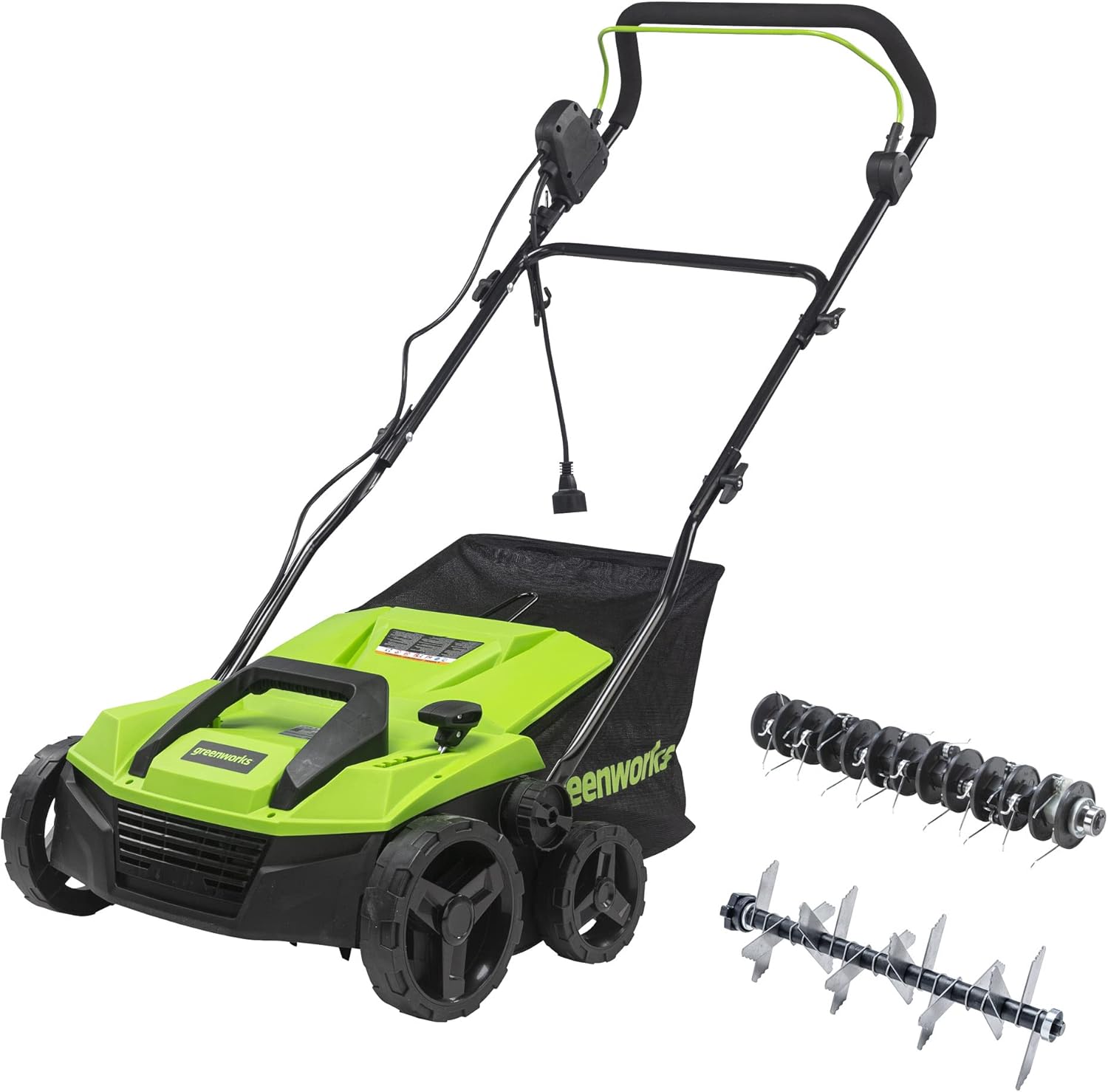
For surface buildup, not core aeration
Greenworks 13 Amp 14-Inch Corded Dethatcher / Scarifier
This type of tool is intended for surface cleanup and light dethatching work. It serves a different purpose from a core aerator, which works on soil compaction.
For heavier lawn buildup or a larger renovation, learn about professional Dethatching (Power Raking).
View Greenworks DethatcherWhat to Do After Core Aeration
After-care depends heavily on whether you had Core Aeration by itself or combined aeration with overseeding.
After Core Aeration Only
- Leave the soil cores on the lawn.
- Expect the lawn to look temporarily messy while the plugs break apart.
- Resume normal lawn care based on weather and lawn conditions.
- Do not treat the holes or plugs as debris that needs to be cleaned up.
After Core Aeration + Overseeding
- Seed care and consistent watering become especially important.
- Do not allow newly germinating seed to repeatedly dry out.
- Be careful with herbicides and other treatments while new grass is establishing.
- Follow the dedicated Seattle Lawn After-Care guide.
Seattle Aeration Advice From the Person Doing the Work
Aerating Thatching Co. is owner-operated, and Stewart personally performs the lawn service. That means the person evaluating what makes sense for the lawn is also the person doing the work.
The goal is not to automatically sell every homeowner overseeding, Dethatching (Power Raking), or a larger renovation. Sometimes Core Aeration is enough. Sometimes another lawn problem needs to be addressed instead.
Seattle Lawn Aeration FAQ
How often should I aerate my Seattle lawn?
Aeration frequency should depend on lawn conditions rather than an automatic twice-a-year schedule. A lawn that stays reasonably healthy and uncompacted may need Core Aeration less often, while a heavily used or repeatedly compacted lawn may benefit more regularly.
What is the best time to aerate a lawn in Seattle?
Spring and fall are generally the most useful windows because the lawn is more likely to be actively growing. Actual soil moisture, weather, lawn stress, and whether you plan to overseed matter more than a rigid calendar date.
Should I mow before aerating?
Mow beforehand if the grass is tall enough to interfere with operating the aerator or seeing obstacles. Use an appropriate normal mowing height rather than scalping the lawn simply because you plan to aerate.
How wet should the soil be before Core Aeration?
The goal is moist, workable soil that allows the machine to remove useful soil cores without operating in saturated or muddy conditions. Recent rainfall may provide enough moisture; very dry, hard soil may need watering beforehand.
Should I remove the soil plugs after aeration?
No. Leave the cores on the lawn. They will dry, break apart, and work back into the turf naturally.
Does Core Aeration get rid of moss?
No. Core Aeration does not remove moss. It may help improve growing conditions where soil compaction is one factor weakening the grass, but shade, drainage, turf density, and surface buildup may need to be addressed separately.
Should I overseed every time I aerate?
No. A dense lawn where compaction is the primary problem may only need Core Aeration. If the lawn is thin as well as compacted, combining Core Aeration with Premium Overseeding may make more sense.
What is the difference between Core Aeration and Dethatching (Power Raking)?
Core Aeration addresses soil compaction by removing plugs from the soil. Dethatching (Power Raking) addresses excessive surface-layer buildup. A lawn can have one problem, the other, or both.
Continue With the Right Lawn Guide
Not Sure If Your Lawn Needs Aeration?
Some lawns need only Core Aeration. Some need aeration plus overseeding. Others are showing symptoms of thatch, drainage, shade, or another problem that aeration alone will not solve.
Describe what your lawn is doing and Stewart can help point you toward the appropriate service rather than making you guess.