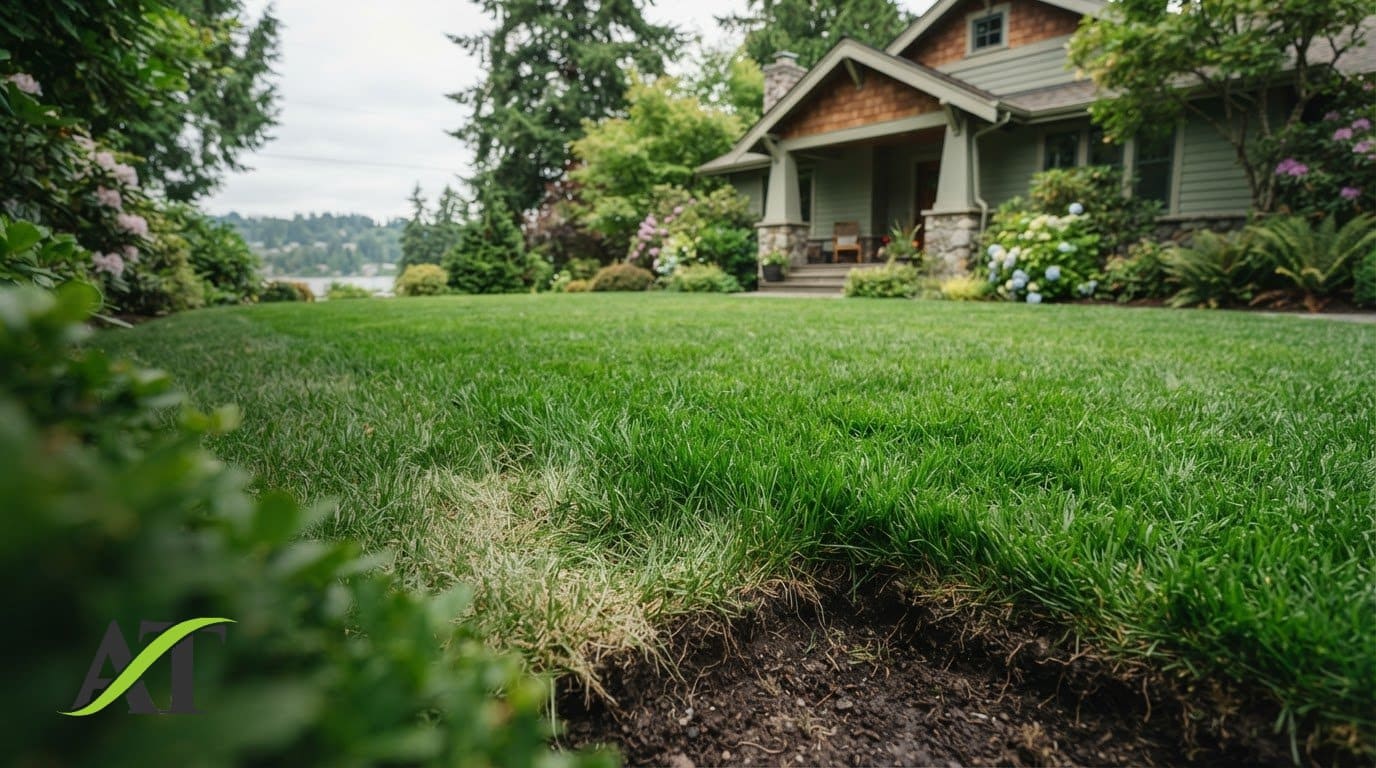
Maintaining a thriving lawn in Seattle’s summer heat doesn’t have to be a challenge. Follow these expert tips to ensure your lawn stays healthy, resilient, and beautiful all season long.
1. Feed Your Lawn for Strength
- Use a slow-release fertilizer before summer heat sets in. This encourages deep root growth and strengthens the lawn without promoting excessive growth that wastes water.
- Fertilizing early ensures your lawn can better withstand heat, drought, and weeds.
2. Mow Smart
- Set your lawnmower height to 2.5 inches. Taller grass shades the soil, reducing evaporation and stress.
- Keep your mower blade sharp for clean cuts, which minimizes damage to the grass.
3. Water Wisely
- Water deeply but less frequently to promote deep roots and drought tolerance.
- Water in the early morning to reduce evaporation.
- For hard or dry soils, use wetting agents to help water reach the roots.
4. Prepare for August Heat
- With hotter summers in Seattle, consider watering your lawn at least twice in August. This prevents damage to dormant grass and saves on repair costs.
5. Mulch for Moisture
- Apply a 2-3 inch layer of mulch to garden beds to retain soil moisture and keep roots cool.
- Order mulch in advance to allow your mulch to mature and avoid introducing weed seeds or toxins into your garden.
6. Prune with Care
- Avoid heavy pruning of shrubs and ornamentals during the summer. Instead, focus on light maintenance and deadheading flowers to encourage reblooming.
7. Check Your Sprinklers
- Inspect and fix any broken or misaligned sprinkler heads.
- Install a rain sensor to save water and reduce your bill. Flag sprinkler heads during the summer for easy maintenance in spring.
By taking these simple steps, you can create a lush, low-maintenance landscape that thrives through Seattle’s hot summer months. Whether you’re a homeowner or a landscaper, this guide ensures your lawn stays green and healthy, even in challenging weather.
For more professional lawn care advice, contact your local experts or explore additional resources tailored to Seattle’s unique climate.