That rental machine sitting down at the hardware store looks like an easy weekend fix, but DIY dethatching often wrecks more turf than it saves. When thick moss and suffocating debris choke out healthy grass, searching for a dethatcher near me is a natural first move. You already know your lawn needs air, moisture, and relief to thrive. Yet, wrestling a 200-pound machine into an SUV, guessing at tine depths, and bagging dozens of debris piles can quickly turn a simple Saturday project into a backbreaking ordeal.
You don’t have to gamble with your root system or spend hours behind a rake to get results. Discover whether renting equipment, buying a machine, or hiring a local specialist is best for restoring your lawn. Below, we break down the practical trade-offs between consumer tools, rental power rakes, and dedicated professional restoration so you can choose the best route for your turf.
Key Takeaways
- Before searching for a dethatcher near me, weigh the transport hurdles, labor demands, and power limits of DIY machines against professional mechanical restoration.
- Identify whether your lawn has surpassed the critical half-inch thatch threshold that repels irrigation and chokes root development.
- Discover why clearing thatch is only half the battle, requiring Core Aeration and Overseeding to protect exposed soil from weeds and moss.
- Learn how to choose between routine seasonal care like the Lawn Tune-Up and deep turf remediation with the Full Meal Deal.
Renting, Buying, or Hiring: Comparing Local Dethatcher Options
Typing dethatcher near me into a search bar usually brings up three choices: buying a compact electric unit, renting commercial machinery, or hiring a local restoration team. Each route brings clear trade-offs in equipment capability, physical effort, and overall turf recovery.
The Reality of DIY Dethatcher Equipment
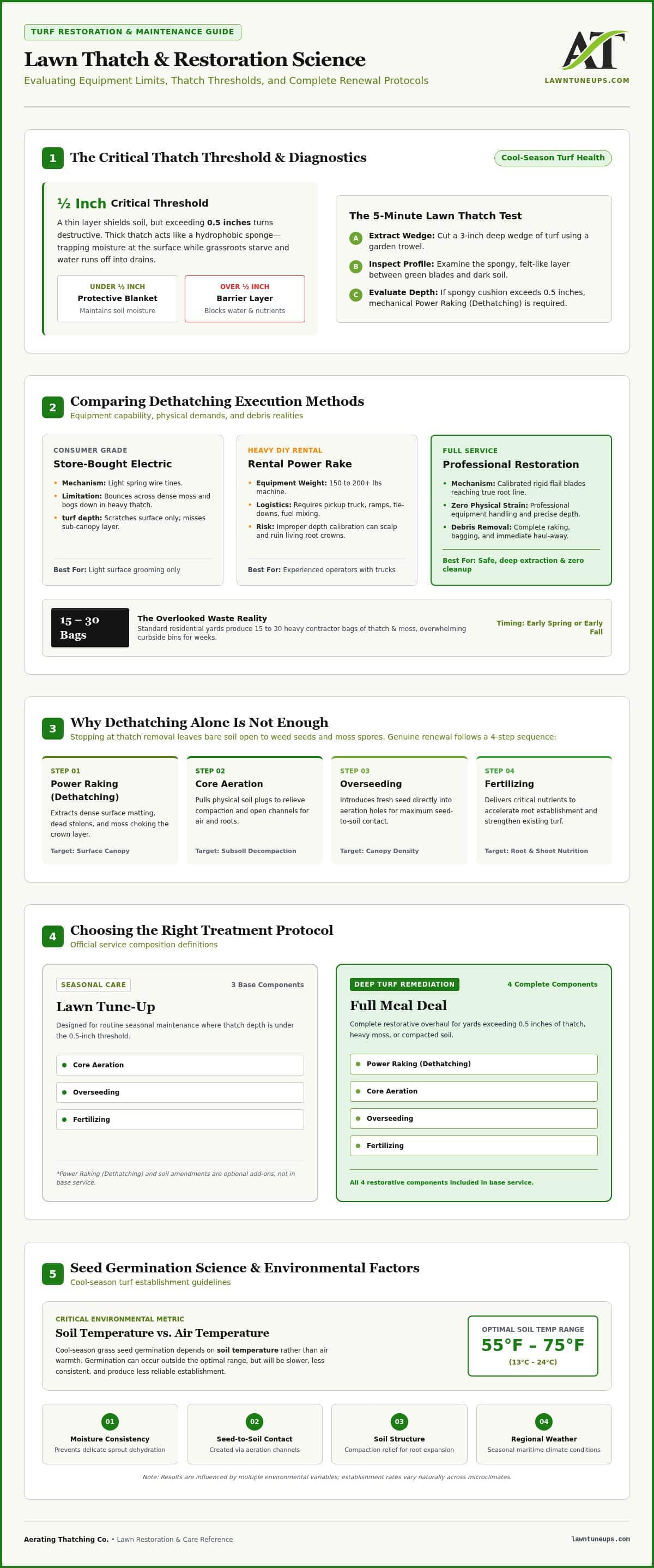
Store-bought electric models rely on light spring wire tines. These parts scratch away surface debris, but they quickly bog down in dense, moss-matted turf. True mechanical extraction requires rigid flail blades that reach down to the root line. Operating a heavy-duty commercial dethatcher or lawn scarifier is a different challenge altogether. These machines regularly weigh over 150 pounds, demanding ramps, tie-downs, and a pickup truck just for transport. You also handle fuel mixing, height calibration, and post-job cleaning to avoid equipment penalties. Renting equipment turns a weekend into an exhausting mechanical workout, while hiring a specialist delivers calibrated power without the physical toll.
The Volume of Waste: Managing Thatch Debris
Homeowners often overlook the mountain of debris that power rakes pull to the surface. A standard residential yard routinely produces 15 to 30 heavy contractor bags of dead roots and moss. Fitting that volume into curbside yard-waste bins across Seattle, Shoreline, or Snohomish County can take weeks of collection cycles. Leaving wet thatch piled on grass quickly smothers healthy blades. Professional crews handle the entire cycle, bringing specialized machinery to dislodge the material, rake it thoroughly, and haul away the mess immediately.
Signs Your Yard Needs Power Raking (Dethatching) This Season
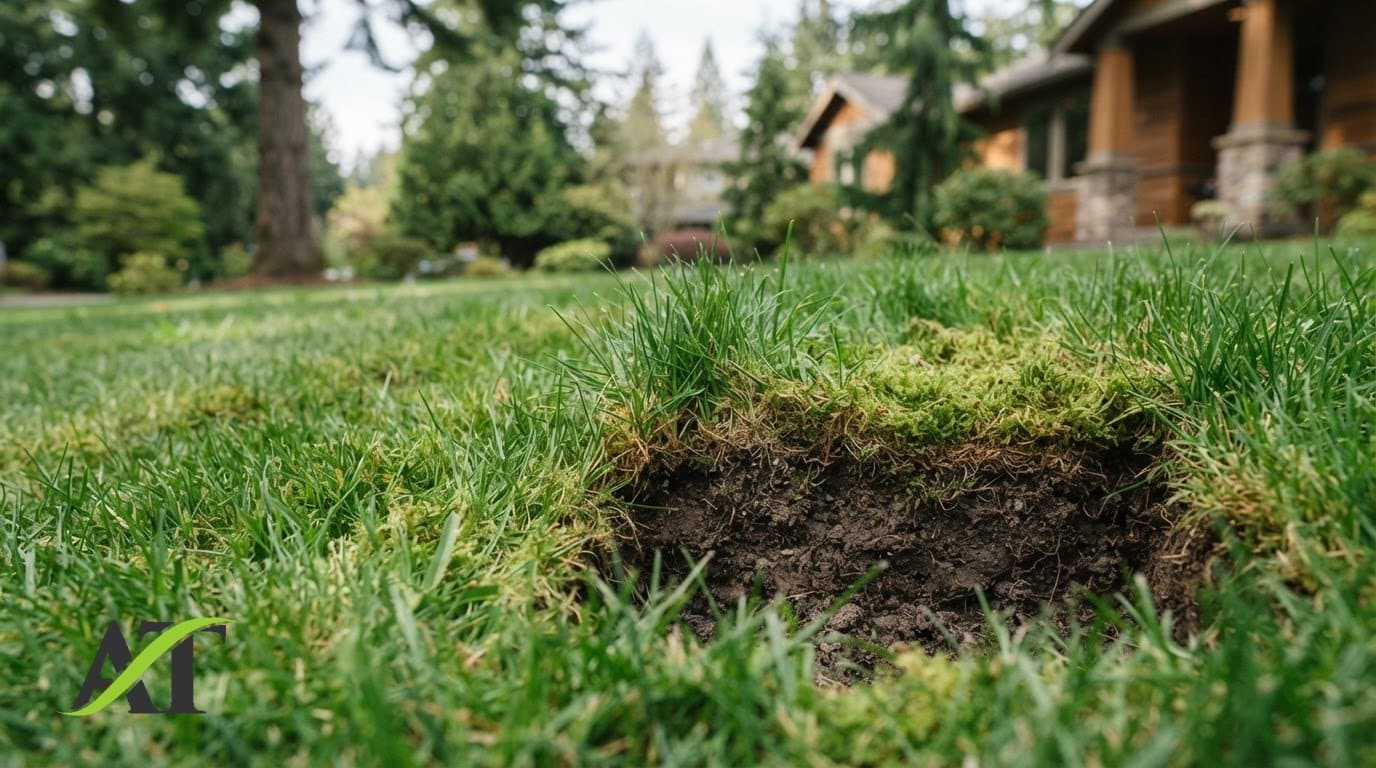
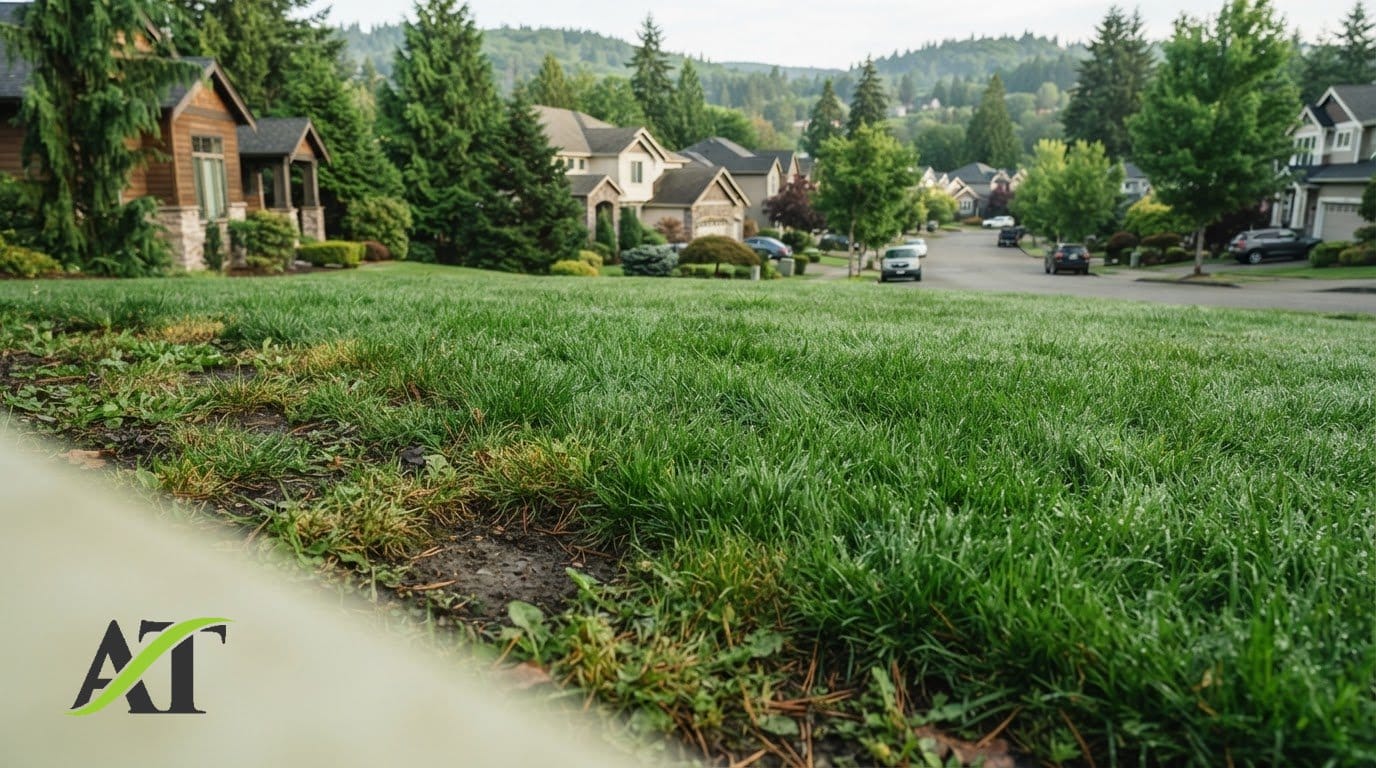
A thin layer of decaying plant tissue shields soil from harsh weather. Once that barrier exceeds one-half inch, it turns destructive. Thick thatch behaves like a dry sponge, trapping moisture at the surface while grassroots starve below. Water runs off into storm drains instead of penetrating the subsoil. Learning the Signs Your Yard Needs Power Raking helps you schedule mechanical work during active cool-season growth windows in early spring or early fall.
How to Perform the Lawn Thatch Test
Evaluating your lawn takes five minutes with a common hand tool:
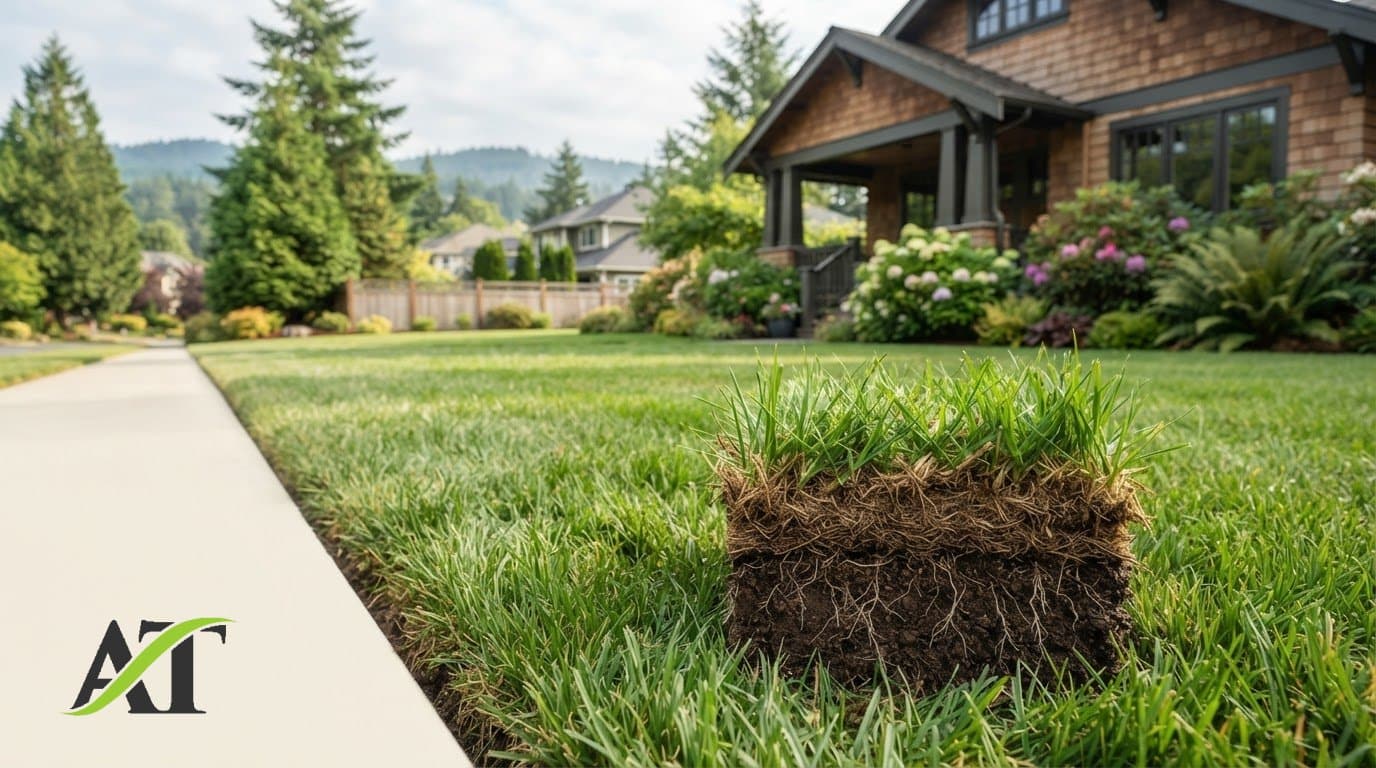
- Cut a three-inch deep turf wedge using a standard garden trowel.
- Inspect the profile between the green blades and the dark mineral soil.
- Measure the spongy, felt-like layer of dead crowns and intertwined stolons.
If that cushion measures over half an inch, routine raking will not cut it. You need mechanized extraction to reopen the turf canopy.
Moss and Thatch Dynamics in Pacific Northwest Turf
Cool maritime conditions across Bothell, Kenmore, and Lynnwood create persistent damp shade. Moss quickly intertwines with decomposing bentgrass and fescue stems, forming dense, hydrophobic mats. Removing this dense layer requires mechanical precision. Light homeowner tools merely bounce across the surface, prompting another search for an industrial dethatcher near me. However, setting commercial rental blades too deep will scalp root crowns and ruin living turf. Homeowners looking to strip matted layers without tearing up healthy root systems can turn to professional power raking services. If your lawn feels springy underfoot and water puddles quickly, you can request a quote to have a specialist inspect the thatch depth before permanent damage sets in.
Why Dethatching Alone Is Not Enough for Lawn Restoration
Pulling up matted thatch opens the surface, but stopping there often backfires. Stripping away that spongy layer leaves exposed, bare ground vulnerable to airborne weed seeds and opportunistic moss spores. Searching for a dethatcher near me solves only the first phase of turf renewal. Complete restoration requires preparing the underlying soil and actively rebuilding canopy density.
The Critical Sequence: Dethatch, Aerate, and Seed
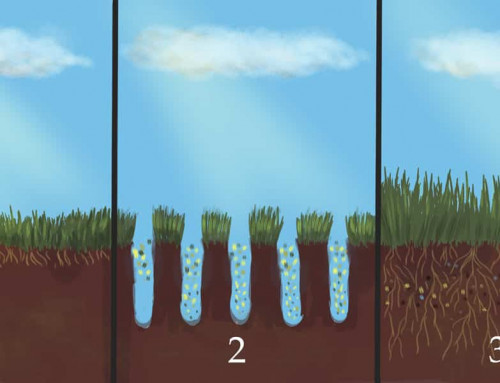
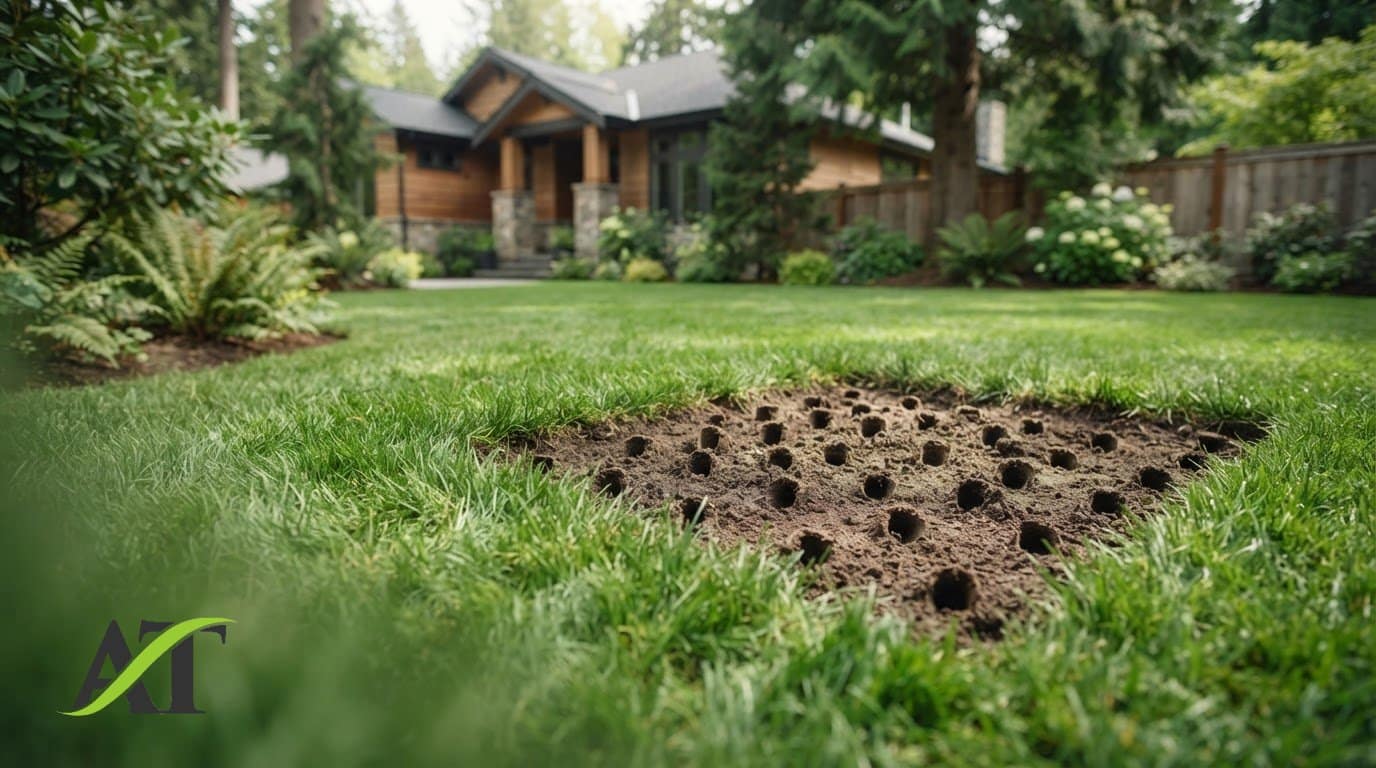
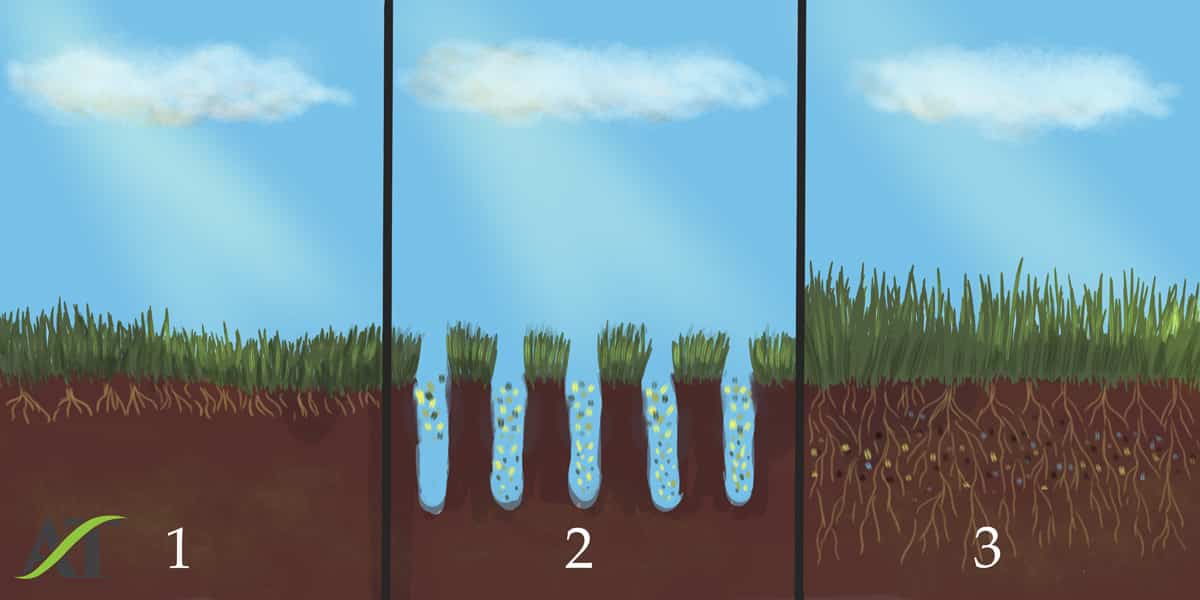
Thatch removal targets the ground surface, whereas genuine soil health happens deeper down. Core aeration and dethatching serve complementary mechanical purposes; one clears the surface debris while the other pulls physical soil plugs to relieve subsoil compaction. These open core holes create direct channels for water, root growth, and fresh seed. Establishing thick turf depends on reliable seed-to-soil contact rather than scattering seed over hard ground. Keep in mind that cool-season grass establishment depends on soil temperature rather than air warmth, requiring an optimal soil temperature range of 55°F–75°F (13°C–24°C) for dependable germination. Success cannot be guaranteed with absolute certainty because moisture levels, seed-to-soil contact, existing soil structure, and regional weather all dictate how well new shoots establish.
Post-Restoration Watering and Soil Care
Fresh seedlings require strict moisture management during their first two to three weeks. Light, frequent watering keeps the top half-inch of soil continuously moist without washing away exposed seed. Applying balanced organic fertilizers feeds young root systems as they anchor into open core holes. Protect these tender blades from early mechanical stress by avoiding heavy foot traffic until the new grass establishes a durable, uniform crown.
Choosing the Right Treatment: Lawn Tune-Up vs. Full Meal Deal
Every lawn faces different soil and growth challenges. Picking the proper service package avoids overworking fragile grass or spending money on machinery you don’t actually need. Instead of searching endlessly for an equipment rental or a dethatcher near me, matching your specific turf condition to the right mechanical process ensures lasting recovery across North Seattle, Edmonds, and Snohomish County.
When to Choose the Signature Lawn Tune-Up
The standard Lawn Tune-Up is designed for yards that already have controlled thatch levels. This foundational service consists exclusively of Core Aeration, Overseeding, and Fertilizing. It relieves subsoil compaction, introduces resilient seed blends, and feeds established root systems. For properties with modest organic buildup, Power Raking (Dethatching) is not required upfront, though it can always be included as an optional add-on if specific trouble spots need mechanical clearing.
When Your Lawn Requires the Full Meal Deal
Lawns buried under thick moss or dense, springy thatch need aggressive physical intervention before overseeding can succeed. For these distressed properties, the Full Meal Deal delivers a complete four-stage restoration: Power Raking (Dethatching), Core Aeration, Overseeding, and Fertilizing.
First, commercial mechanical power rakes extract suffocating debris without tearing out living grass crowns. Our crews rake and haul away the accumulated matter. Next, core aerators pull soil plugs to open root passages. Finally, we apply cool-season seed and balanced fertilizer to establish thick turf. Skip the rental hassles and secure your seasonal service through our online quote form.
Reclaim Your Lawn Without the Heavy Lifting
Renting bulky machinery or searching for an electric dethatcher near me often ends in transport headaches, physical exhaustion, and mountains of bagged debris. Aerating Thatching Co. has served property owners across the Puget Sound region as an owner-operated local business since 2004. We utilize commercial mechanical equipment specifically calibrated to strip suffocating moss without tearing up healthy root crowns. Whether your yard needs the standard Lawn Tune-Up or deep remediation through the Full Meal Deal combining Power Raking (Dethatching), Core Aeration, Overseeding, and Fertilizing, partnering with a local specialist ensures deep, lasting turf vitality.
You don’t have to tackle the backbreaking physical labor alone. With targeted mechanical care and proper seasonal timing, you’ll cultivate a thick, resilient lawn built to thrive through every Northwest season.
Frequently Asked Questions
Can I rent a dethatcher and do my own lawn over the weekend?
Yes, you can rent one, but the project requires serious physical labor and proper logistics. Commercial rental units weigh over 150 pounds and require ramps, tie-downs, and a truck bed. Once on site, operating the equipment, raking debris, and bagging dozens of waste bags demands hours of hard work. That is why homeowners searching for a dethatcher near me often choose dedicated professionals instead.
How do I know if my lawn needs Power Raking (Dethatching) or just Core Aeration?
Check the thickness of the dead organic cushion between your green grass blades and the soil line. If that spongy mat exceeds one-half inch, you need Power Raking (Dethatching) to mechanically slice through the debris. If the thatch layer measures under half an inch but your soil feels hard and compacted, Core Aeration alone provides sufficient airflow and root relief.
What is included in the Full Meal Deal versus a standard Lawn Tune-Up?
The standard Lawn Tune-Up consists exclusively of Core Aeration, Overseeding, and Fertilizing for healthy turf maintenance. Power Raking (Dethatching) is not part of this base package, though it can be selected as an optional add-on. Conversely, the Full Meal Deal is our comprehensive restoration package that always includes all four treatments: Power Raking (Dethatching), Core Aeration, Overseeding, and Fertilizing.
What soil temperature is required for grass seed germination after dethatching?
Cool-season grass seed requires an optimal soil temperature range between 55°F and 75°F (13°C to 24°C) for successful germination. You must measure soil temperature rather than relying on air warmth. While seeds can sprout outside this range, establishment will be slower and far less consistent. Actual results depend on consistent moisture, solid seed-to-soil contact, overall soil health, and seasonal weather patterns.
Will mechanical dethatching kill or permanently damage my existing grass?
Properly calibrated commercial power rakes will not ruin a lawn, though the turf will look ragged immediately following treatment. Flail blades slice vertically through dead matter while preserving root crowns. Turf damage typically happens when DIY operators using rented machinery set blades too low into the soil bed. When you hire an experienced team instead of picking a random dethatcher near me, precision depth control protects living turf.
Article by
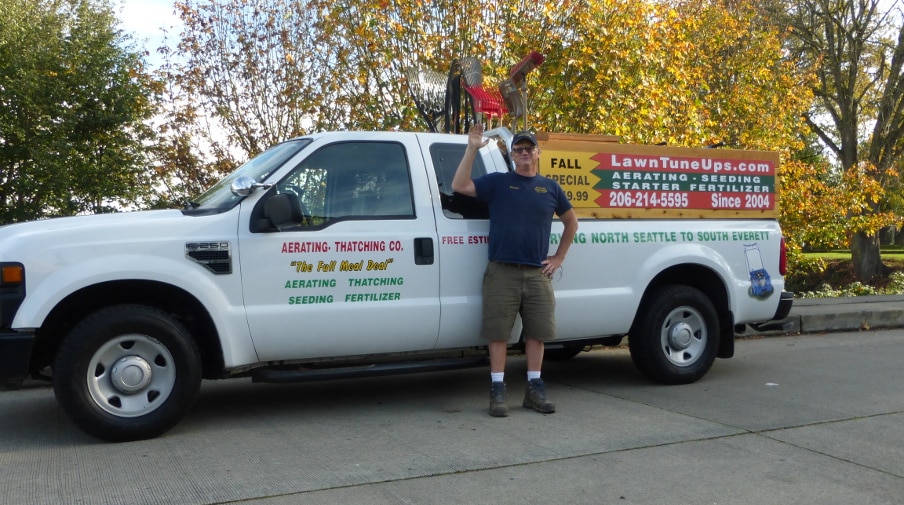
Stewart Armour
Stewart Armour is an independent lawn restoration expert, educator, and owner of Aerating Thatching Co., serving the greater Seattle area since 2004. With more than two decades of professional experience restoring Western Washington lawns, Stewart specializes in diagnosing lawn problems, improving soil health, and developing long-term lawn renovation strategies. His education includes turf management studies, advanced golf course turf training, and continuing education through Wilbur-Ellis University, State Turf Facilities, Soil First Academy, and Golf Course Applied Turf Physiology. Every article published on LawnTuneUps.com is grounded in practical field experience, current turf science, and a commitment to helping homeowners understand the why behind every recommendation—not just what to do.
Stewart has personally evaluated thousands of residential lawns throughout the Seattle area and remains committed to helping homeowners understand the science behind growing healthier, more resilient lawns.