Why does your backyard feel more like a mossy forest floor than a functional lawn? If you live in Lake Forest Park, you’re likely battling the heavy canopy shade and acidic soil that define our beautiful local landscape. You’ve probably tried every fertilizer on the shelf, only to watch your grass remain thin and patchy under those mature tree roots. It’s frustrating when your outdoor space doesn’t reflect the care you put into it. Professional lawn aeration Lake Forest Park is the essential first step to fixing these deep-seated issues.
We understand that a great yard requires more than a quick mow. Our team focuses on mechanical restoration rather than simple maintenance. Discover how specialized Core Aeration and our signature Lawn Tune-Up, consisting of Core Aeration, Overseeding, and Fertilizing, can transform your yard into a thick, resilient landscape. This guide explains the difference between a basic trim and a total restoration. We’ll walk you through soil health and provide the professional guidance needed to handle the unique challenges of our PNW environment.
Key Takeaways
- Learn why the local tree canopy and PNW rain make professional lawn aeration Lake Forest Park essential for overcoming soil compaction and moss growth.
- Understand the specific components of a Lawn Tune-Up, which combines Core Aeration, Overseeding, and Fertilizing to restore turf density.
- Identify the critical window for restoration by monitoring soil temperatures, aiming for the optimal 55°F–75°F range to support successful Overseeding.
- Distinguish between general maintenance and mechanical restoration to choose the right service, such as the comprehensive Full Meal Deal for yards needing Power Raking (Dethatching).
Why Lake Forest Park Lawns Require Professional Core Aeration
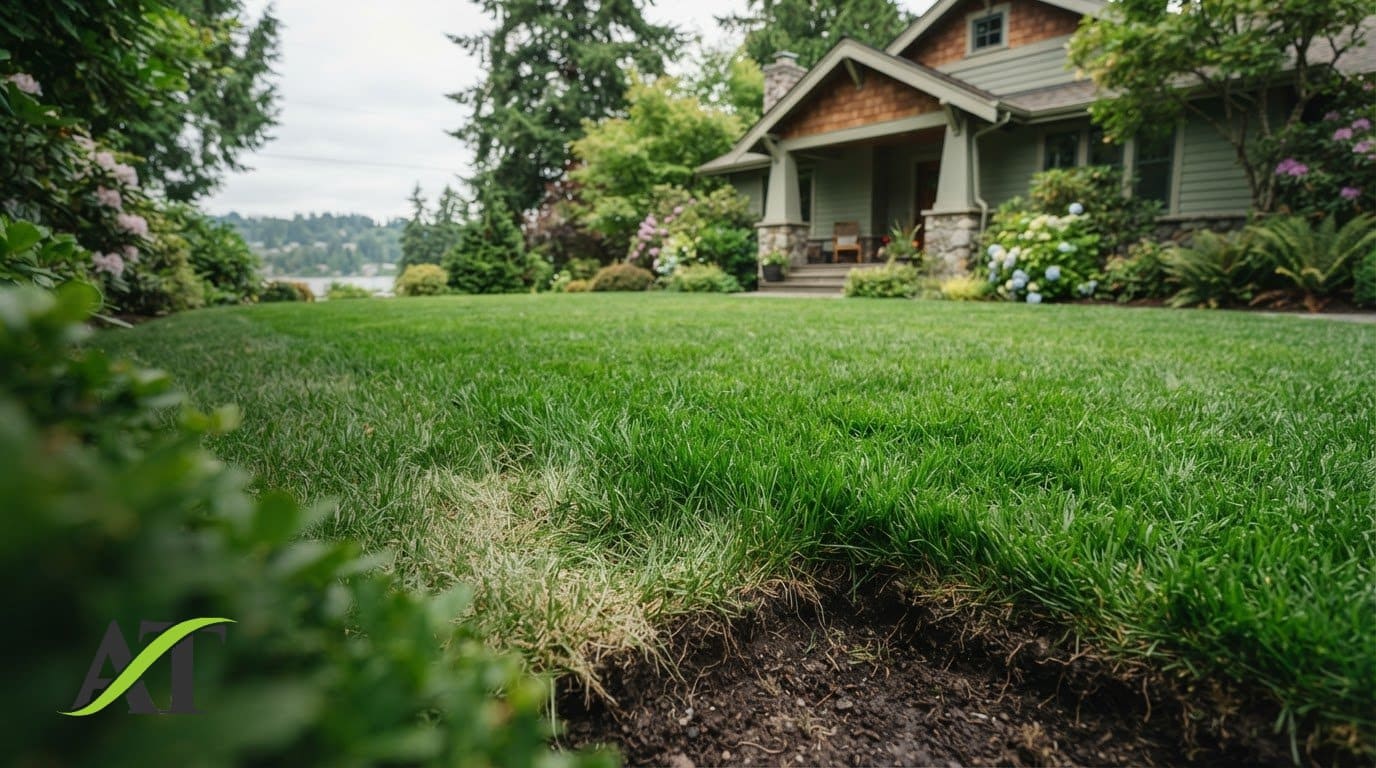
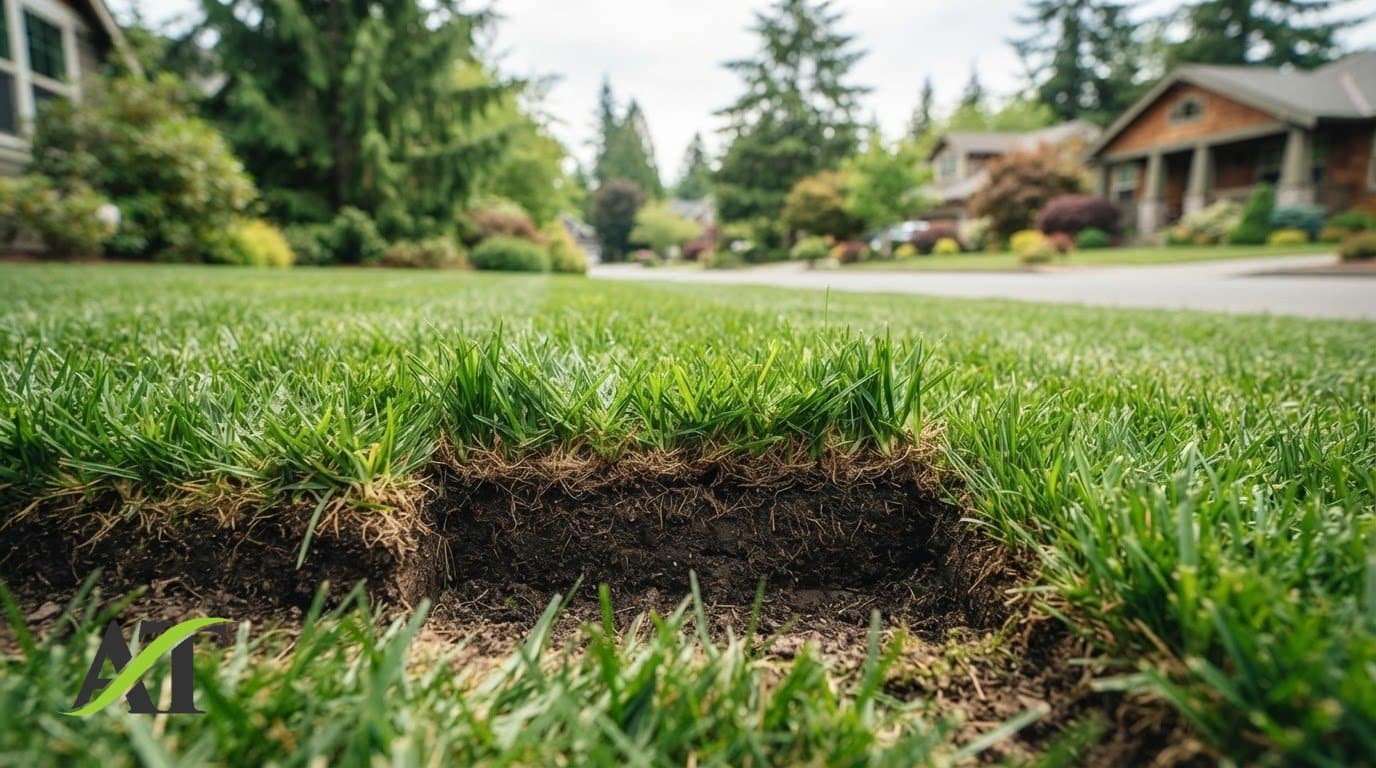
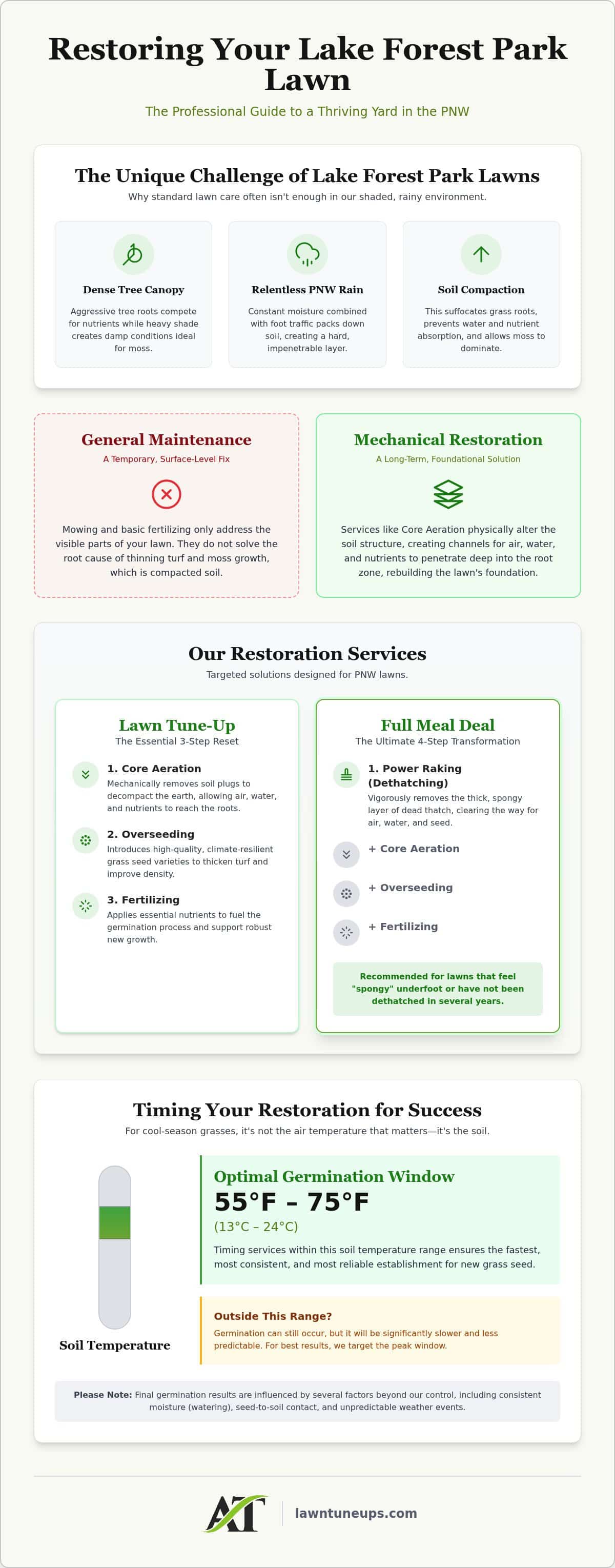
Lake Forest Park is famous for its dense, beautiful canopy. However, those towering trees create a hidden battleground beneath your lawn. Mature roots compete aggressively for space and nutrients while the heavy shade keeps the ground damp. When you add the relentless Pacific Northwest rain to the mix, the soil eventually packs down like concrete. This is why lawn aeration Lake Forest Park is a necessity, not a luxury. A professional Lawn aerator performs Core Aeration, which is the mechanical process of pulling small plugs of soil from the ground. This opens up vital channels for air, water, and nutrients to reach the root zone.
The Impact of Soil Compaction on Turf Health
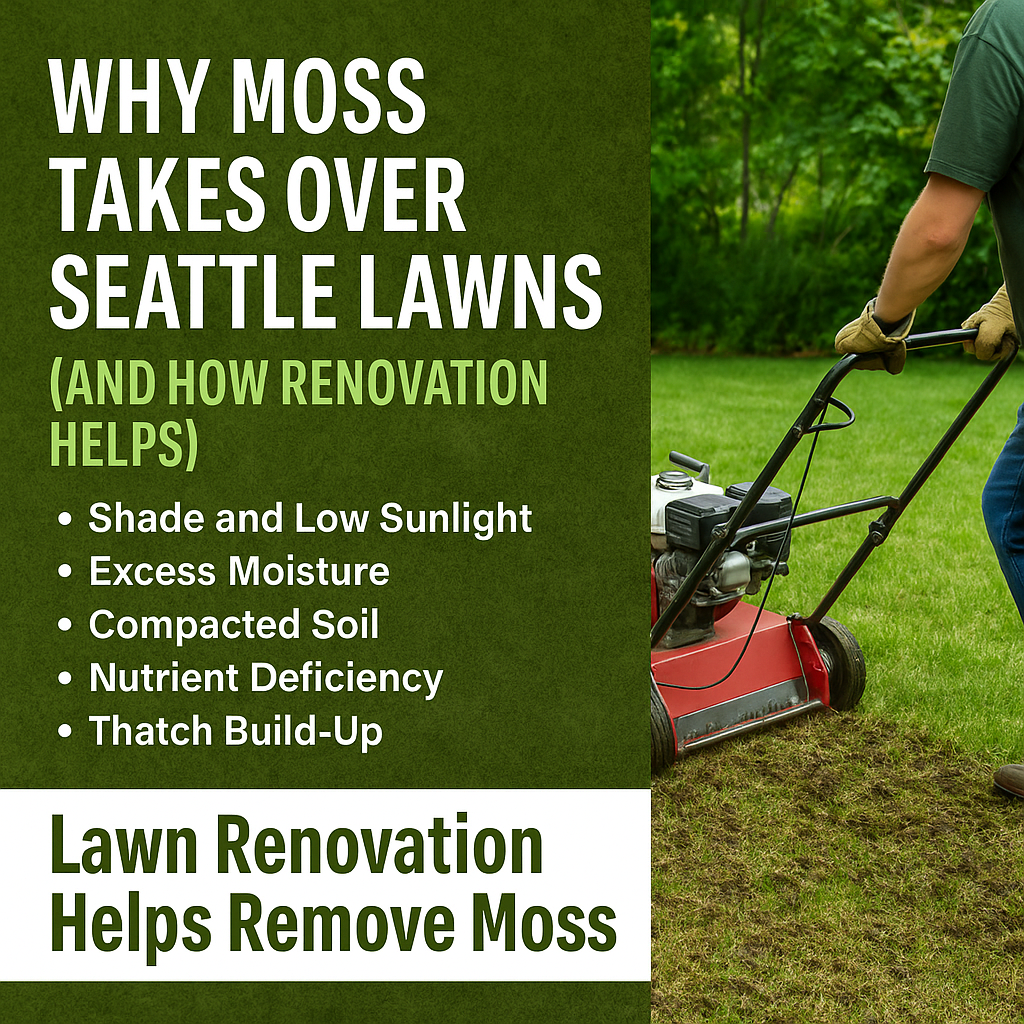
Compacted soil essentially suffocates your grass. Roots can’t penetrate the hard earth, leading to shallow growth and thinning turf that browns quickly in the summer. In neighborhoods like Sheridan Beach, this hard, acidic soil becomes the perfect breeding ground for moss. Moss doesn’t need deep roots or loose soil to thrive. Without mechanical intervention to break through the compaction, surface treatments like fertilizer just sit on top and wash away with the next rain.
Specialist Restoration vs. General Mowing
Many homeowners mistake weekly mowing for comprehensive care. While a clean cut looks nice, it does nothing for the biology beneath the surface. We are restoration specialists, not a mowing crew. Real change requires specialized equipment capable of pulling deep soil cores. Surface-level fixes can’t solve the structural issues caused by our unique woodland environment. True restoration starts with Core Aeration to rebuild the foundation of a healthy yard.
The Lawn Tune-Up: A Specialized Approach to Restoration
Most local yards don’t need another mow; they need a reset. Our signature Lawn Tune-Up is a targeted three-step process built specifically for the unique needs of Western Washington properties. It’s the most efficient way to handle lawn aeration Lake Forest Park while simultaneously addressing thin turf. We’ve refined this process over years of working with local landscapes. You can learn more about our Seattle Lawn Tune-Up process to see how we tackle specific soil challenges.
Components of the Lawn Tune-Up
This service focuses exclusively on mechanical restoration and soil health. It includes:
- Core Aeration: We remove soil plugs to relieve compaction and let the roots breathe.
- Overseeding: We introduce modern, resilient grass varieties that thrive in our specific climate.
- Fertilizing: We apply organic nutrients to fuel the new seed’s establishment.
This combination is designed to rebuild density in cool-season grass lawns. It ensures every component works together to create a thicker, more resilient yard. By focusing on these three essentials, we provide the foundation for a healthy landscape without the fluff of unnecessary maintenance packages.
When to Upgrade to the Full Meal Deal
Sometimes, soil compaction isn’t the only hurdle. If your yard feels “spongy” underfoot, you likely have a heavy layer of dead organic matter blocking growth. In these cases, we recommend the Full Meal Deal. This comprehensive four-step package includes Power Raking (Dethatching), Core Aeration, Overseeding, and Fertilizing. The addition of Power Raking (Dethatching) clears out the debris so the subsequent steps can actually work. It’s the ultimate physical transformation for a neglected landscape. If you aren’t sure which service fits your yard, you can request a quote for an expert assessment.
Timing Your Restoration: Soil Temperature and Germination
Successful restoration isn’t just about the calendar month. For lawn aeration Lake Forest Park, timing the subsequent Overseeding is critical. Many homeowners look at the air temperature, but the soil temperature is what actually triggers growth. You can read more about the Best months for Core Aeration in Snohomish County to see how we align our services with local seasons.
The optimal soil temperature range for cool-season grass seed germination is 55°F–75°F (13°C–24°C). While germination can occur outside this specific range, it’s usually slower and less consistent. This leads to less reliable establishment for your yard. We aim for this window to ensure the best possible environment for your new turf to take hold.
Managing Expectations for Seed Growth
We use professional-grade seed and equipment, but nature still holds the cards. Germination results are heavily influenced by moisture, seed-to-soil contact, and shifting weather patterns. Because of these environmental variables, we don’t offer absolute guarantees on germination. Our job is to provide the mechanical foundation, but consistent watering and cooperation from the weather are equally important for success.
The Role of Organic Fertilizing and Lime
During that critical 55°F–75°F window, Organic Fertilizing supports the soil biology required for rapid root development. However, fertilizing alone won’t fix acidic soil. Most properties in King County require a Lime Application to balance pH levels. Without it, the grass can’t efficiently absorb nutrients. You can learn about Balancing soil pH with Lawn Lime in Kenmore to see why this step is so vital for our region.
Choosing the Right Restoration Service for Your LFP Property
Finding the right solution for your yard starts with an honest assessment of its current condition. Is your grass simply thinning out, or is it buried under a layer of moss and debris? For properties dealing with standard compaction and minor thinning, the Lawn Tune-Up is the most efficient choice. This service provides the essential Core Aeration, Overseeding, and Fertilizing needed to jumpstart growth. It’s a focused treatment that addresses the core issues without unnecessary extras.
However, if your lawn has significant thatch buildup that feels spongy when you walk on it, you need a more aggressive approach. In these cases, we recommend the Full Meal Deal. This package includes Power Raking (Dethatching) to clear the way before we proceed with Core Aeration, Overseeding, and Fertilizing. Without clearing that debris, new seed can’t reach the soil. You can Request a Quote for your Lake Forest Park property to get an expert opinion on which path is best for your landscape.
Why Specialization Matters for Your Investment
Preparation is key to a smooth restoration. Before our team arrives, please ensure your lawn is clear of toys, pet waste, and large debris. This allows our equipment to work effectively across the entire surface. If you have an underground sprinkler system, you’ll need to mark all irrigation heads clearly. We don’t repair irrigation systems, so visibility is vital to avoid accidental damage. These simple steps help us maximize the effectiveness of the Core Aeration process and ensure every square inch of your lawn receives the treatment it needs.
Restore Your Lake Forest Park Landscape Today
Lake Forest Park yards face unique challenges from heavy shade and soil compaction. Standard mowing won’t fix these deep-seated issues. Real change requires mechanical restoration that targets the root zone. Since 2004, we’ve used specialized mechanical Core Aeration equipment to rebuild local lawns from the ground up. We understand that success depends on timing your service with the optimal 55°F–75°F soil temperature range for germination. Whether you need a standard Lawn Tune-Up or the comprehensive Full Meal Deal, our team focuses on long-term soil health rather than surface-level fixes.
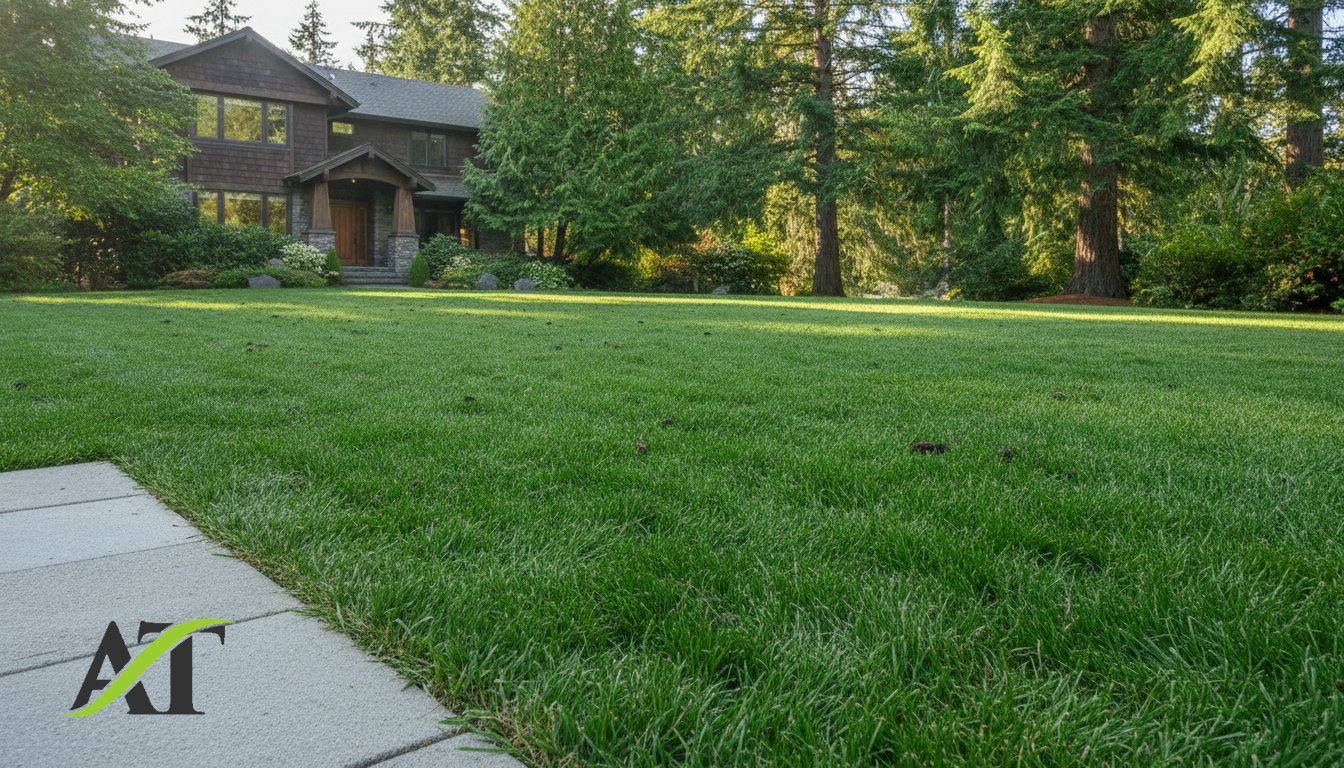
We don’t just cut grass; we restore the physical environment it needs to thrive. If you’re tired of thin turf and persistent moss growth, professional lawn aeration Lake Forest Park is the solution your property deserves. We’re ready to help you transform your yard into a thick, resilient landscape that can withstand the local canopy.
Your lawn has the potential to be the centerpiece of your property. We have the tools and experience to make it happen.
Frequently Asked Questions
What is the difference between a Lawn Tune-Up and a Full Meal Deal?
A Lawn Tune-Up consists exclusively of Core Aeration, Overseeding, and Fertilizing to rebuild turf density. The Full Meal Deal is a more comprehensive four-step restoration that includes Power Raking (Dethatching), Core Aeration, Overseeding, and Fertilizing. We recommend the Full Meal Deal for properties with heavy thatch or spongy turf. This ensures the new seed makes direct contact with the soil rather than getting stuck in surface debris.
When is the best time for lawn aeration in Lake Forest Park?
The ideal windows for lawn aeration Lake Forest Park are typically April through May or September through October. These periods align with the natural growth cycles of cool-season grasses in the Pacific Northwest. Performing Core Aeration during these months ensures the soil is moist enough for our equipment to pull deep plugs. This timing also allows new seed to establish before the extreme heat of summer or the deep freeze of winter.
Do you provide weekly mowing or edging services?
No, we don’t provide weekly mowing, edging, or general maintenance. Our team specializes exclusively in mechanical restoration and soil health. We’re the partners you call when your yard needs professional lawn aeration Lake Forest Park or a total Lawn Tune-Up to fix thinning grass and compaction. By focusing only on restorative work, we ensure your property gets the specialized technical expertise required for long-term health and vitality.
Why is soil temperature more important than air temperature for my lawn?
Soil temperature is the biological trigger for seed germination. While the air might feel warm, the ground takes longer to heat up or cool down. For cool-season grass, the optimal soil temperature range for germination is 55°F–75°F (13°C–24°C). If you plant outside this window, the process will be slower and less consistent. We monitor these levels carefully to give your Overseeding the best possible chance to establish a thick, resilient lawn.
How long does it take for grass seed to germinate after Overseeding?
You’ll typically see the first sprouts within 10 to 21 days, though this varies based on environmental conditions. Results are influenced by moisture levels, seed-to-soil contact, and local weather patterns. Because of these variables, we don’t offer absolute guarantees on germination. Consistent watering is essential during this phase. Within the ideal 55°F–75°F soil temperature range, the new grass will establish more reliably and produce a much thicker landscape over time.
Article by
Stewart Armour
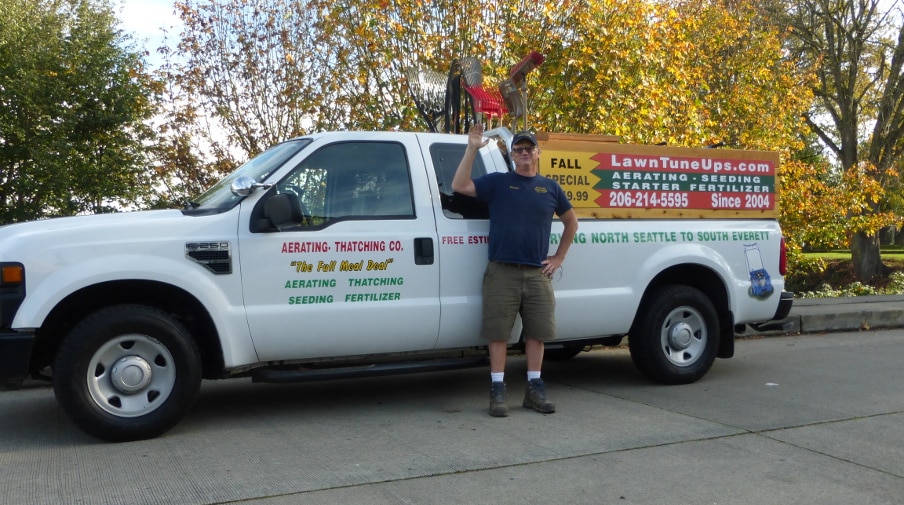
Stewart Armour is an independent lawn restoration expert, educator, and owner of Aerating Thatching Co., serving the greater Seattle area since 2004. With more than two decades of professional experience restoring Western Washington lawns, Stewart specializes in diagnosing lawn problems, improving soil health, and developing long-term lawn renovation strategies. His education includes turf management studies, advanced golf course turf training, and continuing education through Wilbur-Ellis University, State Turf Facilities, Soil First Academy, and Golf Course Applied Turf Physiology. Every article published on LawnTuneUps.com is grounded in practical field experience, current turf science, and a commitment to helping homeowners understand the why behind every recommendation—not just what to do.
Stewart has personally evaluated thousands of residential lawns throughout the Seattle area and remains committed to helping homeowners understand the science behind growing healthier, more resilient lawns.