The standard maintenance you think your lawn needs might actually be a waste of money if you don’t address underlying debris first. It’s frustrating when your turf feels like a wet sponge or moss chokes out the grass despite your efforts. You’ve likely heard conflicting advice regarding power raking vs dethatching Lynnwood homeowners often receive, and it’s easy to worry that aggressive machines might do more harm than good. We understand you want a yard that looks great and drains well without the confusion of industry jargon.
This article explains the mechanical differences between these processes so you can choose the right service level for your property. We’ll clarify what’s included in a Lawn Tune-Up, which consists of Core Aeration, Overseeding, and Fertilizing. You’ll also learn when your soil requires the Full Meal Deal, which adds Power Raking (Dethatching) to those components for a total restoration. We’ll show you why removing heavy organic buildup is the essential first step for achieving proper seed-to-soil contact. By the end, you’ll have a clear path to a thick, healthy lawn that finally breathes again.
Key Takeaways
- Identify why your lawn feels spongy and learn why the professional debate over power raking vs dethatching Lynnwood usually points to the same mechanical solution for lifting heavy debris.
- Determine if you need a maintenance-focused Lawn Tune-Up or the restorative Full Meal Deal, which adds Power Raking (Dethatching) to the core restorative process.
- Monitor your soil temperature rather than the air; the 55°F to 75°F range is the sweet spot for successful grass seed germination and reliable establishment.
- Set realistic expectations for your lawn’s recovery by focusing on seed-to-soil contact and consistent moisture instead of looking for absolute growth guarantees.
Clearing the Confusion: Is Power Raking the Same as Dethatching?
In Lynnwood, the terms power raking and dethatching cause plenty of confusion for homeowners. Most people wonder about the real difference between power raking vs dethatching Lynnwood services when their yard starts looking ragged. In the Pacific Northwest, local professionals often use these terms interchangeably. Both refer to a mechanical process using a specialized Dethatcher equipped with vertical blades. The primary goal is simple: removing the suffocating layer of organic debris and moss trapped between your grass blades and the soil surface. This layer prevents your lawn from breathing and absorbing moisture.
The Mechanical “Reset” for Lynnwood Turf
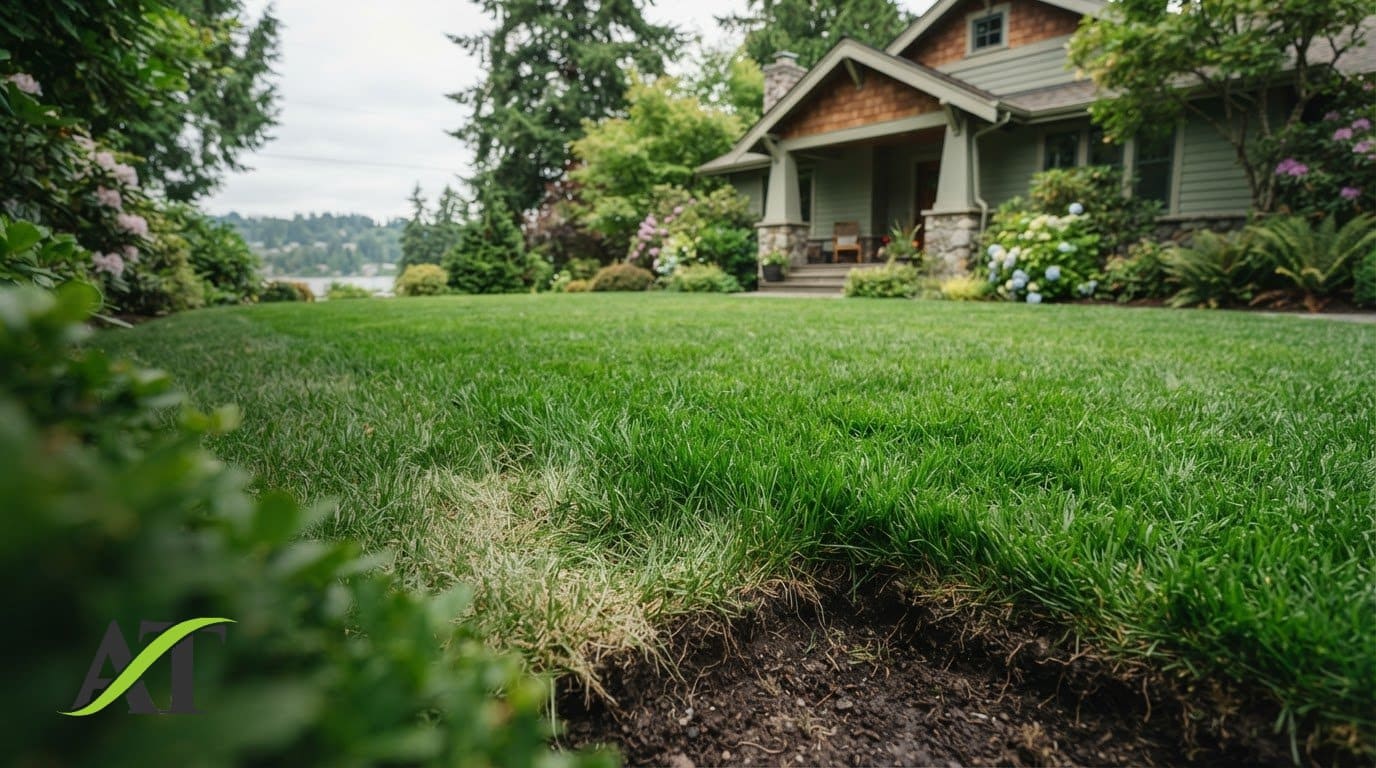
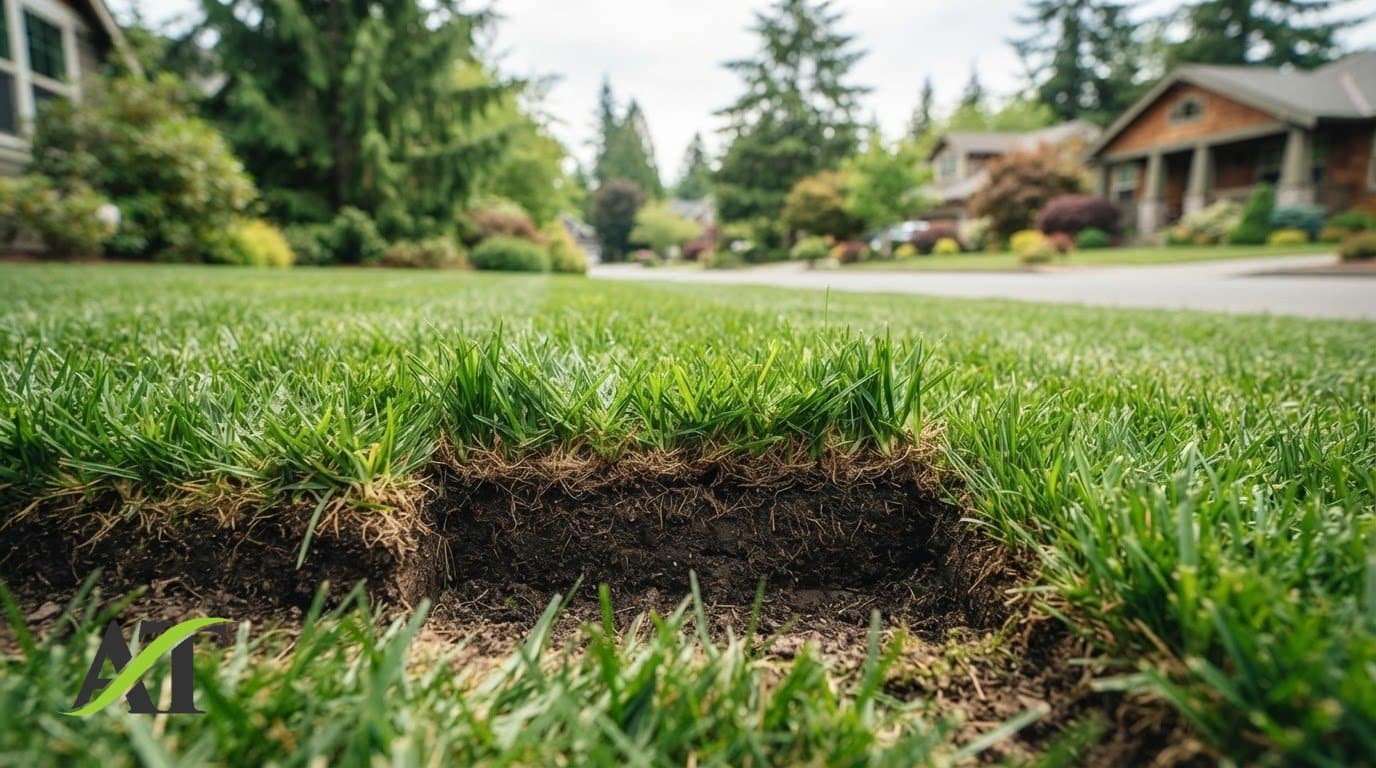
A standard garden rake moves horizontally, which only catches surface leaves or loose clippings. Power Raking (Dethatching) uses vertical tines that spin at high speeds to reach deep into the turf canopy. This mechanical action lifts out the dense thatch layer that blocks water, air, and nutrients from reaching the roots. Manual raking simply cannot achieve this depth or intensity. It’s the necessary reset for a lawn that has become a spongy, water-logged mess after years of neglect in our damp climate.
Terminology vs. Technology
You might see light electric dethatchers at big-box stores, but these lightweight units often struggle with heavy Lynnwood moss and deep thatch. Professional-grade power rakes are heavy-duty machines built to handle the thick, wet buildup common in our humid environment. Understanding the nuances of power raking vs dethatching Lynnwood helps you see why professional equipment is a requirement, not a luxury. We use this aggressive mechanical approach as the foundation of our Full Meal Deal. This ensures your new seed actually reaches the dirt. Without this clearing process, your investment in overseeding often sits on top of debris and fails to establish. It’s about using the right tool to clear the way for a healthy, thick lawn.
Thatch vs. Moss: Why Your Lynnwood Lawn Feels Spongy
Walking across a Lynnwood lawn in the fall often feels like stepping on a soaked sponge. This squishy sensation isn’t just a result of our heavy rains. It’s usually a sign of a thick debris layer. Homeowners comparing power raking vs dethatching Lynnwood services need to understand that this “mat” is a mix of organic thatch and invasive moss. Thatch is a biological buildup of roots and stems that hasn’t decomposed. Moss, on the other hand, is an opportunist that thrives in our damp, acidic soil. Together, they form a waterproof barrier that chokes your grass by preventing air and nutrients from reaching the root zone.
Identifying the Warning Signs
You can diagnose this issue with a simple “Step Test.” A healthy lawn should feel firm and provide solid resistance underfoot. If your foot sinks or the ground feels bouncy, you likely have more than half an inch of buildup. Visually, you might see thinning grass blades or a distinct brown layer at the soil line. Lynnwood’s damp climate accelerates these drainage problems, turning a small amount of thatch into a major barrier in just one season. If you ignore these signs, the grass roots will eventually grow into the thatch layer itself, making the lawn even more susceptible to drought and disease.
Why Fertilizer Alone Won’t Fix the Problem
Many people try to “green up” a struggling lawn by throwing down more product. However, a thick thatch layer acts like an umbrella. It causes liquid or granular treatments to run off into the street rather than sinking into the soil. Before you invest in Organic Fertilizing, you must address the physical barrier. Deciding between Power raking or core-aeration is the first step in restoring drainage. Mechanical removal is the only way to clear the path for nutrients. If your yard stays soggy for days after a light rain, you can request a quote for a professional lawn assessment to get your property back on track.
Lawn Tune-Up vs. The Full Meal Deal: Choosing Your Service
The choice between a maintenance visit and a full restoration depends on your soil condition. We offer two clear paths for local homeowners. A Lawn Tune-Up consists exclusively of Core Aeration, Overseeding, and Fertilizing. This package is ideal for healthy yards that just need a boost. The Full Meal Deal is our most comprehensive service. It includes Power Raking (Dethatching), Core Aeration, Overseeding, and Fertilizing. When weighing power raking vs dethatching Lynnwood services, consider the Full Meal Deal if your grass is thinning or feels like a wet rug.
When a Lawn Tune-Up is Sufficient
A Lawn Tune-Up is a maintenance-focused approach. It works best for lawns with minimal thatch that require thickening. If you can see the soil through the grass blades, you likely don’t need aggressive mechanical removal. We focus on Core Aeration in Snohomish and Lynnwood to open up the soil. This allows the Overseeding and Fertilizing steps to reach the root zone effectively. It’s a great way to keep a healthy lawn looking its best year after year without unnecessary stress on the turf.
The Case for the Full Meal Deal
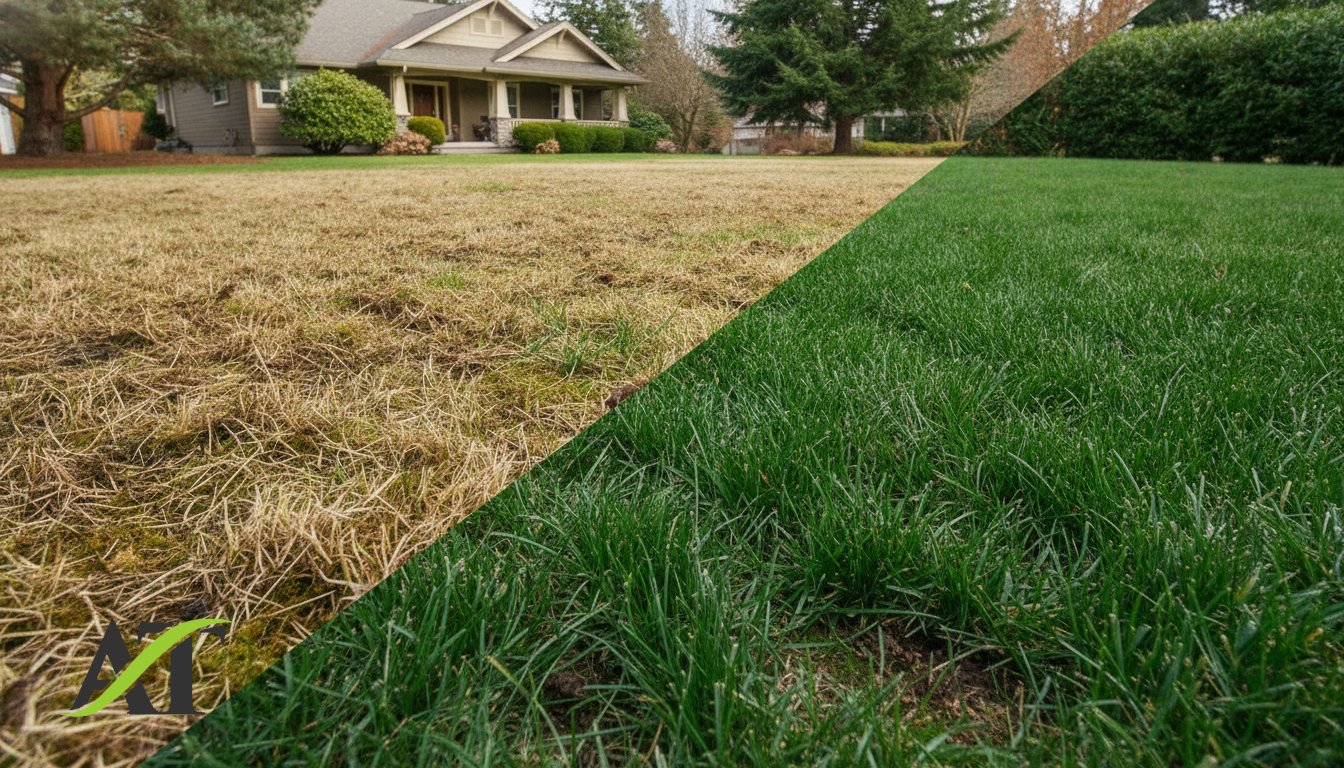
The Full Meal Deal is necessary for neglected or mossy lawns. Understanding power raking vs dethatching Lynnwood helps you see why Power Raking (Dethatching) is the vital first step to control thatch in your lawn when it blocks air and water. This mechanical process clears the organic mat so the subsequent Core Aeration and Overseeding can actually work. Without this reset, new seed often gets trapped in the thatch and dies. By removing the debris first, we ensure the best possible seed-to-soil contact for a thick, resilient lawn.

Timing and Soil Temperature: The Science of a Successful Reset
Success with your lawn isn’t about when the air feels warm. It’s about what happens beneath the surface. Many homeowners make the mistake of planting based on the daily weather forecast; however, soil temperature is the only metric that truly dictates grass seed success. For the cool-season grasses we grow in the Pacific Northwest, the optimal soil temperature range is 55°F to 75°F (13°C to 24°C). If you perform your power raking vs dethatching Lynnwood restoration outside of this window, germination will be slower and less reliable. Establishment becomes a gamble when the ground is too cold or too hot for the seeds to thrive.
The Best Months for Lynnwood Lawn Restoration
Spring and early fall are the primary windows for restorative work. These seasons offer the consistent moisture and moderate temperatures necessary for recovery. In Lynnwood, soil usually warms to the target range by late April or May. In the fall, the ground retains summer heat well into September and October. This makes the fall an ideal time for the Full Meal Deal. Performing Power Raking (Dethatching) during these windows ensures the grass has enough time to recover before the stress of summer heat or winter dormancy sets in.
Post-Service Care and Germination
Once we complete the mechanical work, the focus shifts to maintenance. Consistent moisture is the most critical factor after Overseeding. The new seed must remain damp to sprout. We avoid offering absolute guarantees on germination because nature is unpredictable. Results are heavily influenced by environmental variables including:
- Daily watering consistency
- Seed-to-soil contact quality
- Sudden local weather shifts
- Existing soil health and drainage
A successful reset requires a partnership between our mechanical expertise and your diligent watering schedule. While we provide the professional tools and high-quality seed, the final outcome depends on the care the lawn receives during those first few weeks of growth.
Restore Your Lynnwood Lawn Today
Deciding between power raking vs dethatching Lynnwood services doesn’t have to be complicated. You might need a Lawn Tune-Up consisting of Core Aeration, Overseeding, and Fertilizing. Alternatively, neglected yards often require the Full Meal Deal, which includes Power Raking (Dethatching), Core Aeration, Overseeding, and Fertilizing. We use specialized mechanical restoration equipment to clear out the moss and debris that hold your yard back. Since 2004, we’ve helped Snohomish County neighbors achieve thicker, healthier turf.
We offer organic fertilizer and lime options to ensure your soil stays balanced and productive. Success depends on soil temperatures between 55°F and 75°F (13°C to 24°C), combined with your commitment to consistent watering. While we don’t offer absolute guarantees on germination, our mechanical process provides the best possible foundation for new growth.
Your property deserves a lawn that drains well and looks great. We’re ready to help you get there.
Frequently Asked Questions
Is Power Raking (Dethatching) bad for my grass?
Power Raking (Dethatching) isn’t bad for your grass when performed by experienced professionals. While your yard might look brown and thin immediately after the service, this mechanical process is a necessary “reset.” It removes the suffocating organic mat that prevents air and water from reaching the soil. Without this clearing, your lawn will eventually choke itself out. We’ve used this equipment in Lynnwood since 2004 to restore struggling turf.
How do I know if my Lynnwood lawn needs a Full Meal Deal or just a Lawn Tune-Up?
Use the “step test” to decide which service your property requires. If your yard feels spongy or you see thick moss, you need the restorative Full Meal Deal. This package includes Power Raking (Dethatching), Core Aeration, Overseeding, and Fertilizing. If your lawn is firm but just looks a bit thin, a maintenance-focused Lawn Tune-Up is sufficient. That service consists exclusively of Core Aeration, Overseeding, and Fertilizing to boost your existing grass.
What is the difference between thatch and moss in Pacific Northwest lawns?
Thatch is a layer of organic matter, like roots and stems, that hasn’t decomposed. Moss is a plant that thrives in Lynnwood’s damp conditions and acidic soil. While biologically different, both create a “soaked sponge” feeling underfoot. These barriers must be mechanically removed to restore drainage and allow your grass to grow. Understanding the nuances of power raking vs dethatching Lynnwood helps you address both issues effectively.
Can I overseed without power raking first?
You can overseed without power raking if your lawn has minimal thatch and healthy soil contact. However, if your Lynnwood yard has a thick organic mat or moss, the new seed will simply sit on top and die. We recommend Power Raking (Dethatching) as a precursor to ensure the seed actually touches the dirt. This mechanical step is the primary difference between our maintenance packages and a total restorative service.
What is the best soil temperature for grass seed to grow in Lynnwood?
The optimal soil temperature range for cool-season grass seed germination is 55°F to 75°F (13°C to 24°C). Don’t rely on air temperature alone, as the ground warms and cools much slower than the atmosphere. While germination can happen outside this specific range, it’s often slower and less consistent. For the best results, we time our restorations when the soil is warm enough to support reliable establishment and healthy root development.
Article by
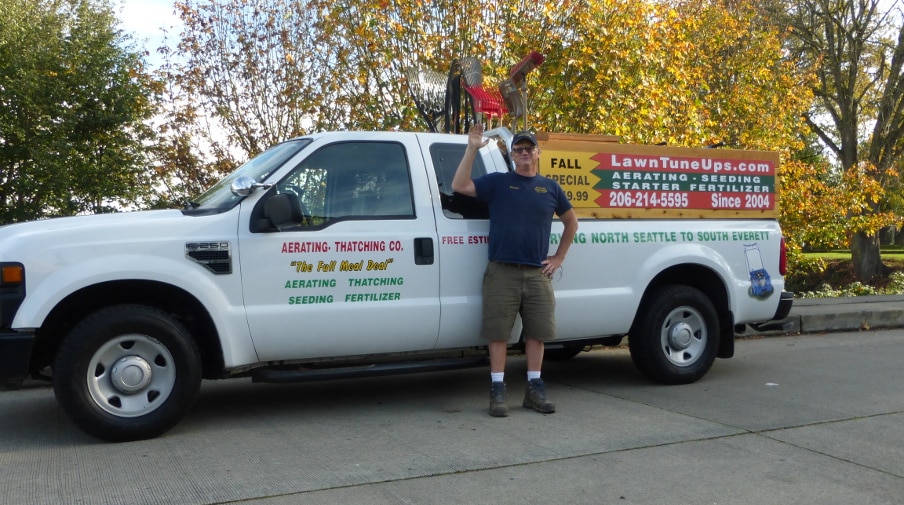
Stewart Armour
Stewart Armour is an independent lawn restoration expert, educator, and owner of Aerating Thatching Co., serving the greater Seattle area since 2004. With more than two decades of professional experience restoring Western Washington lawns, Stewart specializes in diagnosing lawn problems, improving soil health, and developing long-term lawn renovation strategies. His education includes turf management studies, advanced golf course turf training, and continuing education through Wilbur-Ellis University, State Turf Facilities, Soil First Academy, and Golf Course Applied Turf Physiology. Every article published on LawnTuneUps.com is grounded in practical field experience, current turf science, and a commitment to helping homeowners understand the why behind every recommendation—not just what to do.
Stewart has personally evaluated thousands of residential lawns throughout the Seattle area and remains committed to helping homeowners understand the science behind growing healthier, more resilient lawns.