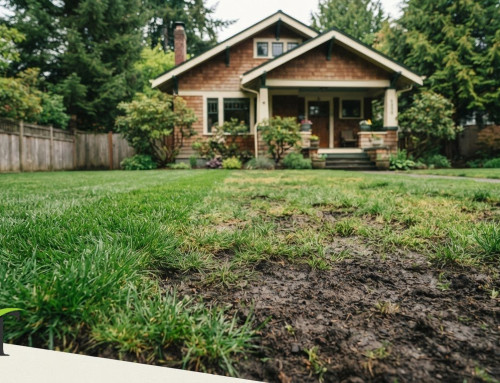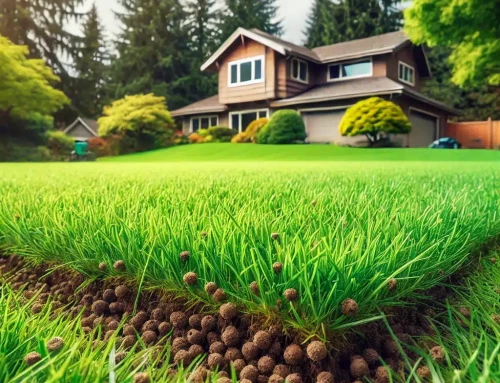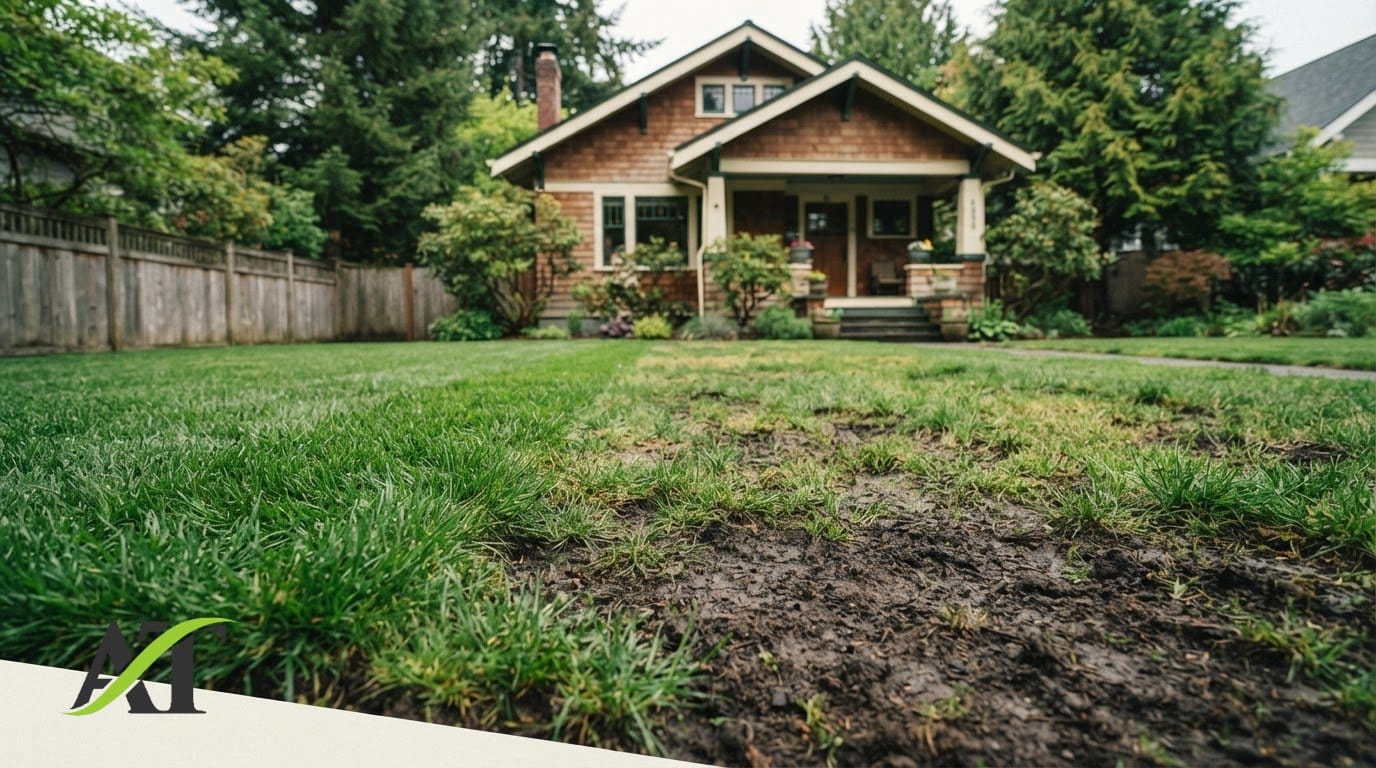
Most Lake Forest Park homeowners aren’t actually growing a lawn; they’re farming moss. It’s a common struggle when you’re dealing with the deep shade of towering evergreen trees and soil that stays damp for months. You’ve likely watched your grass thin out or seen new seed wash away on a sloped yard during a typical PNW downpour. Successful overseeding Lake Forest Park properties isn’t about the brand of seed you buy. It’s about mechanical soil preparation and hitting the right weather window.
We understand that you want a thick, durable lawn that doesn’t require constant coddling. This guide explains why professional Core Aeration and Overseeding are the essential keys to overcoming thin turf. You’ll learn why soil temperature, specifically the 55°F to 75°F range, is the real secret to germination rather than just looking at the thermometer on your porch. We’ll also preview our restoration services, from the standard Lawn Tune-Up to the Full Meal Deal, so you can choose the right mechanical plan to reclaim your yard from the moss.
Key Takeaways
- Understand how the unique environment of Lake Forest Park, from dense tree canopies to sloped terrain, dictates your lawn’s health and moss resistance.
- Discover why successful overseeding Lake Forest Park depends on maintaining soil temperatures between 55°F and 75°F rather than just watching the weather forecast.
- Learn the difference between a standard Lawn Tune-Up and a Full Meal Deal to determine which mechanical restoration process fits your yard’s current thatch level.
- Identify why Core Aeration is the superior method for achieving the seed-to-soil contact necessary for thick, durable grass growth in clay-heavy Pacific Northwest soils.
Why Your Lake Forest Park Lawn Struggles (Shade, Moss, and Slopes)
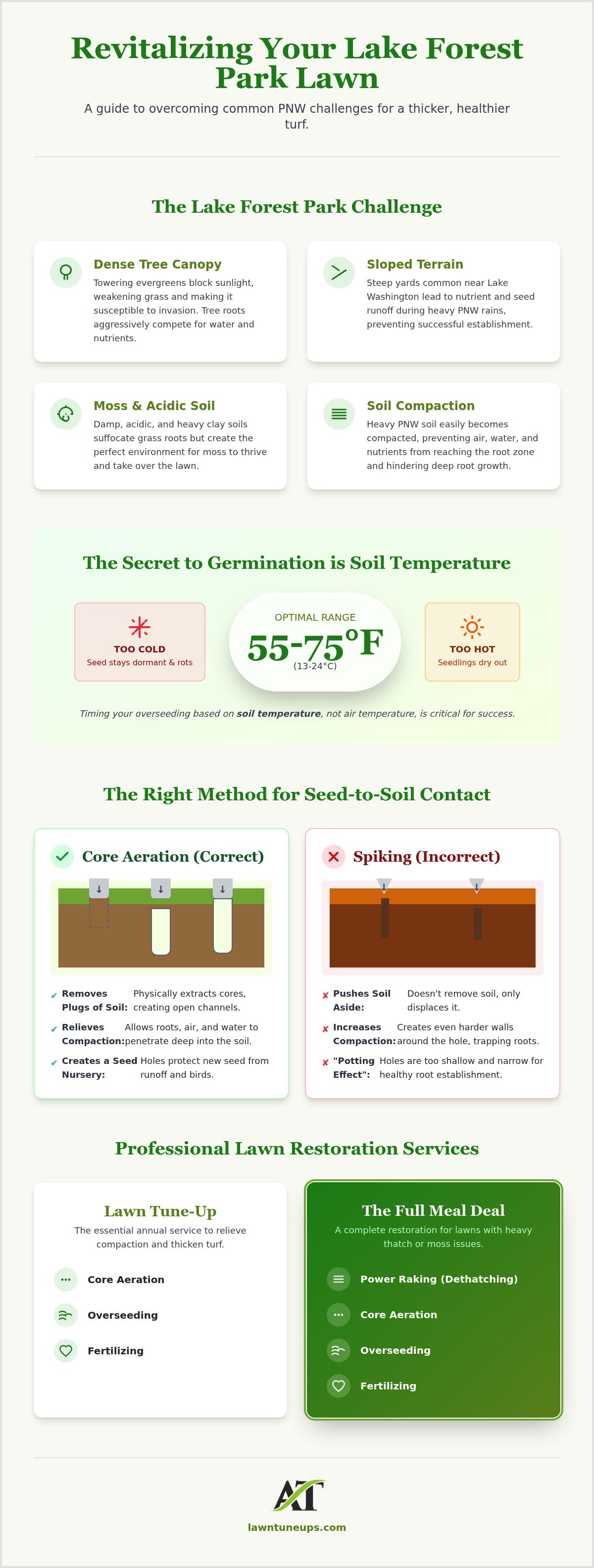
Lake Forest Park is famous for its urban forest feel, but that same beauty makes general lawn maintenance a constant battle. The dense tree canopy blocks the sunlight grass needs for photosynthesis, leaving turf weak and susceptible to invasion. When you add the steep slopes common near Lake Washington, any nutrients you apply often wash away before the roots can grab them. This creates a cycle of thinning turf where simply tossing seed on the ground fails because the environment is stacked against it. Without proper seed-to-soil contact, those expensive bags of seed usually end up as bird food or wash into the street during the first heavy rain.
The Wooded Lot Dilemma
Large evergreens and deciduous trees do more than just block light. Their massive root systems are aggressive competitors, sucking up moisture and nitrogen that your grass desperately needs. Additionally, the annual leaf and needle drop increases soil acidity over time. This nutrient depletion means your grass can’t stay thick enough to resist weeds. Successful overseeding Lake Forest Park properties requires understanding that your lawn is in a literal tug-of-war with your trees. You can see our full range of restoration services designed to help your soil fight back.
Moss vs. Grass in the PNW
In our region, moss isn’t just an eyesore; it’s a clear signal of soil compaction and poor drainage. North Seattle soils are often heavy and acidic, which suffocates grass roots while allowing moss to spread unchecked. Transitioning from a moss-dominated yard to a thick turf canopy requires mechanical intervention. Moss thrives where grass is too weak to compete. By addressing the underlying compaction through Core Aeration and consistent overseeding Lake Forest Park lawns, you can finally shift the balance. While results depend on factors like moisture and weather, this mechanical approach is the best way to stop the moss from returning every spring.
Maximizing Seed-to-Soil Contact: Core Aeration vs. Spiking
Seed-to-soil contact is the absolute baseline for overseeding Lake Forest Park success. If a seed doesn’t touch the dirt, it doesn’t stand a chance. In our area, the soil is often heavy with clay, making it difficult for new roots to penetrate deep enough to survive the summer. Core Aeration is the mechanical removal of soil cylinders to reduce compaction. By pulling these plugs, we create a direct path for air, water, and nutrients to reach the root zone. This process is a staple of effective PNW lawn care practices because it physically changes the soil structure rather than just moving dirt around.
The Problem with Spiking
Many homeowners try to save time by using spiked shoes or rolling spike aerators. This is a mistake in North Seattle. Spiking doesn’t remove anything; it just pushes the soil aside. This actually increases the compaction around the walls of the hole, creating a “potting effect” that traps roots. Spiked holes are usually too shallow and narrow to provide the space needed for a new grass plant to establish itself. You’re left with seed that’s technically in a hole, but it’s a hole with walls as hard as a brick.
Why Core Aeration Wins
Core Aeration creates the perfect nursery for new grass seed. When you perform overseeding Lake Forest Park lawns after pulling plugs, the seed falls into these open pockets. These holes protect the seed from birds and runoff while providing loose soil for rapid root expansion. For a deeper look at how this process works, check out our Core Aeration in Snohomish guide. If your lawn feels like concrete, you can get a professional assessment to see which mechanical restoration approach is right for your property.
The Optimal Window for Overseeding Lake Forest Park Lawns
Many homeowners check the morning air temperature before starting their yard work, but the dirt beneath your feet is what actually matters for overseeding Lake Forest Park lawns. Grass seed doesn’t care about the breeze; it responds to the warmth of the soil profile. Timing your restoration based on soil temperature ensures you aren’t wasting money on seed that won’t sprout.
The optimal soil temperature range for cool-season grass seed germination is 55°F to 75°F (13°C to 24°C). If the ground is too cold, the seed sits dormant and often rots in our damp PNW winters. If it’s too hot, the young shoots dry out and die before they can establish. While germination can happen outside this range, it’s usually slower, less consistent, and less reliable for long-term growth.
Spring vs. Fall Overseeding in the PNW
Late summer and early fall are generally the best times for restoration. The soil is already warm from the summer sun, and the return of natural rainfall helps maintain the consistent moisture needed for the first 21 days. Spring seeding is possible but more challenging. You’re fighting against rising summer heat and aggressive weed competition that can choke out new grass sprouts before they take hold.
Steps to Ensure Germination
Before we arrive for a Lawn Tune-Up, clear all debris and mow your existing grass as short as possible. This ensures the seed hits the soil instead of getting stuck in the grass blades. Keep the area moist with light, frequent watering but avoid puddling, especially on sloped lots where seed can wash away. Results are influenced by moisture, seed-to-soil contact, and weather, so we don’t offer absolute guarantees on germination. However, hitting the right temperature window significantly improves your success rates. Once your service is complete, following a structured lawn care after aeration routine is the best way to protect your investment and maximize germination.
The ‘Full Meal Deal’: A Professional Approach to Lawn Restoration
Lake Forest Park lawns often reach a point where standard maintenance isn’t enough. If your turf is buried under a thick layer of dead grass and debris, you need a more aggressive mechanical solution. The Full Meal Deal is our most comprehensive restoration package. It includes Power Raking (Dethatching), Core Aeration, Overseeding, and Fertilizing. This combination ensures that we remove the physical barriers to growth before we ever put seed in the ground, which is vital for successful overseeding Lake Forest Park lots.
When to Choose a Lawn Tune-Up
For yards that are generally healthy but just looking thin, a Lawn Tune-Up is the essential choice. This service consists of Core Aeration, Overseeding, and Fertilizing only. It’s designed to reset your lawn’s health by relieving compaction and boosting density. If you’re looking for a detailed breakdown of how we handle these treatments, see our Lawn Tune Up Service Seattle guide.
The Power of the Full Meal Deal
Neglected yards with heavy moss buildup require Power Raking (Dethatching) to clear the way. By removing the thatch layer first, the Core Aeration equipment penetrates deeper into the soil. This creates the best environment for overseeding Lake Forest Park properties. We often suggest Lime Application or Lawn Soil Amendments as add-ons to combat naturally acidic soil. If you want to stop guessing about your soil’s pH and nutrient levels before choosing amendments, our lawn soil testing Seattle guide walks you through exactly how to pull an accurate sample and interpret the results. While results depend on weather and moisture, this methodical approach provides the best foundation for a durable lawn. To get the most out of your restoration, review our post-aeration lawn care checklist so you know exactly how to handle watering, soil plugs, and the critical first weeks after your service.
Take the First Step Toward a Thicker Lawn
Restoring a yard in the PNW requires more than just a bag of seed. Successful overseeding Lake Forest Park lawns depends on mechanical preparation and precise timing. By targeting soil temperatures between 55°F and 75°F, you give your grass the best possible start. Whether you need a Lawn Tune-Up or a Full Meal Deal, we focus on the seed-to-soil contact that produces results.
Since 2004, we’ve used specialized Core Aeration equipment designed for our local clay soils. Our restoration plans include Organic Fertilizing and Lime Application to balance soil health. While we don’t offer absolute guarantees on germination due to weather variables, our process is built on decades of local experience. You don’t have to settle for a thin yard when a professional restoration is within reach.
We look forward to helping you build a durable, thick lawn that your family can enjoy for years to come.
Frequently Asked Questions
When is the best time for Overseeding in Lake Forest Park?
The best time for overseeding Lake Forest Park lawns is when soil temperatures are between 55°F and 75°F. This typically happens in late summer or early fall. While spring seeding is possible, the warm soil of September helps seeds establish more quickly before winter. Germination outside this range is often slower and less consistent, making the fall window the most reliable choice for our region.
What is the difference between Core Aeration and spiking?
Core Aeration physically removes small soil cylinders to relieve compaction and create space for roots. Spiking merely pushes the dirt aside with solid tines, which actually increases the compaction around the hole. For the heavy clay soils found in North Seattle, Core Aeration is the only effective way to ensure air, water, and seed can penetrate deep into the root zone.
Does Core Aeration help with moss in Washington lawns?
Yes, Core Aeration is a critical tool for managing moss because moss is usually a symptom of compacted soil and poor drainage. By opening up the soil profile, you allow grass roots to breathe and grow stronger. While results are influenced by moisture and weather, a thicker lawn created through overseeding Lake Forest Park properties is the best natural defense against moss invasion.
How long does it take for new grass seed to germinate in the PNW?
Most cool-season grass seeds in the PNW take between 7 and 21 days to germinate. This timeline depends heavily on maintaining consistent moisture and hitting the 55°F to 75°F soil temperature sweet spot. Because we don’t offer absolute guarantees on germination, we highlight that success is influenced by moisture, seed-to-soil contact, soil conditions, and weather. Light, frequent watering is essential during this initial period.
Is Power Raking (Dethatching) included in a standard Lawn Tune-Up?
No, Power Raking (Dethatching) is not part of a standard Lawn Tune-Up. A Lawn Tune-Up consists exclusively of Core Aeration, Overseeding, and Fertilizing. If your yard has heavy thatch or moss buildup that needs to be physically removed first, you should choose the Full Meal Deal. That package includes Power Raking (Dethatching) along with the other three restoration components.
Article by
Stewart Armour
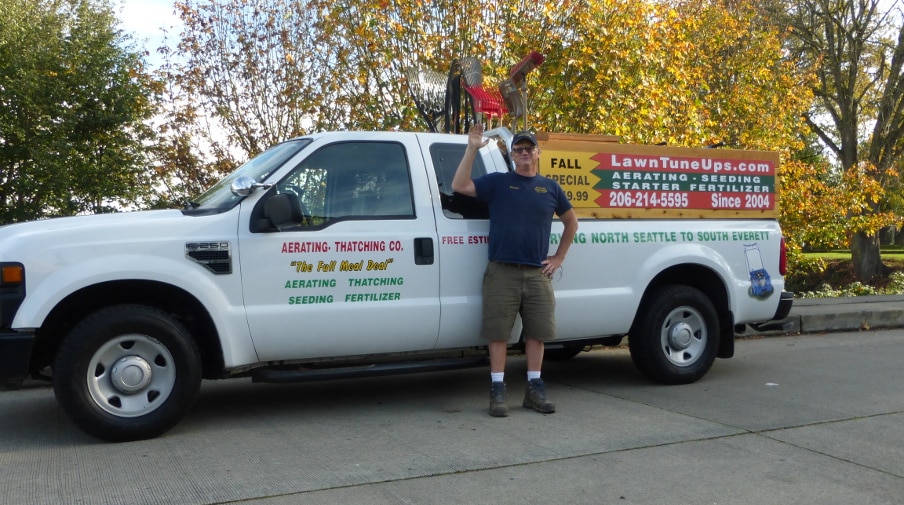
Stewart Armour is an independent lawn restoration expert, educator, and owner of Aerating Thatching Co., serving the greater Seattle area since 2004. With more than two decades of professional experience restoring Western Washington lawns, Stewart specializes in diagnosing lawn problems, improving soil health, and developing long-term lawn renovation strategies. His education includes turf management studies, advanced golf course turf training, and continuing education through Wilbur-Ellis University, State Turf Facilities, Soil First Academy, and Golf Course Applied Turf Physiology. Every article published on LawnTuneUps.com is grounded in practical field experience, current turf science, and a commitment to helping homeowners understand the why behind every recommendation—not just what to do.
Stewart has personally evaluated thousands of residential lawns throughout the Seattle area and remains committed to helping homeowners understand the science behind growing healthier, more resilient lawns.