🌤️ Seattle Lawn Drought Prep: Get Your Lawn Ready for Reduced Water (2026 Guide)
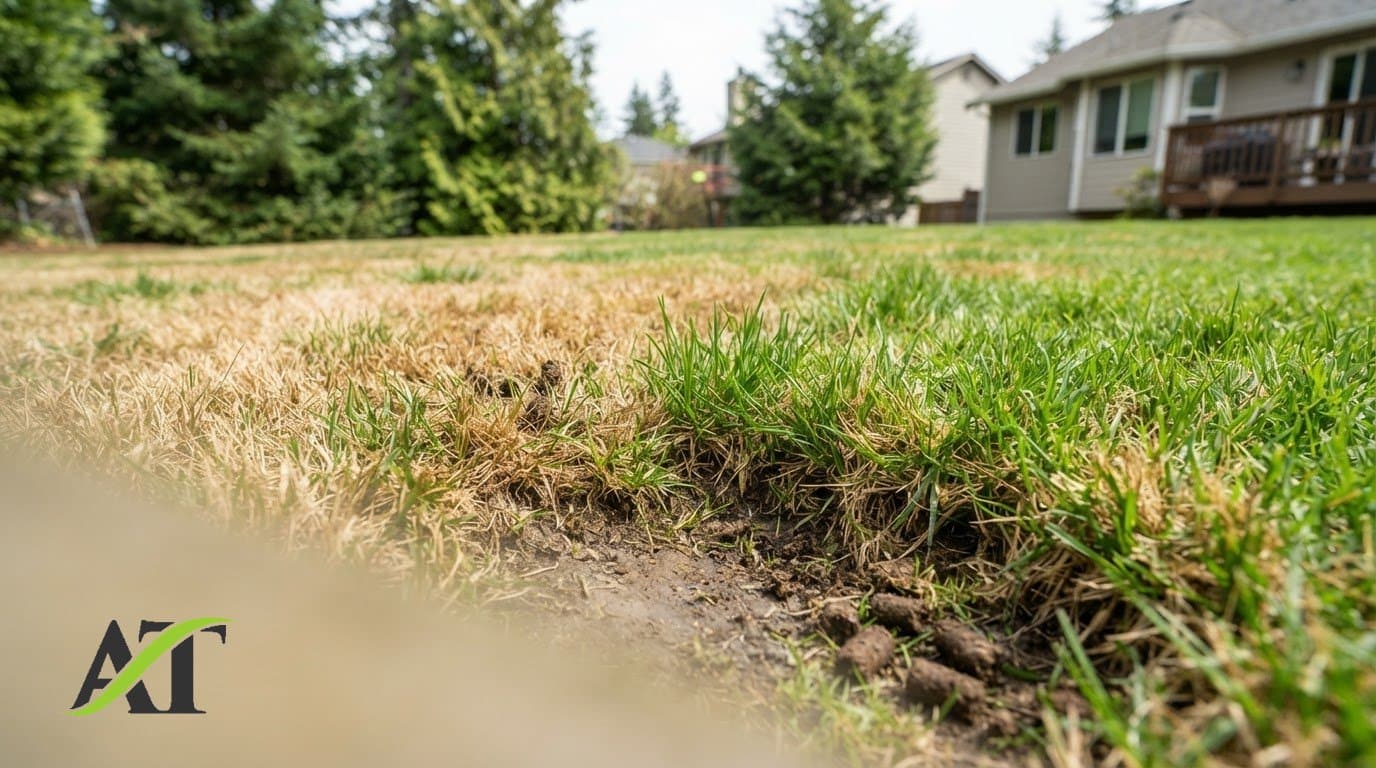
If spring snowpack stays low or we head into a dry summer, lawns in Western Washington can struggle—especially if cities tighten watering rules.
The best defense is simple: build deeper roots, improve soil infiltration, and water smarter (not more).
Want a water-smart plan for your yard?
Request a quote and tell me what your lawn is doing (thin, compacted, mossy, dry spots, etc.).
🧭 Quick plan: what to do before hot weather hits
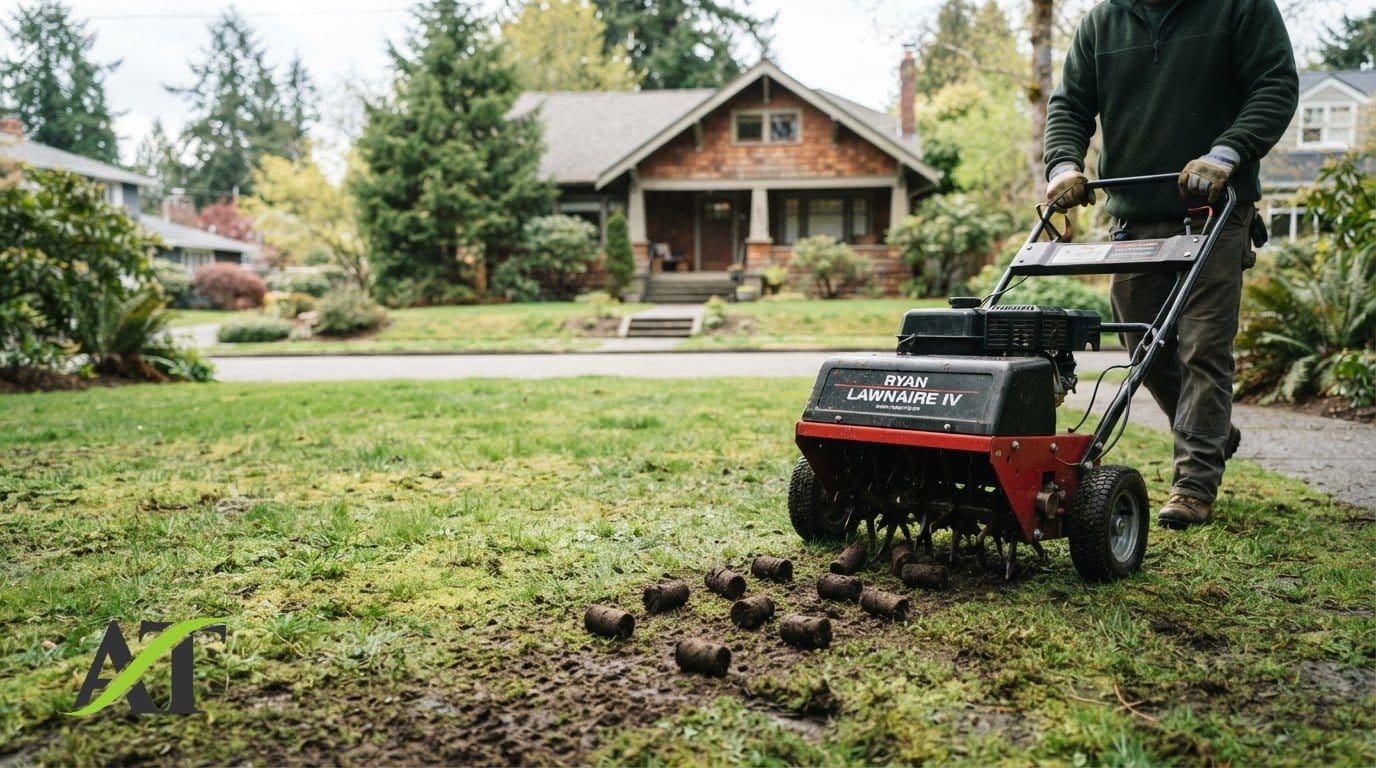
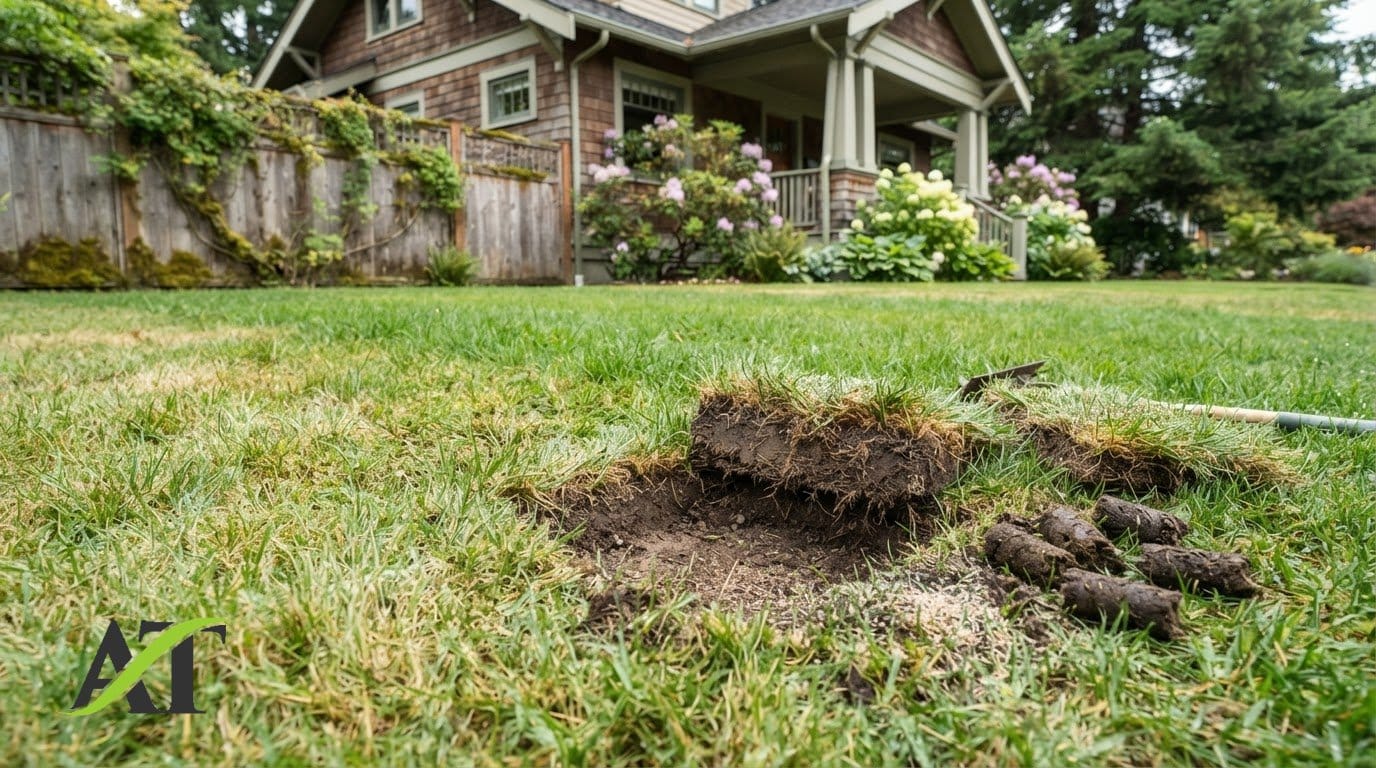
- 🕳️ Core aeration: reduce compaction so water can soak in (less runoff, fewer dry patches).
- 🌿 Feed smart: use a slow-release blend (organic-friendly options help steady growth without “flush + crash”).
- ✂️ Mow higher: taller grass shades soil and reduces evaporation.
- 💧 Water deeply, less often: build deeper roots instead of shallow, thirsty roots.
- 🧩 Fix problem areas now: dry spots often need soil improvement—not more watering.
💧 Watering the Seattle way (without wasting water)
In dry summers, the goal is to water in a way that actually reaches roots. Daily quick watering usually creates shallow roots and more stress.
✅ Best-practice watering habits
- 🌅 Water early morning to reduce evaporation and wind loss.
- 🪣 Aim for deep soakings instead of frequent “sprinkles.”
- 👣 Watch the lawn: loss of sheen and footprints that linger are classic “time to water” signs.
- 🧪 Measure output: catch-can tests prevent under/over watering.
• Seattle smart watering tips: seattle.gov smart watering
• Weekly watering schedules (regional): savingwater.org weekly schedules
🕳️ Why core aeration matters more in dry years
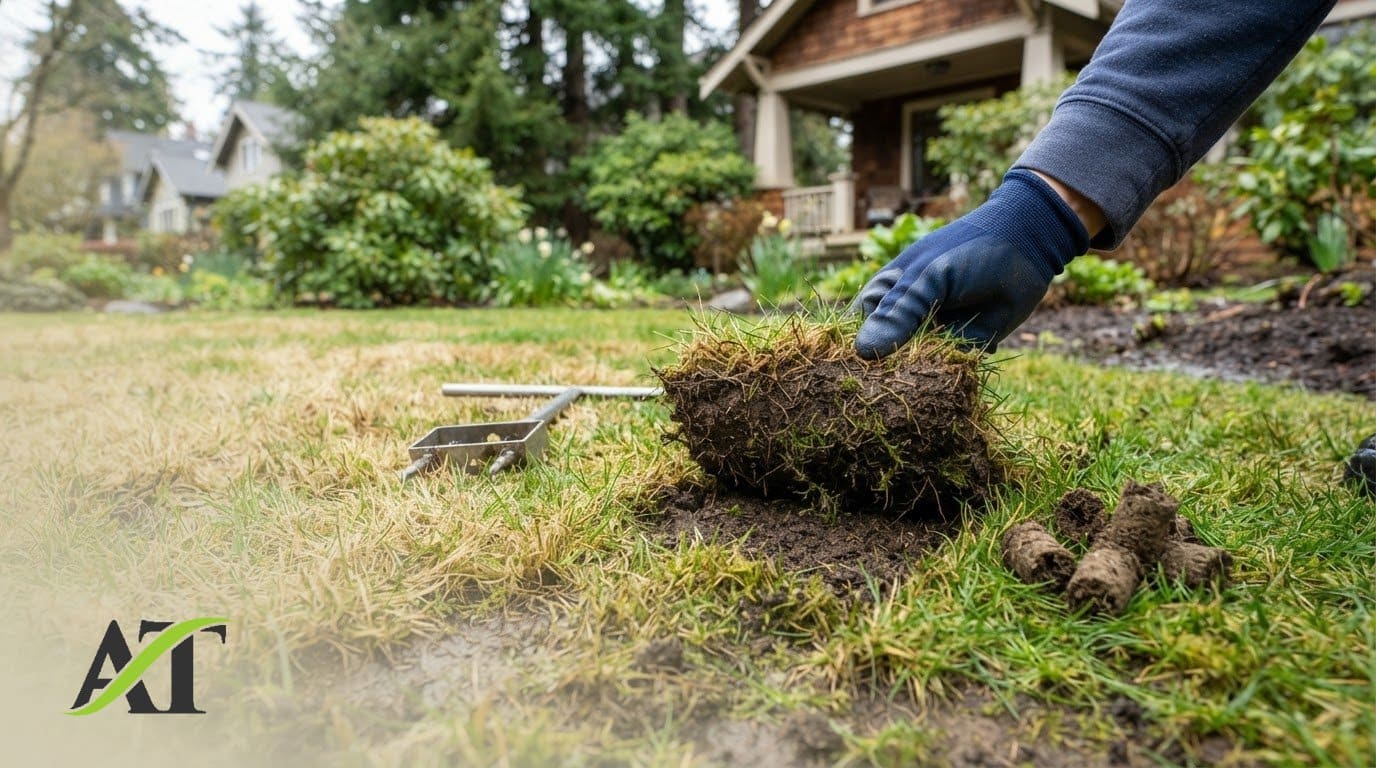
Compacted soil acts like a lid. Water runs off, puddles, or never reaches deeper roots. Core aeration opens pathways so water penetrates and roots expand.
- 💧 Better infiltration = less runoff and better use of each watering.
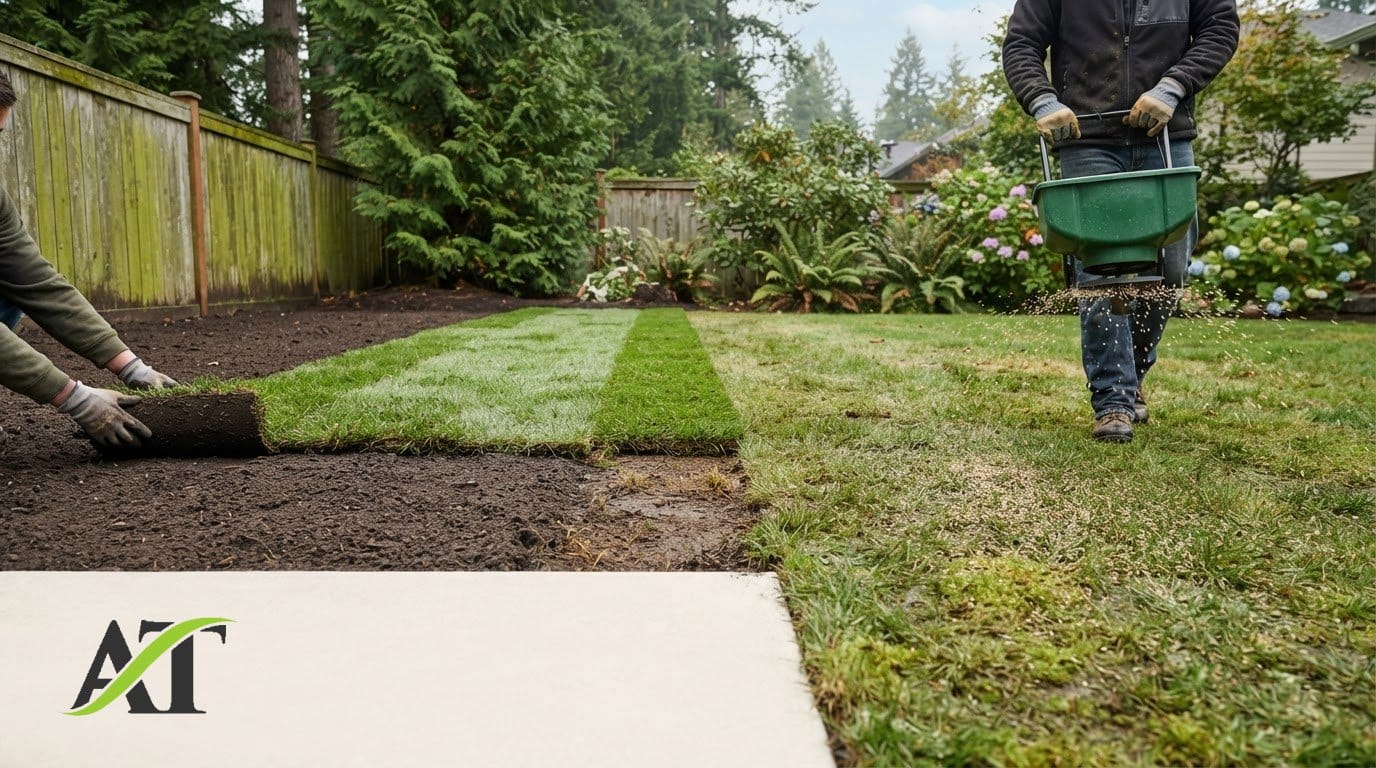
- 🌱 Helps seed-to-soil contact when paired with overseeding.
- 🧱 Reduces “hardpan” feel and improves root oxygen.
• Dethatching (power raking) (when the surface is matted):
Seattle lawn dethatching (power raking)
• Overseeding + starter fertilizer / premium 60-40 seed mix info:
starter fertilizer + premium 60/40 seed mix
Not sure if compaction is the problem?
Request a quote and I’ll recommend the right plan for your lawn and sun/shade mix.
🌿 Fertilizing for drought resilience (slow-release wins)
A lawn that’s fed correctly builds stronger roots and stays thicker—which means it can handle dry periods better.
In Western Washington, slow-release feeding is a smart way to avoid extreme growth spikes that increase water demand.
| What you want | What helps |
|---|---|
| Thicker lawn with less water demand | Steady, slow-release nutrition + correct mowing height |
| Stronger root system | Core aeration + deep watering habits |
| Fewer “crispy” dry spots | Improve infiltration and correct irrigation coverage |
Seattle organic lawn fertilizer upgrade
Seattle soil wetting agent (“Drought Buster”)
🌾 Optional: seed choices for summer stress
If you’re renovating, patching, or rebuilding thin areas, seed choice matters in dry summers—especially in sunny lawns.
- ☀️ Hot/sunny exposure benefits from drought-tolerant options.
- 🌤️ Mixed sun/shade lawns do best with a balanced blend.
- 🧩 The best results come from matching seed to light + soil + watering reality.
Drought-tolerant lawn seed for Seattle (A-Listed)
❓ FAQ: drought, restrictions, and “what should I do?”
Should I water every day during heat waves?
Usually no. Frequent light watering encourages shallow roots and more stress. Deep, less frequent watering is typically more effective (especially when paired with core aeration).
Is it okay if my lawn goes a little brown in summer?
In many Western Washington lawns, mild dormancy can be normal and the lawn can rebound with fall rains—assuming the lawn isn’t compacted and you’re not scalping it.
What causes dry patches even when I water?
Often it’s coverage (sprinkler gaps), compaction, or water repellency in soil. Fixing infiltration and coverage usually beats “watering more.”
Want me to diagnose your lawn fast?
Request a quote and include your biggest issue (thin lawn, dry spots, runoff, moss pressure, etc.).
📌 Official drought + watering info (bookmark these)
- 🏛️ WA Dept. of Ecology drought response: ecology.wa.gov drought response
- 💧 Seattle smart watering: seattle.gov smart watering
- 📆 Weekly watering schedules (regional guidance): savingwater.org weekly schedules
- 📄 WSU Extension lawn watering (deep & infrequent): WSU irrigation fact sheet (PDF)
- 🌱 WSU water-wise lawn care (regional): WSU water-wise lawn care
If you want your lawn in the best condition possible before summer, I can build a plan around core aeration, correct fertilizing, and a realistic watering strategy.