Slow-Release Lawn Fertilizer: A Practical Guide for Seattle Lawns
Slow-release fertilizer can provide steadier feeding with fewer growth surges, but the right product still depends on the lawn, season, soil and label. This guide explains what slow-release fertilizer does, when it makes sense and what it cannot fix.
Is slow-release fertilizer good for Seattle lawns?
Often, yes. A slow-release nitrogen source can support more even color and growth over time and may reduce the sharp growth surge associated with a fully quick-release product. It can be especially useful when a homeowner wants steadier feeding instead of the fastest possible green-up.
That does not make every slow-release product right for every lawn. Product analysis, application rate, soil moisture, grass condition and the time of year all matter. A soil test can help when nutrient needs are uncertain.
What is slow-release lawn fertilizer?
Slow-release fertilizer makes part or all of its nitrogen available gradually. Depending on the product, release may be controlled by a coating, the fertilizer material itself, soil moisture, temperature or microbial activity. Many lawn fertilizers are blends containing both quick-release and slow-release nitrogen rather than being entirely one type.
Slow-release or blended fertilizer
- Feeds over a longer period.
- Usually produces steadier growth and color.
- May require fewer applications, depending on the label.
- Still requires accurate measuring and appropriate watering.
Quick-release fertilizer
- Makes nitrogen available more rapidly.
- Can provide a faster visible response.
- Can create a stronger growth surge.
- Has a greater chance of burn or loss when misapplied.
A blended product can be a practical middle ground. Washington State University describes a fertilizer containing both quick-release and slow-release nitrogen as a useful bridge approach for lawn feeding.
Benefits of slow-release fertilizer
More even growth
Gradual nitrogen availability can reduce the cycle of rapid top growth followed by a noticeable slowdown.
Lower burn potential
Slow-release sources generally have less burn potential than soluble quick-release nitrogen, although any fertilizer can cause damage when spilled or overapplied.
Longer feeding period
A correctly selected product can continue supplying nitrogen for weeks or months, depending on its formulation and site conditions.
Useful on sensitive sites
Slow release may be helpful on slopes, sandy soil or near sensitive water resources, but correct rates and keeping fertilizer off hard surfaces remain essential.
When should slow-release fertilizer be applied?
Apply fertilizer when cool-season grass is growing and moisture can be managed. In the North Seattle area, spring and fall are often practical lawn-improvement periods. Summer applications require enough moisture and a realistic watering plan; feeding a severely drought-stressed lawn is rarely the first priority.
Good reasons to apply
The lawn is actively growing, the product matches the lawn's needs, application conditions are suitable and you can follow the label's watering directions.
Reasons to wait
The lawn is dormant or drought-stressed, heavy rain is expected, the ground is saturated, or the actual problem is compaction, shade, drainage, moss or missing grass.
Do not fertilize by calendar alone. The right timing depends on the grass, soil, weather, moisture and whether the lawn is also being aerated or overseeded. Use the Seattle lawn care calendar as a planning guide, then adjust for actual conditions.
How to choose a fertilizer for an established lawn
Start with the guaranteed analysis, shown as three numbers for nitrogen, phosphate and potash. Then review the nitrogen sources and the percentage described as slowly available or water-insoluble. Avoid choosing a product only because the bag promises fast color.
Match nutrients to the lawn
A soil test is the clearest way to identify a documented phosphorus or potassium need. Yellowing or thin turf can also come from water, roots, compaction, disease, shade or mowing practices.
Calculate the real application rate
Measure the lawn area and follow the label. The percentage of nitrogen determines how many pounds of product supply the intended amount of nitrogen.
Washington phosphorus rule: phosphorus-containing fertilizer is generally restricted on established turf. Exceptions include establishing new grass, repairing damaged grass during the growing season in which it is established, or applying it when a soil test from the previous 36 months documents a phosphorus deficiency. Review the current Washington State Department of Agriculture guidance and the product label before applying.
Homeowners who prefer a gradual, organic-based option can also review Aerating Thatching Co.'s Organic Fertilizer Upgrade. Organic-based and slow-release are related ideas, but they are not interchangeable terms; the actual formulation and label determine how a product behaves.
How to apply granular lawn fertilizer more evenly
Measure the lawn
Estimate the actual turf area, not the total lot size. This prevents guessing at the amount of product needed.
Follow the fertilizer label
Use the labeled rate and spreader setting as a starting point. Do not assume that more fertilizer will create a healthier lawn.
Choose suitable weather
Avoid windy conditions, saturated ground and forecasts for heavy rain. Follow the label for any watering-in requirement.
Spread consistently
Use an even walking pace and overlap passes only as directed. Shut the spreader off while turning or crossing pavement.
Clean hard surfaces
Sweep granules from sidewalks, driveways and streets back onto the lawn before watering so they do not enter storm drains.

Scotts Turf Builder EdgeGuard Mini Broadcast Spreader
A broadcast spreader can help homeowners apply granular fertilizer more consistently across a small or medium lawn. Calibrate it for the specific product and lawn area rather than relying on the setting alone.
View Spreader on AmazonAs an Amazon Associate, Aerating Thatching Co. may earn from qualifying purchases. Product availability and pricing can change.
Fertilizer is one part of lawn improvement
Fertilizer supplies nutrients. It cannot add new grass plants, physically relieve compaction or remove a heavy layer of moss and thatch. The useful next step depends on what is limiting the lawn.
Compacted soil
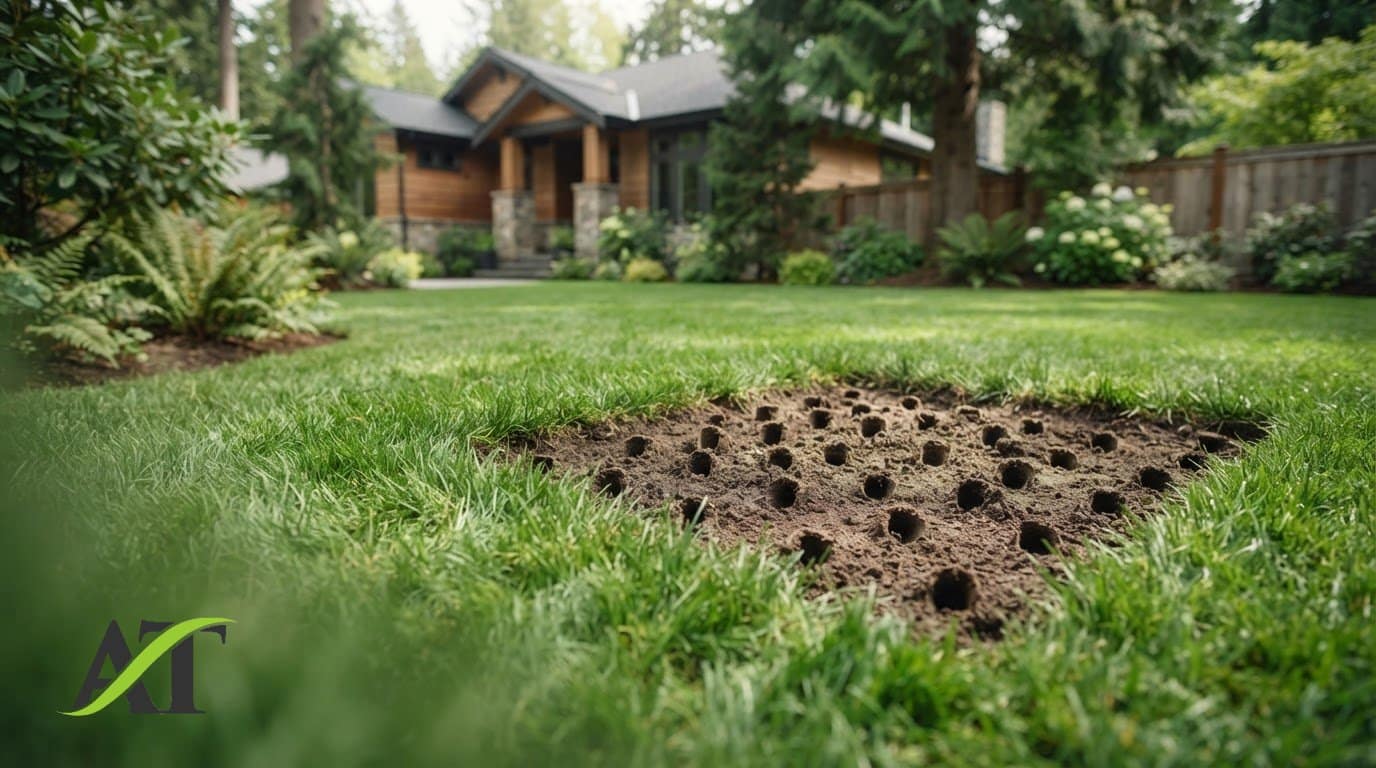
Core Aeration removes small soil plugs to improve movement of air, water and nutrients into the root zone.
Thin or worn grass
The Lawn Tune-Up combines Core Aeration, Premium Overseeding and starter fertilizer for lawns that need greater density.
Heavy surface buildup
Dethatching (Power Raking) may be appropriate when excessive thatch, moss or matted debris interferes with renovation.
What if fertilizer is sitting above matted debris?
Fertilizer does not remove thatch, moss or dead surface material. A hand dethatching rake can help with limited DIY cleanup in a small area, but it is not a substitute for professional power raking when a lawn has widespread heavy buildup. Diagnose the underlying condition before aggressively raking healthy turf.

Dethatching Rake
A manual rake may be useful for loosening a small patch of matted dead material before repair. Use it selectively and avoid tearing up healthy grass simply because the lawn is being fertilized.
View Dethatching Rake on AmazonAs an Amazon Associate, Aerating Thatching Co. may earn from qualifying purchases. Product availability and pricing can change.
Slow-release lawn fertilizer FAQ
Is slow-release fertilizer always better than quick-release fertilizer?
No. Slow-release fertilizer is useful when steadier feeding and fewer growth surges are priorities. Quick-release nitrogen can provide a faster response, and a blended fertilizer can combine both approaches. The best choice depends on the lawn, season, product analysis and application goal.
What is the best time to apply slow-release fertilizer in Seattle?
Apply it while cool-season grass is actively growing and moisture can be managed. Spring and fall are often practical in the Seattle area, while summer feeding requires adequate moisture. Actual weather, lawn condition and the product label matter more than a fixed calendar date.
Should I water after applying slow-release fertilizer?
Follow the product label. Many granular fertilizers need to be watered into the lawn, but application immediately before heavy rain can increase runoff risk. Sweep granules off pavement before watering.
Can I use fertilizer containing phosphorus on an established Washington lawn?
Washington generally restricts phosphorus-containing fertilizer on established turf. Exceptions include establishing new grass, repairing damaged grass during its establishment season, or using a soil test from the previous 36 months that documents a phosphorus deficiency.
Will slow-release fertilizer fix a yellow or patchy lawn?
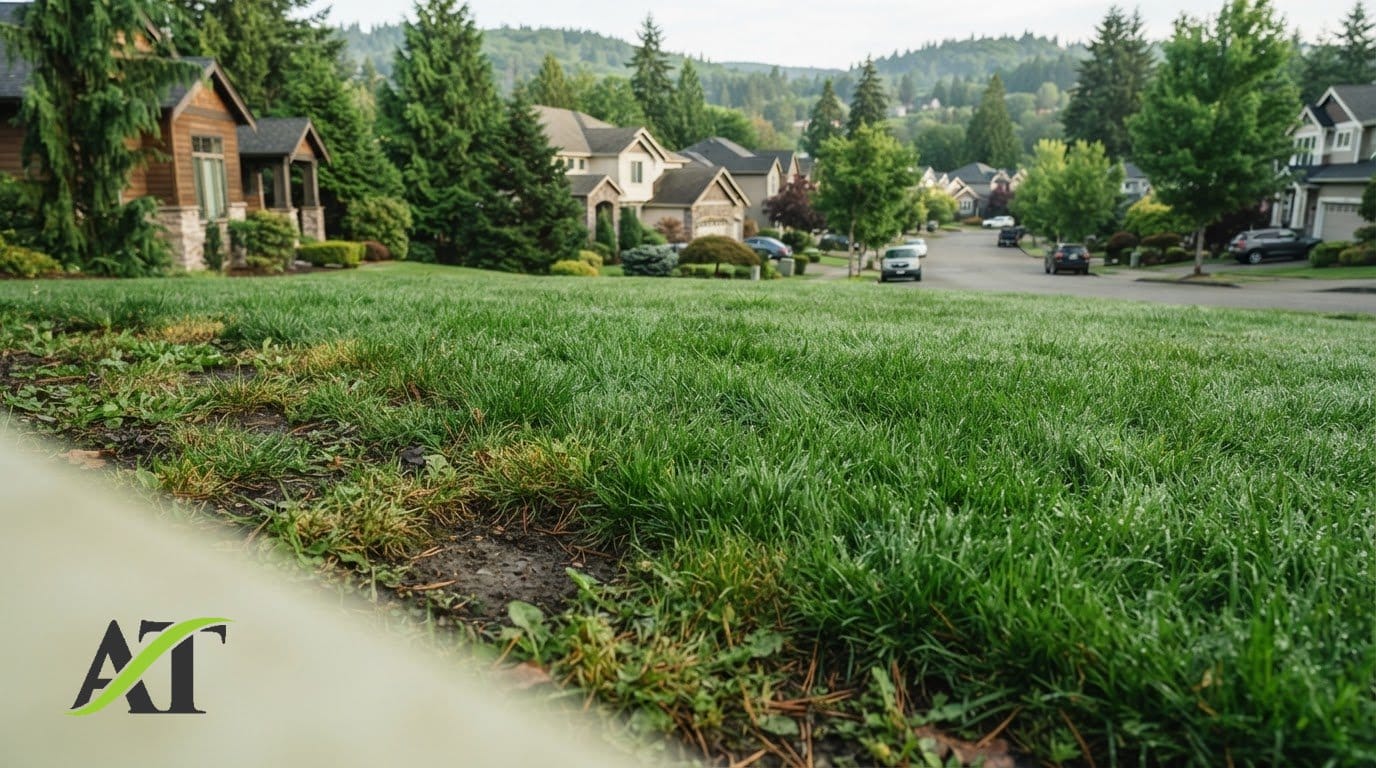
Not necessarily. Yellowing or patchiness can result from nutrient needs, drought stress, overwatering, compaction, shade, disease, pet urine, mowing damage or missing grass. Identify the cause before assuming more fertilizer is the answer.
Should I aerate before fertilizing?
Core Aeration can be a useful pairing when soil compaction is limiting the lawn, but aeration is not required before every fertilizer application. Fertilizer supplies nutrients; aeration physically addresses compacted soil and root-zone access.
Sources and further reading
Washington State University: Pacific Northwest Gardener's Handbook, Chapter 10 - Lawns
Washington State Department of Agriculture: Fertilizers Containing Phosphorus