Most homeowners in Mill Creek wait until their lawn is a yellowed, mossy mess before they think about Power Raking (Dethatching), but by then, the damage is already done. It’s frustrating to watch water pool on your turf or see moss take over despite your best efforts with a garden hose. You want a thick, green lawn that actually absorbs nutrients instead of letting them sit on top of a thick layer of dead thatch. This 2026 guide will show you exactly when to schedule Power Raking Mill Creek services to restore your lawn’s health and ensure your soil is ready for new growth.
We’ll break down the critical spring and fall windows, explain why soil temperature between 55°F and 75°F is the only metric that matters for successful germination, and clarify why the Full Meal Deal is the gold standard for total lawn restoration. You’ll learn how this package combines Power Raking (Dethatching) with the Core Aeration, Overseeding, and Fertilizing found in a standard Lawn Tune-Up. By understanding the right timing and the necessary equipment, you can stop the cycle of thinning turf and start building a resilient, healthy landscape.
Key Takeaways
- Identify the optimal spring and fall windows for power raking Mill Creek to clear out moss and thick thatch before the growing season peaks.
- Learn why the Full Meal Deal is the best choice for heavy restoration, as it includes Power Raking (Dethatching), Core Aeration, Overseeding, and Fertilizing.
- Discover why soil temperatures between 55°F and 75°F are the target range for successful Overseeding and thick turf establishment.
- Get actionable steps for property preparation, including specific mowing heights and debris removal, to ensure your mechanical service is as effective as possible.
What is Power Raking (Dethatching) and Why Does Mill Creek Need It?
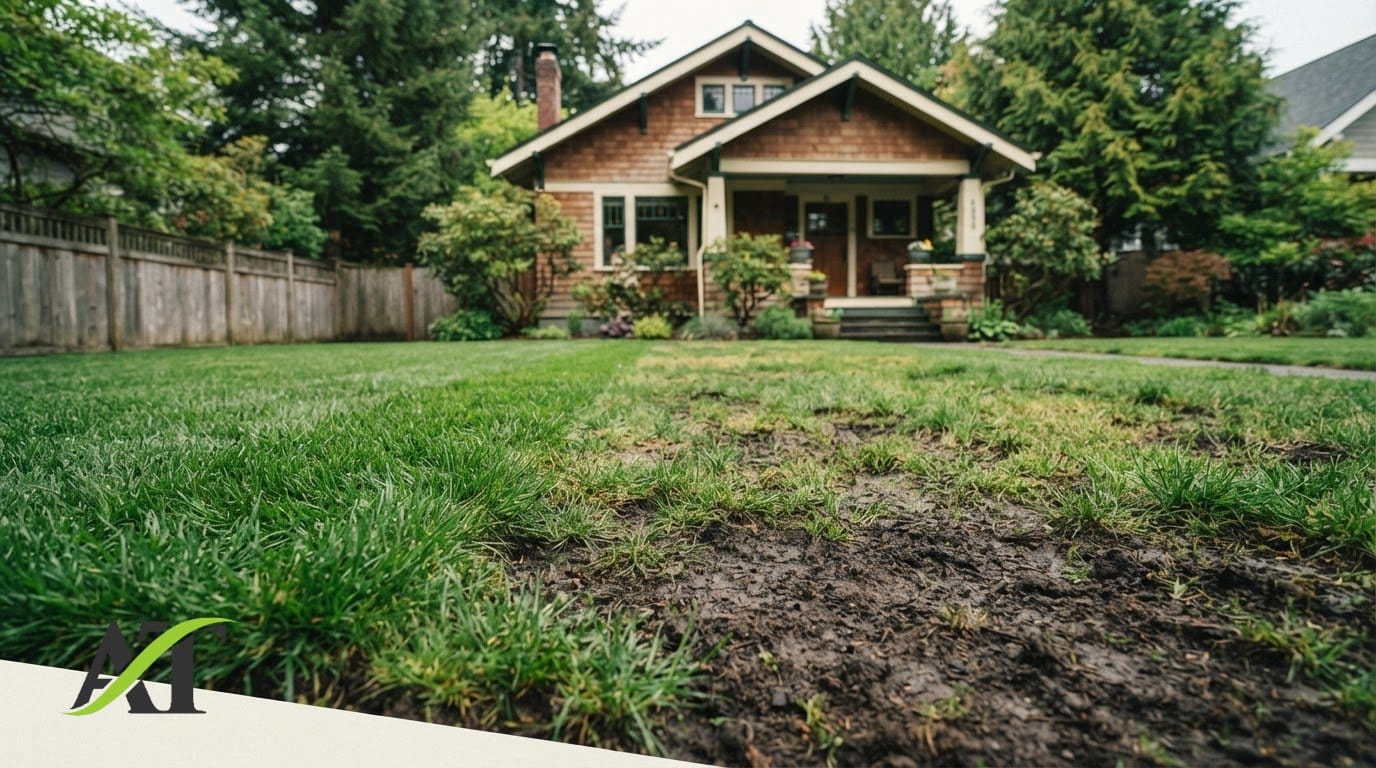
Power Raking (Dethatching) is a heavy-duty mechanical process that uses a professional Dethatcher to pull up the dense organic layer sitting between your grass blades and the soil. In Mill Creek, our wet climate creates what we call the “Mill Creek Moss Factor.” Constant rain and cool temperatures accelerate the buildup of moss and dead organic matter far faster than in drier regions. While a tiny bit of thatch is actually healthy for soil protection, any layer thicker than half an inch starts to suffocate your turf. It acts like a waterproof barrier, blocking air, water, and nutrients from reaching the roots where they’re needed most.
The main goal of power raking Mill Creek properties is to strip away this suffocating mat so the grass can finally breathe. Without this mechanical intervention, your lawn will likely remain yellow and thin even if you water it daily. Clearing this debris is the critical first step in our Full Meal Deal. This comprehensive package follows up the raking with Core Aeration, Overseeding, and Fertilizing to ensure your lawn recovers quickly and grows back thicker than before. It’s about restoring the physical connection between your grass and the nutrients it requires to thrive.
Signs Your Lawn Has a Thatch Problem
You can usually diagnose a thatch issue just by walking across your yard. If the ground feels unusually bouncy or springy underfoot, you’re likely walking on a mat of debris rather than firm soil. This “Spongy Walk” is a classic sign that thatch has become excessive. You should also watch for these common local issues:
- Poor Water Infiltration: You’ll see water pooling on the surface or running off into the driveway even during light Mill Creek rains because the soil can’t absorb it.
- Increased Pests: Thick thatch provides a perfect breeding ground for lawn pests and fungal diseases that can kill off large patches of grass.
- Thinning Turf: Grass blades appear sparse or yellow because they’re fighting through a layer of dead matter to find sunlight and food.
The Best Time for Power Raking in Mill Creek
Timing is the most critical factor for a successful lawn restoration. Because Power Raking (Dethatching) is a restorative process, it requires your grass to be in an active growth phase to recover from the mechanical stress. In Snohomish County, the primary window for power raking Mill Creek lawns is late March through May. This is when the grass is pushing new growth and can quickly fill in the gaps left behind after the debris is removed.
If you miss the spring window, the September window serves as a reliable fall alternative. Performing this service in early autumn allows for a late-season cleaning before the lawn enters winter dormancy. According to research on Thatch Management in Lawns, removing excess organic matter when the grass is vigorous ensures the root system remains protected. While air temperature might feel warm, it’s a secondary metric compared to what is happening beneath the surface. If you aren’t sure if your soil is ready, you can request a quote for a professional assessment.
The 55°F–75°F Soil Temperature Rule
Success with the Full Meal Deal depends heavily on the soil temperature. For cool-season grass seed germination to be most reliable, soil temperatures must reach 55°F–75°F (13°C–24°C). This is the target range for the Overseeding phase of your service. While germination can technically happen outside this range, it will be significantly slower, less consistent, and produce less reliable establishment. We advise homeowners to wait for consistent soil warmth rather than rushing the service during a brief warm spell in February. Results are always influenced by moisture, seed-to-soil contact, and weather, so hitting this temperature window gives your new seed the best possible start. If you’re dealing with similar challenges in a neighboring area, our guide on overseeding Lake Forest Park explains how soil temperature and mechanical preparation work together across PNW properties.
The Full Meal Deal: Why Power Raking (Dethatching) Needs Partners
Power Raking (Dethatching) is an aggressive mechanical process. While it’s highly effective at stripping away moss and debris, it only addresses the surface. If you stop there, you leave your lawn thin, exposed, and vulnerable to new weed growth. This is why we recommend the Full Meal Deal for power raking Mill Creek properties that need heavy restoration. This package pairs Power Raking (Dethatching) with Core Aeration, Overseeding, and Fertilizing. It’s the only way to ensure the ground is actually prepared to grow back stronger.
When you control thatch in your lawn, you finally create the necessary seed-to-soil contact for new growth. Without this contact, new grass seed just sits on top of dead matter and dries out. This is the primary difference between a restorative service and our standard Lawn Tune-Up. While a Lawn Tune-Up consists of Core Aeration, Overseeding, and Fertilizing, it doesn’t include the heavy raking needed for Mill Creek properties struggling with a thick spongy layer.
Understanding the Service Components
To get the best results from power raking Mill Creek lawns, you have to fix what’s happening underground. The Full Meal Deal includes these three essential partners:
- Core Aeration: This relieves the heavy clay soil compaction common in North Seattle. It pulls small plugs of soil out so air and water can reach the root zone. Raking removes the lid, but aeration lets the soil breathe.
- Overseeding: We introduce new, resilient grass varieties into the freshly cleaned soil to fill in bare spots. This prevents moss from simply returning to the empty spaces.
- Organic Fertilizing: This provides the necessary nutrients for new seedlings to establish. While we don’t offer absolute guarantees on germination because of weather and moisture variables, this step gives the seed its best shot. If your lawn has been struggling to absorb nutrients despite regular feeding, lawn soil testing Seattle homeowners rely on can reveal whether acidic soil pH is blocking uptake before you invest in another round of fertilizer.

Preparing Your Mill Creek Property for Service
To get the best results from power raking Mill Creek lawns, you have to prepare the site before our equipment arrives. Mechanical restoration is a heavy process, and a few simple steps on your end ensure the machinery can work efficiently without causing unnecessary damage. Follow these four steps to get your yard ready for a Full Meal Deal or a standalone Power Raking (Dethatching) service.
- Step 1: Mow Low. A few days before your scheduled service, mow your lawn slightly lower than your usual setting. This shorter height allows the tines of the power rake to reach the thatch layer more effectively.
- Step 2: Clear the Surface. Remove all toys, garden hoses, and large debris from the turf. It is also essential to clear any pet waste, as this interferes with the machinery and the Overseeding process.
- Step 3: Mark Obstacles. Use flags or bright stakes to mark all underground obstacles. This includes sprinkler heads, valve box covers, and invisible dog fences. Our operators work carefully, but they need to know exactly where your infrastructure is hidden.
- Step 4: Monitor Moisture. Ensure the lawn is not overly saturated. While we need some moisture for the Core Aeration portion of the service, soil that is soaking wet can lead to turf damage during mechanical raking. If the ground is squishy, it is too wet for service.
Managing Expectations for Post-Service Recovery
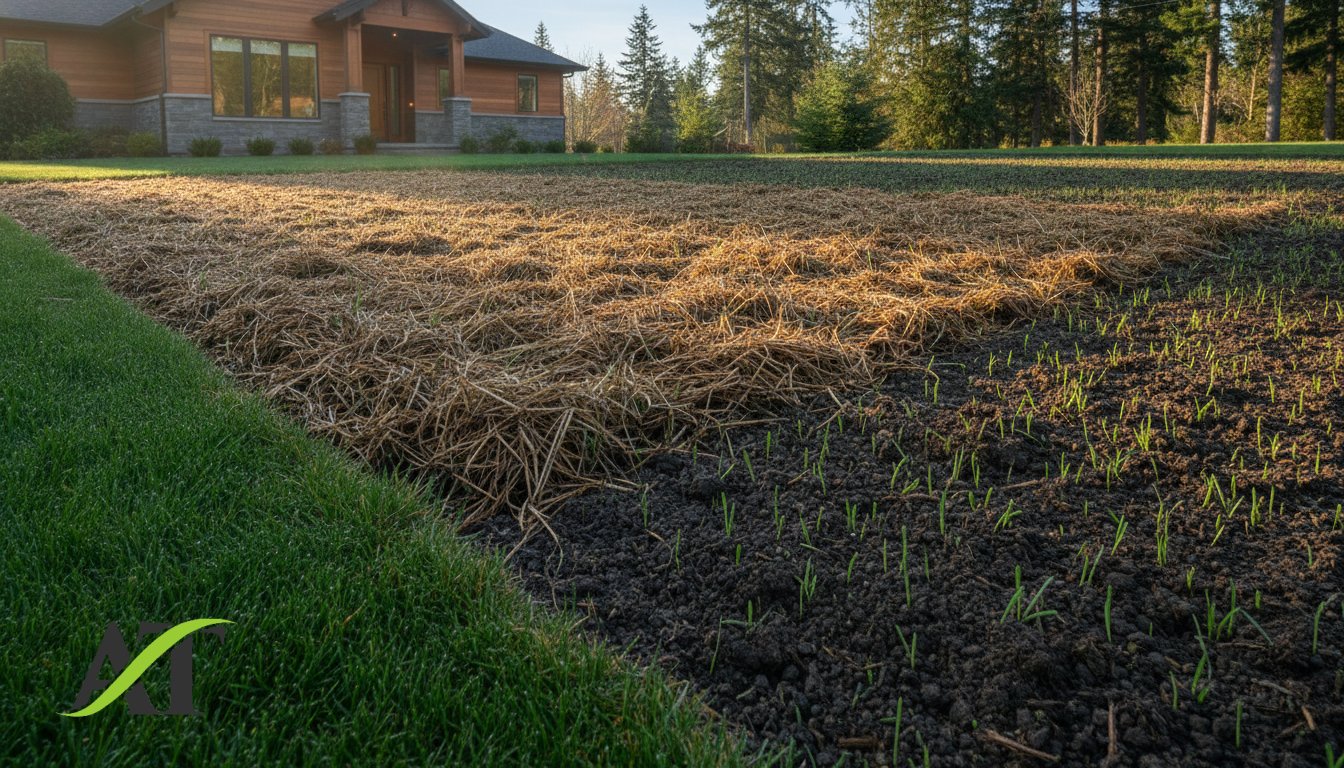
It is important to understand that your lawn will look rough immediately after Power Raking (Dethatching). We are pulling up years of accumulated moss and debris, which often leaves the turf looking thin and brown for a short period. This is a normal part of the restorative process. Once the thatch is gone, the grass can finally access the air and water it needs to recover.
Regarding the Overseeding phase, we want to be transparent about results. Germination is influenced by multiple factors, including consistent moisture, seed-to-soil contact, and local weather patterns. Because of these variables, we do not offer absolute guarantees on germination. However, hitting that 55°F to 75°F soil temperature window gives your new grass its best chance to thrive. For a personalized assessment of your property, you can Request a Quote and we will help you determine the best path forward.
Get Your Mill Creek Lawn Back on Track for 2026
Restoring a moss-choked yard requires more than just a quick mow. Successful power raking Mill Creek properties depends on hitting the right timing when soil temperatures are between 55°F and 75°F. By choosing the Full Meal Deal, you address surface thatch while also fixing soil compaction through Core Aeration and introducing fresh growth with Overseeding and Fertilizing. This comprehensive approach ensures your lawn has the structural support it needs to thrive in our specific Pacific Northwest climate.
We’ve been serving the local community since 2004. Our owner-operated team uses specialized equipment to handle the heavy lifting of mechanical restoration so you don’t have to. We know the local soil conditions and exactly how to prepare your turf for the best possible recovery. While results are always influenced by weather and moisture, our process gives your grass the strongest foundation possible.
Your lawn can be the thick, green space you’ve been wanting. We’re ready to help you clear away the debris and start fresh this season.
Frequently Asked Questions
Is Power Raking (Dethatching) the same as a Lawn Tune-Up?
No. A Lawn Tune-Up consists of Core Aeration, Overseeding, and Fertilizing. It’s designed for routine maintenance. Power Raking (Dethatching) is a more aggressive restoration process. If your lawn has heavy thatch, we recommend the Full Meal Deal. This comprehensive service includes Power Raking (Dethatching), Core Aeration, Overseeding, and Fertilizing to ensure your turf recovers properly after the debris is removed.
Will my lawn look worse right after power raking?
Yes, your lawn will look thin and brown immediately after the service. We are pulling up a dense layer of dead organic matter and moss, which exposes the soil and leaves the remaining grass sparse. This is a normal phase of mechanical restoration. Recovery happens quickly during the spring growth window. Pairing the service with Overseeding helps fill in those bare spots for a thicker, greener result.
How much does power raking cost in Mill Creek?
Costs for power raking Mill Creek properties are determined by the size of the lawn and the volume of thatch we need to remove. Every yard is unique, so we avoid using generic price lists. Factors like slope, access, and the thickness of the moss layer all play a role. We recommend requesting a free quote so we can provide a specific estimate tailored to your property’s needs.
Can I power rake my lawn if it is mostly moss?
Power raking is an excellent solution for lawns dominated by moss. Our wet climate makes moss buildup common, and mechanical removal is often the only way to clear it out. Because moss removal leaves large bare patches, it’s critical to follow up with the components of our Full Meal Deal. Adding Core Aeration, Overseeding, and Fertilizing ensures that healthy grass fills the space before the moss returns.
What happens if the soil temperature is below 55°F when I seed?
Germination will be slower and less consistent if the soil temperature is below 55°F. While seeds might eventually sprout, the establishment is much less reliable outside the optimal 55°F to 75°F range. We prioritize soil temperature over air temperature because it directly affects seed metabolism. Waiting for the right warmth ensures the Overseeding phase of your service produces the best possible results for a resilient, healthy lawn.

Article by
Stewart Armour
Stewart Armour is an independent lawn restoration expert, educator, and owner of Aerating Thatching Co., serving the greater Seattle area since 2004. With more than two decades of professional experience restoring Western Washington lawns, Stewart specializes in diagnosing lawn problems, improving soil health, and developing long-term lawn renovation strategies. His education includes turf management studies, advanced golf course turf training, and continuing education through Wilbur-Ellis University, State Turf Facilities, Soil First Academy, and Golf Course Applied Turf Physiology. Every article published on LawnTuneUps.com is grounded in practical field experience, current turf science, and a commitment to helping homeowners understand the why behind every recommendation—not just what to do.
Stewart has personally evaluated thousands of residential lawns throughout the Seattle area and remains committed to helping homeowners understand the science behind growing healthier, more resilient lawns.