Seattle Lawn Soil Amendments for Compacted, Poor-Structure Soil
A thicker lawn needs more than seed on the surface. Our custom soil-amendment blend is available as an upgrade to selected lawn services to support better soil conditions, stronger rooting, and healthier grass growth.
This is not sold as a stand-alone service. It is added when appropriate to Core Aeration, a Lawn Tune-Up, a Full Meal Deal, or an overseeding and lawn-repair visit.
What is a lawn soil-amendment upgrade?
A lawn soil amendment is material applied to support the condition of the soil around the grass roots. Our custom blend is mainly recommended for lawns with compaction or poor soil structure. It works best as part of a coordinated service that may also include core aeration, overseeding, fertilizer, or dethatching.
Main goal: create better growing conditions so your lawn has a stronger chance to become healthier and thicker. Results still depend on sunlight, watering, existing soil conditions, weather, traffic, drainage, and the other services included.
Is a Soil-Amendment Upgrade Right for Your Lawn?
It may be worth adding when:
- The soil feels hard or compacted.
- Grass stays thin despite normal watering and feeding.
- Roots struggle to develop in the upper soil layer.
- Water runs off or moves unevenly through the lawn.
- The same areas repeatedly struggle after seeding.
- You are already scheduling aeration, overseeding, or renovation.
It may not solve the problem by itself when:
- The lawn receives too little sunlight for the grass type.
- Standing water is caused by grading, runoff, or a drainage-system problem.
- Grass is being damaged by insects, disease, pet urine, or chemical injury.
- The area receives constant heavy traffic.
- New seed cannot be watered consistently.
- The lawn needs full surface preparation rather than a light repair.
How Lawn Soil Amendments Work
We look at the lawn problem
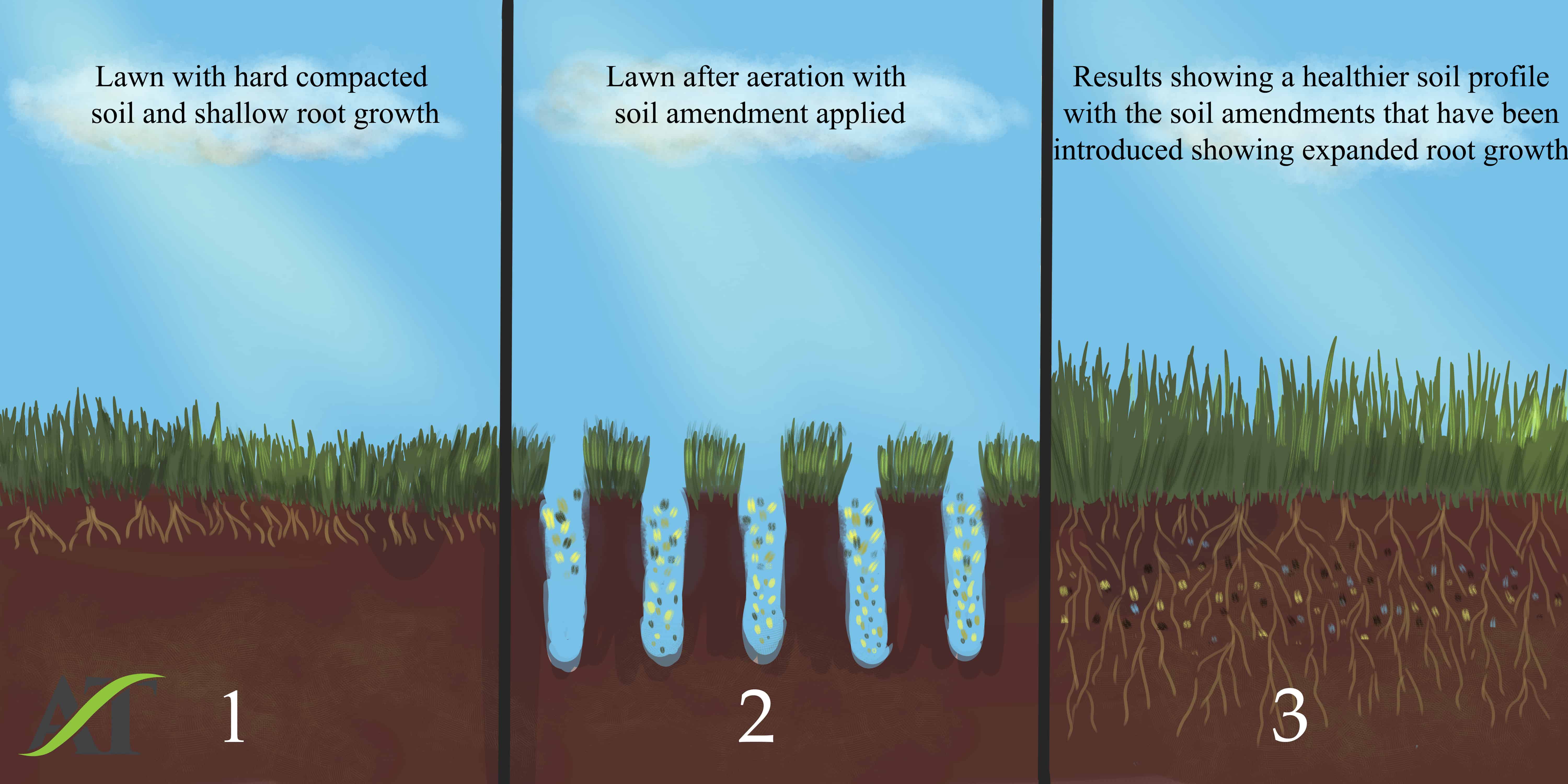
Compaction and poor soil structure can limit root growth and make it harder for water, air, seed, and nutrients to reach the active root zone.
We pair the upgrade with the right service
The amendment is most useful when applied with a service that physically opens the soil or repairs lawn density, such as core aeration and overseeding.
You support the result afterward
Normal watering is needed after application. When seed is included, follow the seeding instructions and keep heavy traffic off newly seeded areas.
Important distinction
The amendment supports soil improvement, but core aeration provides the direct mechanical relief for compaction. For compacted Seattle-area lawns, the strongest plan is often core aeration plus the amendment rather than treating the amendment as a substitute for aeration.
Which Lawn Services Can Include the Upgrade?
| Service | What the main service does | Why add soil amendments? |
|---|---|---|
| Core Aeration | Removes small soil cores to reduce compaction and create openings into the root zone. | A strong match when the lawn has hard soil or poor structure and you want to support longer-term improvement after aeration. |
| Seattle Lawn Tune-Up | Combines core aeration, overseeding, and starter fertilizer. | Adds soil-focused support to a service already designed to help thin lawns fill in. |
| Full Meal Deal | Combines dethatching, core aeration, overseeding, and starter fertilizer for broader renovation. | Useful when surface buildup, compaction, poor seed contact, and weak soil conditions are all part of the problem. |
| Overseeding or Lawn Repair | Adds new grass seed to thin or damaged areas. | May support the soil environment beneath repaired areas, especially when poor structure has contributed to repeat thinning. |
What Is Included—and What Is Not?
- Professional application of the custom soil-amendment blend.
- Application as part of an eligible scheduled lawn service.
- Placement intended to complement the aeration, overseeding, or repair plan.
- Basic after-care direction based on the companion service.
- A stand-alone soil-amendment visit.
- A guaranteed cure for drainage, shade, pests, disease, weeds, or moss.
- A guarantee that every bare spot will germinate or fill in.
- A replacement for core aeration in heavily compacted soil.
- A soil laboratory test unless specifically quoted.
- Permanent correction of an ongoing site problem.
What Results Should You Expect?
Soil improvement is usually gradual. The amendment is intended to support better growing conditions; it is not a quick cosmetic coating. When it is paired with the right service and followed by proper care, the lawn will develop better rooting, more even growth, and improved density over time.
What you may notice first
Better response from overseeding or renovation, depending on weather, watering, and the condition of the existing lawn.
What takes longer
Changes in rooting, soil performance, and recurring thin areas generally need a growing season and continued good lawn care.
What controls the outcome
Sunlight, moisture, drainage, mowing, traffic, seed contact, soil condition, and seasonal temperatures all matter.
Soil Amendments vs. Aeration, Fertilizer, Lime, and Wetting Agents
| Treatment | Main purpose | What it does not replace |
|---|---|---|
| Soil amendment | Supports soil condition and structure around the root zone. | Mechanical core aeration, seeding, fertilizer, or drainage work. |
| Core aeration | Physically removes soil plugs to relieve compaction and create openings. | Seed, fertilizer, or correction of major drainage and grading problems. |
| Fertilizer | Supplies nutrients used by established grass or new seedlings. | Compaction relief or correction of poor physical soil structure. |
| Lime treatment | Supports soil-pH management when lime is appropriate. | Aeration, fertilizer, or a general soil amendment. |
| Wetting agent | Helps water spread and penetrate more evenly in difficult dry areas. | Mechanical compaction relief or correction of major drainage issues. |
Best Seattle-Area Timing
Because this is an upgrade, timing follows the companion service. Spring and fall are common windows for core aeration, overseeding, lawn repair, and renovation because grass is generally better positioned to recover and establish when temperatures and moisture are favorable.
Work may need to be delayed when soil is saturated, frozen, excessively dry, or otherwise unsuitable for the planned service. See the Seattle Lawn Care Calendar and the guide to the best time to aerate and overseed in Seattle.
How to Prepare for Service
Before the crew arrives
- Mow the lawn if your service instructions request it.
- Remove toys, hoses, furniture, pet waste, and movable decorations.
- Mark irrigation heads, shallow wiring, invisible-fence lines, and other hidden obstacles.
- Make sure gates are unlocked and access is clear.
- Point out areas that stay wet, dry out first, or repeatedly become thin.
Tell us about recurring problems
Include useful details with your quote request:
- How long the lawn has been struggling.
- Whether the soil feels hard or stays soggy.
- How many hours of direct sunlight the area receives.
- Whether pets, children, or foot traffic use the area heavily.
- Any known irrigation, pest, disease, or drainage concerns.
After-Care for Soil Amendments
- Water normally after application. Avoid creating puddles or saturated areas.
- When seeding is included, follow the seeding watering instructions. New seed needs more frequent surface moisture than an established lawn.
- Keep heavy traffic off newly seeded areas. Limit repeated walking, play, furniture, equipment, and hard turns until seedlings are established.
- Adjust for rainfall. Skip or reduce irrigation when Seattle weather supplies enough moisture.
- Follow mowing guidance for new grass. Do not mow immature seedlings too early.
Use the complete Seattle lawn after-care guide when your service includes dethatching, core aeration, or overseeding.
Soil-Amendment Visual Guide
Soil Amendments and Lawn Repair
This video provides a practical look at the soil-amendment material and how it can fit into a lawn-repair plan.
Seattle Lawn Soil-Amendment FAQ
What is the main benefit of adding soil amendments to my lawn service?
The main goal is to support better soil conditions so grass can root and grow more effectively. When paired with the right service, the amendment can help support a healthier, thicker lawn. It is not a guaranteed result because sunlight, watering, soil condition, drainage, weather, and traffic also affect lawn growth.
Is the soil amendment available as a stand-alone service?
No. It is offered as an upgrade to selected services: Core Aeration, a Lawn Tune-Up, a Full Meal Deal, or overseeding and lawn-repair work.
Which lawns are the best candidates for this upgrade?
It is mainly intended for lawns with compaction or poor soil structure, especially when the lawn stays thin, roots poorly, or repeatedly struggles in the same areas. It is most useful when combined with a service that addresses the lawn's other needs.
Does a soil amendment make grass grow thicker?
It can support the soil conditions needed for healthier growth, but it does not create lawn density by itself. A thicker result often depends on overseeding, good seed-to-soil contact, suitable sunlight, correct watering, and ongoing mowing and feeding.
Does this replace core aeration?
No. Core aeration physically removes small plugs of soil to relieve compaction. The amendment is a complementary soil upgrade, not a substitute for mechanical aeration when the ground is heavily compacted.
Why pair soil amendments with core aeration?
Aeration creates openings into the root zone and directly reduces compaction. Applying the amendment during the same service helps place the soil-focused upgrade into a lawn that has already been opened mechanically.
Can I add soil amendments to a Seattle Lawn Tune-Up?
Yes. The amendment can be added to a Lawn Tune-Up, which combines core aeration, overseeding, and starter fertilizer. This is a practical option for a thin lawn that also has compacted or poor-structure soil.
Can I add soil amendments to a Full Meal Deal lawn renovation?
Yes. The Full Meal Deal combines dethatching, core aeration, overseeding, and starter fertilizer. Adding soil amendments may be appropriate when poor soil structure is another part of the lawn's decline.
Can soil amendments be used with overseeding or spot repair?
Yes, when included with an eligible overseeding or lawn-repair service. The amendment supports the soil environment, while surface preparation, seed contact, moisture, temperature, and sunlight determine how well the new grass establishes.
Is a soil amendment the same as fertilizer?
No. Fertilizer supplies nutrients to grass. A soil amendment is used primarily to support soil properties or root-zone conditions. A lawn may benefit from both, which is why the amendment can be paired with services that include starter fertilizer.
Is this a pesticide or weed-control treatment?
This page does not present the soil amendment as a pesticide, herbicide, fungicide, or weed-control service. Confirm the current product label before making a definitive ingredient or regulatory claim.
Will soil amendments get rid of weeds?
No. The service is not weed control. A denser, well-maintained lawn may compete better with some weeds, but the amendment does not eliminate existing weeds or prevent them permanently.
Will soil amendments remove moss?
No. Soil amendments do not remove moss. Moss is often linked to shade, moisture, compacted soil, low lawn density, or surface buildup. Dethatching, aeration, overseeding, and changes to the underlying conditions may be more relevant.
Can soil amendments fix standing water?
Not necessarily. They may support better soil conditions, but standing water caused by low spots, grading, runoff, buried barriers, or inadequate drainage can require separate drainage or landscape work.
Will this solve a lawn that is too shaded?
No. Soil improvement cannot replace adequate light. Shade-tolerant seed and better soil conditions may help in marginal areas, but deeply shaded locations may not support a dense lawn.
Can this repair pet urine spots?
The amendment is not a direct treatment for urine damage. Repair may require removing damaged material, preparing the soil surface, seeding, watering, and changing the repeated cause. Ongoing pet use can cause the spots to return.
Will this fix lawn disease or insect damage?
No. Disease and insect damage require correct identification and an appropriate response. Soil improvement and reseeding may help the lawn recover after the cause is addressed, but they do not diagnose or control the pest or disease.
When is the best time to add soil amendments in Seattle?
The timing follows the companion service. Spring and fall are common periods for aeration, overseeding, and renovation, but actual scheduling depends on soil moisture, temperature, rainfall, and whether the lawn can be watered afterward.
Can the service be performed when the ground is very wet?
It may need to be rescheduled. Working saturated soil can create ruts, mess, and additional compaction. The lawn must be in suitable condition for the full service being performed.
Do I need to water after the amendment is applied?
Yes. Water normally after application unless your service instructions say otherwise. Avoid runoff and puddling. When overseeding is included, follow the more specific new-seed watering plan.
How should I water when the service includes grass seed?
Keep the seeded surface consistently moist without making it soggy. Frequency changes with rainfall, temperature, soil, sprinkler coverage, and the stage of seedling growth. Follow the instructions provided for your service and reduce watering when rain supplies enough moisture.
Can children and pets use the lawn after application?
No child- or pet-safety guarantee should be made without the current product label and business policy. When seed is included, keep children, pets, and heavy traffic off the repaired areas as much as practical to protect germination and young grass.
How quickly will I see results?
Many homeowners begin noticing improvement within about three weeks when the soil amendment is combined with the appropriate lawn service and the lawn receives proper watering and favorable growing conditions. Long-term soil improvement and continued lawn thickening develop over the growing season as the lawn establishes and matures.
Is one application enough?
It depends on the original soil condition and whether the cause of compaction continues. Heavy foot traffic, repeated equipment use, wet-soil traffic, and difficult native soil can create ongoing problems. Future aeration or soil-focused upgrades may be appropriate.
Do I need a soil test first?
Not necessarily for a general soil-structure upgrade. A laboratory soil test can be useful when pH, nutrient imbalance, salt, or another specific chemistry issue is suspected. Do not use a general amendment as a substitute for testing when a precise diagnosis is needed.
How much does the soil-amendment upgrade cost?
Pricing depends on the lawn size, the companion service, material requirements, access, and current rates. Use the current Seattle lawn-care pricing page and request a quote for the exact upgrade price.
What should I include in my quote request?
Include your property address, an approximate lawn size if you know it, and a description of the problem areas. Let us know whether your lawn has an in-ground sprinkler system or is watered manually, where the soil feels hard or compacted, where water tends to collect, how much sunlight the area receives, and whether you are interested in Core Aeration, a Lawn Tune-Up, the Full Meal Deal, or targeted lawn repair. The more useful details you provide, the better we can recommend the right combination of services.
Build a Better Plan for Compacted, Thin Lawn Areas
Tell us where the lawn stays thin, where the soil feels hard, and whether you are considering aeration, a Lawn Tune-Up, a Full Meal Deal, or targeted overseeding. We can determine whether the soil-amendment upgrade belongs in your service plan.
Soil amendments are offered only as an upgrade to selected services and are not sold as a stand-alone visit.