Seattle Lawn Dethatching (Power Raking)
If your lawn has a heavy layer of thatch, moss or matted surface material, Dethatching (Power Raking) removes that buildup so the lawn surface can open back up.
It can be especially useful before overseeding or as part of a broader lawn renovation, but not every Seattle lawn needs dethatching. If the real problem is compacted soil, thin grass, drainage, shade or another underlying condition, a different service or combination may make more sense.
What Does Dethatching (Power Raking) Actually Do?
Dethatching (Power Raking) mechanically removes excessive thatch, moss and matted organic material from the lawn surface.
Thatch is the organic layer that develops between the actively growing grass and the soil. A small amount is normal. When the layer becomes excessive, it can interfere with movement of water, air and nutrients and can make overseeding more difficult.
Power raking uses mechanical equipment to loosen and lift this accumulated material to the surface where it can be raked up.
Not Every Lawn Needs It
A lawn that is thin or hard underfoot may need Core Aeration, overseeding or another correction instead. Visible moss alone also does not automatically prove that excessive thatch is the main problem.
Signs Dethatching May Make Sense
The goal is to identify an actual surface-buildup problem rather than treating every thin or mossy lawn the same way.
Dethatching May Be a Good Fit When:
- The lawn has a noticeable layer of dead or matted material between the green grass and soil.
- The surface feels unusually spongy or padded.
- Moss and dead surface material have accumulated heavily.
- Seed has difficulty reaching exposed soil.
- The lawn needs surface preparation before a larger renovation.
- Previous growth has left a dense mat that needs to be mechanically opened.
Dethatching Alone May Not Be the Answer When:
- The main problem is hard, compacted soil below the surface.
- The lawn is thin but has little significant surface buildup.
- Standing water comes from grading or a drainage-system problem.
- Heavy shade is preventing grass from growing well.
- The lawn needs new grass density rather than primarily surface removal.
- Moss keeps returning because the underlying growing conditions have not changed.
Dethatching vs. Core Aeration: Which Does Your Lawn Need?
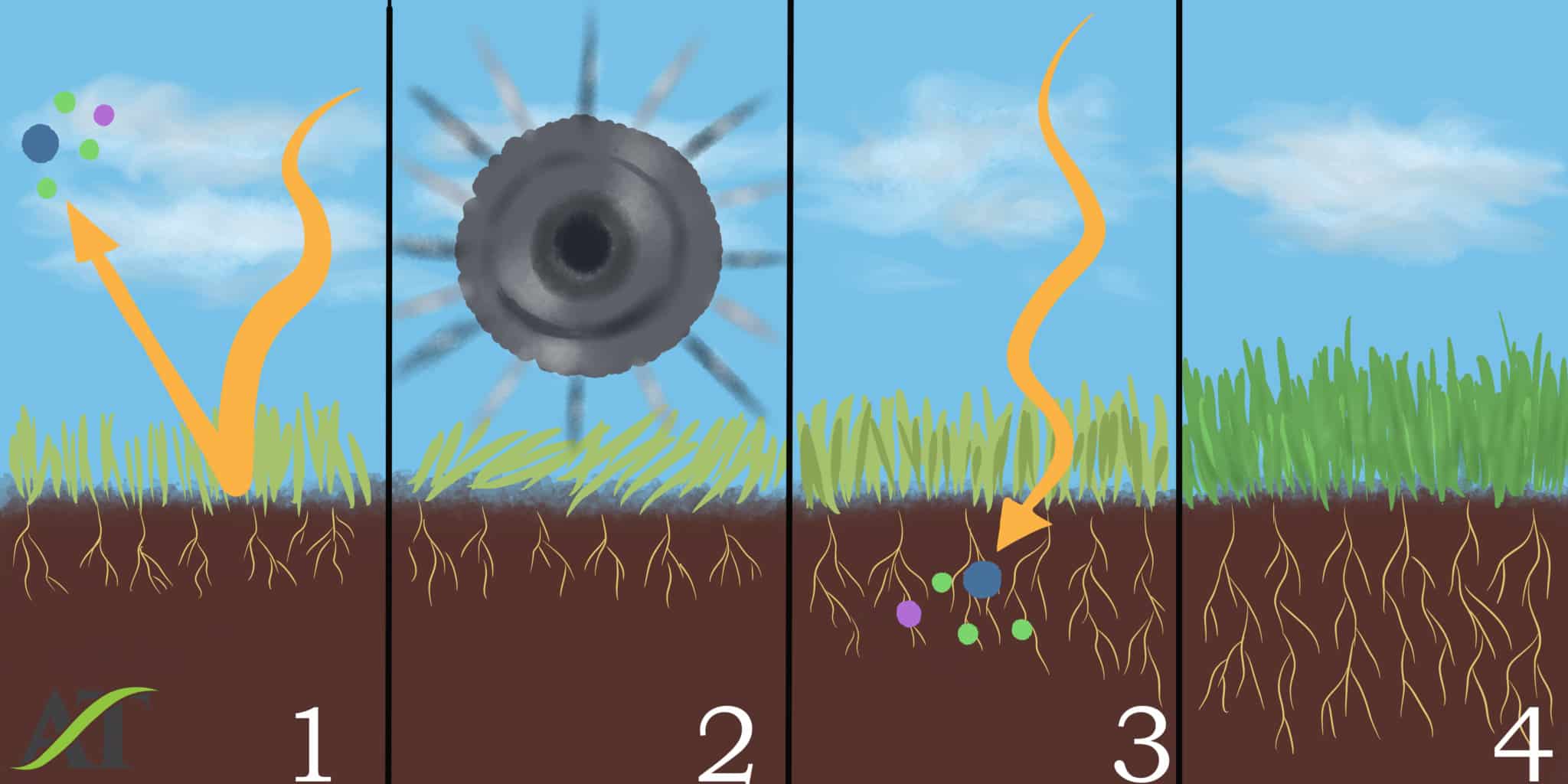
These services solve different problems. Dethatching works mainly at the lawn surface. Core Aeration works in the soil.
Dethatching
Best when excessive thatch, moss or matted material is physically covering the surface.
Core Aeration
Best when hard or compacted soil is limiting root-zone air and water movement.
Dethatch + Aerate
Useful when significant surface buildup and soil compaction are both present.
Full Meal Deal
Best when the lawn also needs overseeding and starter fertilizer as part of a stronger renovation.
| Situation | Dethatching | Core Aeration | Broader Renovation |
|---|---|---|---|
| Heavy surface thatch or matting | Primary service | May complement it | Consider if lawn is also thin |
| Hard, compacted soil | Does not directly relieve soil compaction | Primary service | Consider if density is also poor |
| Thin grass with little thatch | May not be needed | Often useful | Lawn Tune-Up may fit better |
| Thatch + moss + compaction + thin turf | Useful | Useful | Full Meal Deal is the stronger approach |
Benefits of Dethatching (Power Raking)
Open the Lawn Surface
Removing excessive surface material reduces the barrier between the growing grass and the soil underneath.
Improve Seed Contact
When overseeding is planned, removing heavy matting can help new seed reach the soil rather than sitting on top of accumulated debris.
Remove Existing Moss
Power raking can mechanically lift substantial amounts of existing moss and dead material from the lawn surface.
Prepare for Renovation
Dethatching can be an important first step when a lawn needs aeration, overseeding and starter fertilizer afterward.
Expose the Real Lawn Condition
Once surface buildup is removed, thin areas and underlying lawn problems become easier to see and address.
Reduce Excessive Thatch
A healthy lawn can tolerate some thatch. The objective is to remove excessive accumulation, not strip every trace of organic material from the turf.
Will Dethatching Remove Moss?
Yes, Dethatching (Power Raking) can mechanically remove a significant amount of existing moss from the lawn. But removing moss and fixing the conditions that encouraged it are two separate jobs.
What Dethatching Does
- Lifts existing moss and matted material.
- Opens a covered lawn surface.
- Improves access to the soil for follow-up renovation work.
- Prepares thin areas for rebuilding when overseeding follows.
Why Moss May Return
- Dense shade still limits grass growth.
- Soil remains compacted.
- Drainage or persistent moisture issues remain.
- The grass is too thin to compete effectively.
- Other unfavorable lawn conditions remain unchanged.
For a lawn with moss plus compaction and thin grass, Stewart may recommend combining surface removal with Core Aeration and overseeding rather than treating moss removal as the complete solution.
What to Expect During Dethatching
Power raking is intentionally mechanical. The equipment works through the turf surface, loosens accumulated material and brings it up where it can be seen and collected.
Power Rake
Stewart uses professional power-raking equipment to work through the lawn surface.
Lift Buildup
Thatch, moss and loose matted material are pulled upward from the turf.
Assess the Lawn
Once the surface opens up, thin grass and other underlying conditions become easier to evaluate.
Next Step
Depending on the lawn, cleanup, aeration, overseeding or other restoration work may follow.
Watch a Seattle Dethatching Demonstration
What Is Included — and What Happens to the Debris?
Dethatching Service
The power-raking service mechanically loosens and lifts thatch, moss and accumulated material from the lawn surface.
This is the primary Dethatching (Power Raking) service priced on the current service price list.
Raking & Cleanup
Raking/cleanup can be added for an additional fee.
Aerating Thatching Co. does not provide haul-away of the removed material. For heavier jobs, having sufficient yard-waste capacity available can make disposal easier.
Seattle Dethatching (Power Raking) Price
What Can Affect the Final Quote?
- Total lawn size.
- Property access and equipment access.
- Amount of surface buildup and service scope.
- Whether raking/cleanup is requested.
- Whether Dethatching is part of a larger renovation.
- Additional services such as Core Aeration or overseeding.
Pricing shown reflects the current published LawnTuneUps.com price list and is subject to change. Larger lawns are priced by estimate.
Thin, Mossy and Compacted? Consider the Full Meal Deal.
Dethatching clears the surface, but a lawn that is also thin and compacted may need to be rebuilt rather than simply cleaned out.
The Full Meal Deal Lawn Renovation combines the services that address those different parts of the problem:
- Dethatching (Power Raking)
- Core Aeration
- Premium Overseeding
- Starter Fertilizer
Surface problem only?
Dethatching may be enough.
Compaction but little thatch?
Core Aeration may be the better service.
Thin + thatch/moss + compaction?
The Full Meal Deal may be the stronger restoration plan.
When Is the Best Time to Dethatch?
Dethatching is best scheduled when the grass is positioned to recover from the mechanical work. In Western Washington, spring and early fall are useful service windows, but weather and lawn condition still matter.
Spring
A practical time to address accumulated winter surface material and prepare the lawn for active growth.
Early Fall
A useful renovation window when Dethatching will be followed by Core Aeration, overseeding and establishment work.
Dethatching Performed by Stewart
Aerating Thatching Co. is owner-operated, and Stewart personally performs the lawn work rather than sending an unknown rotating crew.
That matters on a service such as Dethatching because the first decision is not simply how much can be removed? It is whether the lawn actually needs the service and what should happen afterward.
See the Work and Hear From Customers
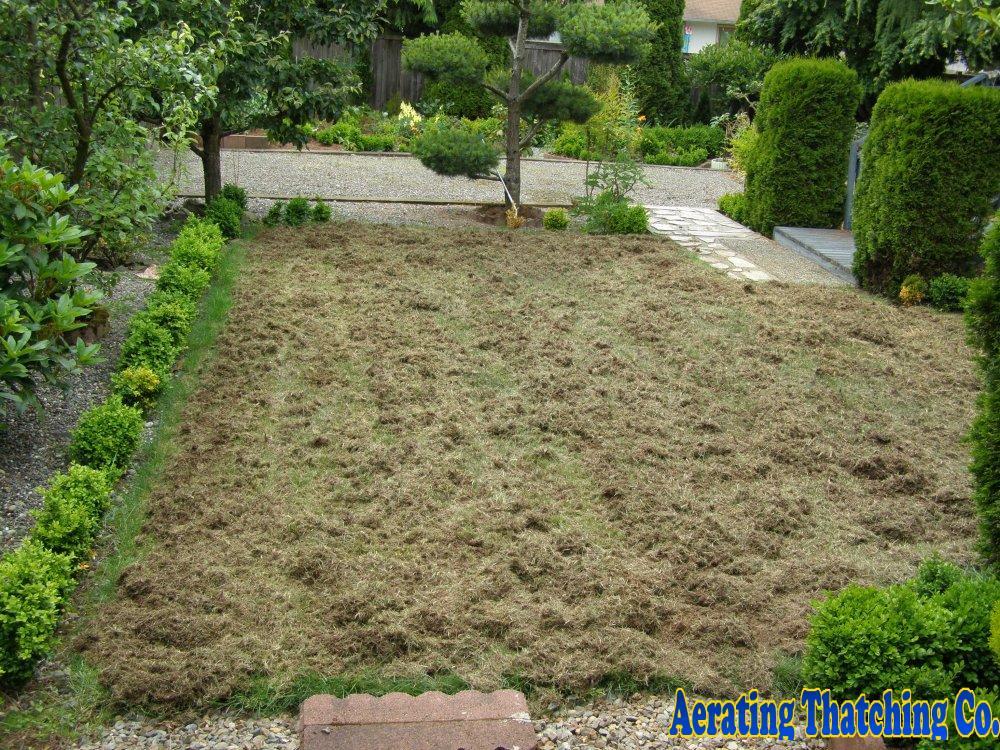
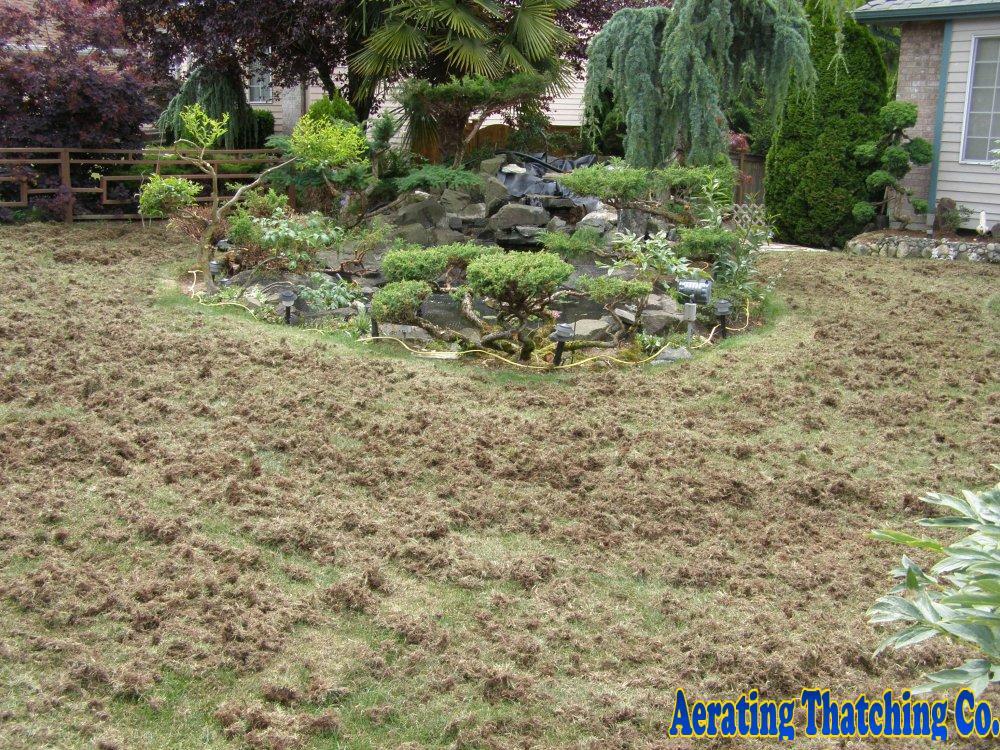
Before-and-after photos show what the service looks like. Customer videos add something different: the homeowner's perspective after working with Aerating Thatching Co.
Customer Testimonial
Customer Testimonial
Can I Dethatch My Lawn Myself?
Yes. DIY can make sense for smaller lawns, light buildup or homeowners comfortable doing the physical cleanup afterward. For larger lawns, heavier buildup or renovation work, professional power raking is usually much more practical.
DIY May Make Sense When:
- The lawn area is relatively small.
- The buildup is light enough to manage manually.
- You are comfortable raking and handling the debris.
- You want to maintain a small problem area yourself.
Professional Service May Make More Sense When:
- The lawn is large or heavily matted.
- Substantial moss and thatch need to be mechanically lifted.
- You are coordinating dethatching with aeration and overseeding.
- You want help deciding how aggressive the lawn actually needs to be treated.
Groundskeeper II Dethatching Rake
A manual option for smaller areas, detail work and lighter surface buildup.

Greenworks 40V Cordless Dethatcher / Scarifier
A powered DIY option for homeowners who want more mechanical help than a hand rake provides.

Product links above are affiliate links. If you purchase through them, LawnTuneUps.com may receive a commission at no additional cost to you.
What Happens After Dethatching?
The next step depends on whether you scheduled Dethatching by itself or as part of a lawn renovation.
Standalone Dethatching
The lawn can look temporarily thinner or rougher immediately after the material is lifted. Normal mowing, watering and recovery depend on turf condition and the amount of material removed.
Dethatching + Overseeding
If the lawn is aerated and overseeded afterward, new-seed watering and mowing instructions become much more important. Follow the dedicated after-care plan rather than treating the lawn as established turf.
Seattle Lawn Dethatching (Power Raking) FAQ
How do I know if my lawn actually needs Dethatching (Power Raking)?
Is moss the same thing as thatch?
Will dethatching get rid of moss permanently?
Dethatching vs. Core Aeration: which one do I need?
Can you dethatch and aerate the lawn at the same time?
Should I overseed after Dethatching?
When is the best time to dethatch a lawn in Seattle?
Can you dethatch wet grass?
Will my lawn look rough immediately after Dethatching?
Is raking and cleanup included with Dethatching?
Do you haul away the thatch and moss?
Can I dethatch my lawn myself?
How much does professional Dethatching (Power Raking) cost?
Start With the Lawn Problem, Not the Biggest Service
If your lawn has a heavy layer of thatch, moss or matted surface material, Dethatching (Power Raking) may be exactly what it needs. If the lawn is also thin, compacted or struggling to recover, Stewart can recommend whether Core Aeration, a Lawn Tune-Up or the Full Meal Deal makes more sense.